When it comes to creating a perfect space for entertaining outdoors, the patio vs deck decision is one most homeowners eventually face: Should I build a patio or a deck?
Both options can expand your living space, increase home value, and create a comfortable area for family gatherings or weekend parties. But each one comes with its own strengths, costs, and design possibilities.
In this guide, we’ll break down everything you need to know about patios and decks—from materials and maintenance to cost, comfort, and style—so you can make the best choice for your backyard.
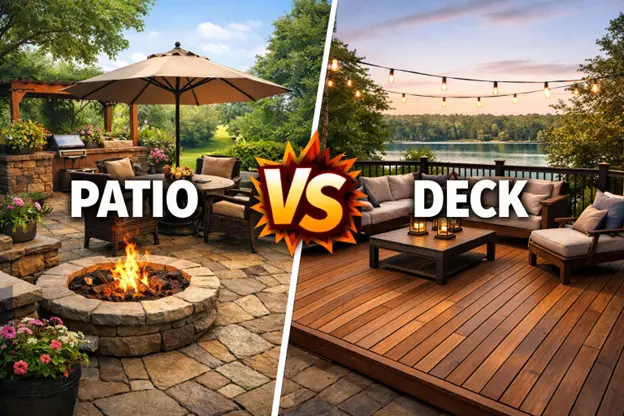
Patio vs Deck: What You Need to Know First
Before deciding between a patio vs deck, it helps to define what sets them apart.
A patio is typically a ground-level outdoor space made from durable materials like concrete, pavers, or natural stone. It usually connects directly to your home or sits somewhere in your yard, blending into the landscape.
A deck, on the other hand, is a raised platform that extends from the house. Built most often from wood or composite materials, a deck provides an elevated area for dining, relaxing, or enjoying a view.
Example:
If your yard is flat, a patio can easily complement your lawn or garden. But if your home sits on a slope, a deck can create usable space where a patio might be difficult to install.
Patio vs Deck: Key Differences
Let’s compare the main differences between a patio and a deck across several important categories.
1. Materials and Construction
- Patios are made from solid, long-lasting materials such as poured concrete, brick, flagstone, gravel, or pavers.
- They’re placed directly on the ground, making them stable and strong.
- Customization is easy—add patterns, borders, or decorative finishes for a personal touch.
- Decks are constructed from wood (pressure-treated pine, cedar, redwood) or composite materials (a mix of wood fibers and recycled plastics).
- They require framing, support posts, and elevated platforms.
- Decks can include built-in seating, stairs, and railings for safety and design appeal.
- Patios are made from solid, long-lasting materials such as poured concrete, brick, flagstone, gravel, or pavers.
Bottom line:
If you prefer a natural, grounded look with stone textures, go for a patio. If you love the warmth and appeal of wood or want an elevated view, choose a deck.
2. Cost
Cost plays a huge role in any patio vs deck decision.
- Patio Cost: Usually lower upfront. The average cost ranges from $8 to $25 per square foot, depending on material choice and design complexity. Simple concrete or gravel patios are the least expensive options.
- Deck Cost: Typically higher due to materials and structural support. Expect to pay between $20 and $50 per square foot for wood, and up to $60 per square foot for premium composite decking.
However, costs can shift over time. Decks may need more maintenance (staining, sealing), while patios may require occasional cleaning or crack repairs.
Quick Tip: If you’re on a budget or prefer a long-lasting surface with minimal upkeep, opt for a patio for your backyard.
3. Maintenance
Proper maintenance ensures your outdoor entertainment space looks great year after year.
- Patios:
- Require occasional sweeping, power washing, and weed removal between pavers.
- Materials like concrete or stone can last for decades without much upkeep.
- Sealing is recommended every few years to prevent staining or erosion.
- Decks:
- Need regular cleaning to remove mildew and dirt.
- Wood decks must be sealed and stained every two to three years to resist moisture damage.
- Composite decks reduce maintenance needs but still require occasional washing to maintain their color and finish.
- Patios:
Verdict: Patios generally need less care and can handle harsh weather better over time.
4. Durability and Longevity
Choosing a durable material saves time and money down the road.
- Patios: With quality materials, a patio can last 30 years or more. Stone and concrete are resistant to rot, insects, and weather changes.
- Decks: A well-maintained wood deck can last 10–20 years, depending on the quality of wood and climate. Composite decks may extend that lifespan to 25 years or more.
Example:
In a hot, dry area like Las Vegas, patios typically perform better since heat and sun exposure can cause wood decks to fade or crack over time.
5. Comfort and Temperature
When entertaining, comfort matters. No one wants scorching surfaces or slippery floors.
- Patios: Stone and concrete can get hot under direct sunlight but stay cooler in shaded or partially covered areas. Adding rugs, umbrellas, or outdoor furniture helps maintain comfort.
- Decks: Wood tends to stay warmer in cooler climates and can feel more comfortable barefoot. However, dark-colored composite decking may absorb more heat.
Tip for comfort: Add a pergola, awning, or shade sail over your patio or deck to control temperature and create a cozy atmosphere.
6. Aesthetic Appeal
Both patios and decks can transform your outdoor space into a beautiful, functional extension of your home.
- Patios:
- Offer a natural flow from the indoors to your yard.
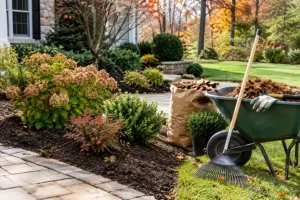
- Work well with landscaping—plant borders, garden beds, and water features look seamless next to stone or pavers.
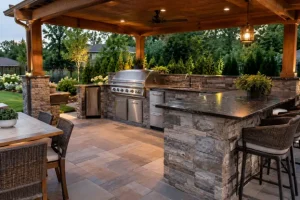
- Can include outdoor kitchens, fire pits, and lounge areas.
- Decks:
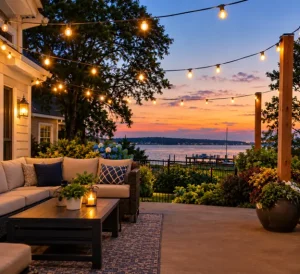
- Provide a warm, inviting look—especially when complemented by string lights and wooden furnishings.
- Create a multi-level design for entertainment zones or seating areas.
- Excellent for homes with scenic views or uneven ground.
- Patios:
Both can be styled to suit your home’s design—modern, rustic, classic, or coastal.
7. Home Value
Adding a patio or deck can boost your home’s resale appeal.
- Decks: Often deliver a high return on investment (ROI), especially for homes in warmer climates or with scenic views. A well-maintained deck can recoup 60–80% of its cost when selling.
- Patios: Also increase property value by improving curb appeal and functionality, especially when integrated with landscaping.
Pro Tip: Use materials that complement your home exterior to maximize ROI and create a unified look.
8. Installation Time
If you’re eager to entertain soon, installation time might influence your decision.
- Patios: Generally take 3–5 days for simple installations but can take longer for intricate designs or large areas.
- Decks: Usually take 1–3 weeks, depending on structural requirements and permits.
Example:
A small backyard patio can be ready for your next barbecue in less than a week, while a custom multi-level deck may take several weeks.
When to Choose a Patio
A patio for backyard entertainment is ideal if:
- Your yard is flat and stable.
- You want a budget-friendly, low-maintenance solution.
- You prefer long-lasting materials like stone or concrete.
- You enjoy integrating garden elements such as flower beds, pathways, and water features.
- You want to design outdoor rooms—like a dining area, kitchen, or lounge—that blend naturally with the landscape.
- Outdoor Dining Patio: Pair a rectangular stone surface with a large dining table and string lights overhead.
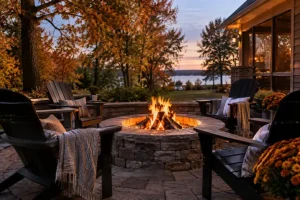
- Fire Pit Patio: Use circular pavers to create a cozy gathering spot for cool evenings.
- Garden Patio: Surround a small paved area with planters, vines, and seating for a private retreat.
- Poolside Patio: Combine concrete and natural stone for slip resistance and easy maintenance.
When to Choose a Deck
Choose a deck if:
- Your home sits on a slope or uneven ground.
- You want a raised platform for better views.
- You love the warmth and character of wood finishes.
- You’re comfortable performing occasional maintenance or prefer composite materials for reduced upkeep.
- You plan to integrate multiple levels or connect different parts of your yard.
Stylish Deck Ideas:
- Wraparound Deck: Extends around the house for multiple entertainment zones.
- Multi-Level Deck: Perfect for separating areas for dining, cooking, and lounging.
- Rooftop Deck: Ideal for urban homes or limited outdoor space.
- Deck with Pergola: Adds shade, charm, and visual appeal for outdoor dining.
Combining Patio and Deck Designs
You don’t necessarily have to choose between a patio or deck—you can have both!
Many creative homeowners blend both structures to enjoy the advantages of each. For example:
- Build a deck connected to the house for easy access from the living room.
- Add a patio below for cooking, relaxing, or entertaining under a pergola or fire pit.
- Mix materials for visual contrast—use warm wood tones for the deck and cool stone textures for the patio.
This layered approach adds visual interest and maximizes your usable space while giving you flexible zones for entertaining outdoors.
Safety and Building Codes
Before starting construction, always check your local building codes.
- Decks: Often require permits, especially if elevated more than 30 inches or attached to the home. Railings, posts, and joists must meet safety standards.
- Patios: Usually don’t need permits if ground-level, though large retaining walls or built-in structures may require approval.
Tip: Work with a licensed contractor familiar with your city’s codes to avoid costly mistakes and ensure long-term safety.
Weather and Climate Considerations
Your local climate affects how your patio or deck holds up over time.
- Hot, sunny regions (like Nevada): Stone patios stay cooler and resist fading better than wood.
- Rainy or humid regions: Composite decking resists rot and moisture damage better than natural wood.
- Cold climates: Concrete patios can crack from freeze-thaw cycles, so use pavers or add an expansion joint to reduce stress.
Choose materials that suit your weather conditions to ensure comfort and longevity.
Eco-Friendly Choices
If sustainability matters to you, both patios and decks offer eco-friendly options.
- Patios:
- Use permeable pavers to absorb rainwater and prevent runoff.
- Choose locally sourced stones or recycled concrete materials.
- Add native plants around the patio for a green, natural environment.
- Decks:
- Composite decking made from recycled wood and plastic reduces waste.
- Use FSC-certified (Forest Stewardship Council) lumber to ensure responsible sourcing.
- Incorporate solar-powered lights for eco-friendly illumination.
Example: A sustainable patio with solar lights, native shrubs, and permeable pavers can serve as a green oasis while conserving resources.
Designing for Entertainment
Whether you’re still weighing a patio vs deck, thoughtful design makes outdoor entertaining effortless.
- Dining Area: Add a large table, shade umbrella, and string lights for evening dinners.
- Outdoor Kitchen: Include a built-in grill, countertop space, and mini-fridge for easy hosting.
- Fire Pit or Fireplace: Creates warmth and ambiance for evening gatherings.
- Seating Zone: Use comfortable outdoor furniture, cushions, and throw blankets for coziness.
- Lighting: Combine task lighting (path lights, wall sconces) with ambient options like lanterns or LEDs.
Pro Tip: Plan electrical outlets early if you want to include lighting, heaters, or outdoor electronics.
Maintenance Tips for Longevity
To keep your outdoor entertainment area in top shape:
- Sweep regularly and remove debris.
- Wash surfaces with mild detergent and water.
- Reseal decks or patios every few years.
- Check deck boards for signs of warp or rot.
- Refill joint sand between pavers to prevent weeds.
Consistency is key. Proper maintenance ensures your outdoor space looks inviting year-round.
Patio or Deck: Which Is Better for You?
Here’s a quick summary to help you decide:
Feature | Patio | Deck |
Cost | Lower | Higher |
Maintenance | Minimal | Moderate |
Lifespan | 30+ years | 15–25 years |
Best for | Flat yards | Uneven slopes |
Materials | Stone, concrete, pavers | Wood, composite |
Comfort | Cooler in shade | Warmer underfoot |
Permits | Rarely required | Often required |
Ultimately, the best patio vs deck choice depends on your budget, yard layout, climate, and personal style.
If you want a permanent, low-maintenance surface, go for a patio for the backyard. If you’d prefer a raised, wood-toned area with character, choose a deck.
Making the Right Choice Between Patio vs Deck
Creating a beautiful outdoor entertaining space brings people together, enhances comfort, and boosts home value. Whether you choose a patio or deck, focus on how you plan to use the space—family meals, parties, or quiet relaxation.
With careful planning, durable materials, and creative touches, your backyard can become the heart of your home—a place where memories are made under the open sky.
Ready to transform your backyard after settling the patio vs deck debate?
Contact the outdoor living experts at Hawkins Landscaping Inc. today to start designing your perfect patio or deck. From cozy backyard patios to multi-level decks and complete outdoor living areas, our team creates spaces tailored to your lifestyle, style, and budget.
With over 50 years of experience serving Frederick County and surrounding areas, we help you explore creative patio ideas, compare materials, and design a layout that maximizes comfort, functionality, and long-term value.
Call (301) 898-3615 or visit hawkinslandscaping.com to schedule your consultation. Ask about our flexible financing options and turn your backyard into your favorite getaway spot.