Why Walkway Ideas and Materials Matter
A walkway does more than just connect spaces in your yard — it defines the style and character of your entire landscape. Whether you’re designing walkway ideas for your garden, front entrance, or patio, the material you choose will determine both the appearance and durability of your walkway.
The three most popular choices for homeowners are pavers, concrete, and natural stone. Each option comes with unique benefits, price points, and styles. Understanding the pros and cons of these materials can help you design walkways for your backyard that look beautiful, fit your budget, and last for years.
In this guide, we’ll break down everything you need to know about pavers, concrete, and natural stone — from style options to maintenance tips — so you can create walkway ideas that perfectly complement your outdoor living space.
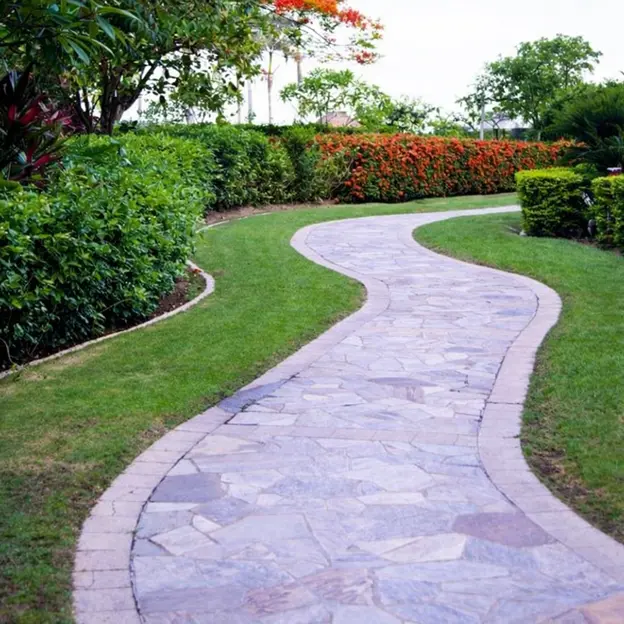
Understanding Your Outdoor Space
Before choosing materials, take a moment to analyze your yard’s layout and design goals. A walkway should match both the function and aesthetic of your home.
Ask yourself a few key questions:
- What areas will the walkway connect? (Front door, patio, garden, driveway)
- What design style best fits your home? (Modern, rustic, traditional, contemporary)
- Do you prefer low maintenance or are you open to upkeep work?
- What is your budget range?
Your answers will guide you toward the right material. Let’s explore how each material performs in different categories.
Concrete Walkway Ideas
What Is a Concrete Walkway?
Concrete is one of the most common materials for residential walkways. It’s created from a mix of cement, water, and aggregates (like sand or gravel) that harden over time. Concrete paths are known for strength, versatility, and affordability, making them a popular choice for practical walkway ideas.
Advantages of Concrete Walkways
- Budget-friendly: Concrete is one of the most affordable walkway materials, making it ideal for homeowners designing walkways on a budget.
- Smooth and consistent look: Ideal for modern or minimalist homes.
- Can be customized: Colored concrete, stamped finishes, and exposed aggregate designs make it possible to mimic natural stone or brick without the higher cost.
- Durable and long-lasting: Properly maintained, a concrete walkway can last 20–30 years or more.
Drawbacks of Concrete Walkways
- Cracks over time: Temperature changes, shifting soil, or heavy loads can cause cracking.
- Repair challenges: Repairs are rarely invisible; patches can stand out unless resurfaced entirely.
- Limited flexibility: Concrete slabs don’t allow for easy replacements of single sections.
- Plain aesthetic: Even with finishes, it may lack the rich texture of pavers or stone.
Maintenance and Care
Concrete paths require regular cleaning and sealing every 2–3 years to maintain color and prevent water damage. Keep an eye on small cracks — sealing them early prevents larger structural issues.
Cost Range
Concrete walkway installation typically costs $6–12 per square foot, depending on design complexity and finishes like staining or stamping.
Paver Walkway Ideas
What Are Pavers?
Pavers are small, interlocking pieces made from materials like concrete, brick, or stone. They come in different colors, shapes, and patterns, giving homeowners unmatched design flexibility. Pavers are ideal for creative walkway ideas and custom design projects.
Advantages of Paver Walkways
- Design versatility: Pavers come in multiple patterns — herringbone, running bond, basketweave, and more — allowing for highly personalized designs.
- Easy to repair: Individual pavers can be replaced if damaged, saving time and cost.
- Slip-resistant surface: Great for poolside paths or sloped areas.
- High durability: Properly installed pavers can last 30–50 years.
- Visual appeal: Creates a polished and upscale look suitable for any architectural style.
Drawbacks of Paver Walkways
- Higher initial cost: Paver installations can be labor-intensive.
- Weed and moss growth: Gaps between pavers may allow weeds to grow if not properly sealed.
- Shifting or settling: Poor base preparation may cause uneven sections or loose pavers.
- Maintenance effort: Requires occasional joint replenishment with polymeric sand.
Maintenance and Care
Paver walkways need regular sweeping, joint sanding, and occasional sealing to lock the surface and enhance color. Because of their interlocking structure, they resist cracks better than poured concrete.
Cost Range
Expect to spend $12–25 per square foot, depending on paver type and pattern complexity. Brick and concrete pavers are usually cheaper than natural stone pavers like travertine or granite.
Natural Stone Walkway Ideas
What Is a Natural Stone Walkway?
Natural stone pathways are made from quarried materials like slate, flagstone, bluestone, limestone, or granite. Each stone piece offers unique shapes, colors, and textures, giving a distinctive, organic charm that’s hard to replicate — perfect for elegant walkway ideas.
Advantages of Natural Stone Walkways
- Timeless beauty: No material matches the natural character and variation of real stone.
- Durability: Stones like granite or slate are extremely tough and weather-resistant.
- Increases property value: Natural stone adds curb appeal and a high-end appearance.
- Eco-friendly: A sustainable option when sourced responsibly.
- Flexible style: Works well for rustic, natural, or elegant designs.
Drawbacks of Natural Stone Walkways
- High cost: Stone materials and installation are expensive, especially for large areas.
- Irregular shapes: Installation requires skill to fit stones together naturally.
- Slippery surfaces: Some stones get slick when wet, requiring texture treatment.
- Heavier material: Requires a strong foundation for long-term stability.
Maintenance and Care
Natural stone walkways need routine cleaning, occasional resealing, and weed control between joints. It’s important to use stone-safe cleaners to avoid surface damage.
Cost Range
Prices vary widely depending on stone type and quarry source, usually ranging from $20–50 per square foot — potentially more for premium materials.
Design Ideas for Walkways
Now that you understand the basics of each material, let’s explore walkway ideas and design inspiration for your yard.
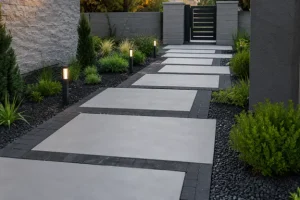
1. Modern Backyard Concrete Walkway
Pair stamped or stained concrete with minimalist garden borders and linear lighting for a sleek, contemporary look. Choose neutral tones like gray or beige for a clean aesthetic.
2. Classic Brick Paver Path
Brick patterns like herringbone or basketweave add charm and tradition to front yard entrances or garden edges. Combine with lush greenery for a timeless effect.
3. Natural Flagstone Garden Path
For an organic, rustic look, irregular flagstones placed in grass or gravel create a charming natural stone walkway that blends seamlessly with garden settings.
4. Mixed Material Design
Combine materials — for example, concrete slabs with stone borders or pavers with gravel infill — for a custom, creative pathway design that enhances visual interest.
5. Stepping-Stone Walkway
Perfect for walkways on a budget, this design uses spaced-out stones or concrete pads with gravel or mulch in between. It’s simple, low-cost, and allows easy water drainage.
Choosing the Best Walkway Ideas for Your Home
Each material suits different priorities for your walkway ideas. Here’s how to decide which is best for you:
Concrete Walkway Options
- You’re looking for affordable walkways on a budget.
- You want a smooth, simple modern look.
- You prefer minimal maintenance.
- You plan to use stamped or colored concrete for decorative value.
Paver Walkway Options
- You want custom patterns, shapes, and colors.
- You’re interested in easy future repairs or replacements.
- You want a durable walkway that resists cracking.
- You’re designing walkways for backyard entertainment areas or patios.
Natural Stone Walkway Options
- You want a luxurious, one-of-a-kind aesthetic.
- Budget is less of a concern.
- You value natural textures and environmentally friendly materials.
- You’re upgrading a high-value landscape or curb appeal project.
Tips for Walkways on a Budget
Building a walkway doesn’t have to break the bank. Here are creative ways to cut costs while keeping your design beautiful and practical:
- Mix materials — use concrete as the main surface and add stone borders for a premium look.
- DIY installation — for smaller paths, install pavers or stepping stones yourself.
- Reuse materials — repurpose leftover bricks or stones from old landscaping.
- Use gravel or mulch — budget-friendly fillers between stepping stones.
- Limit surface area — focus on essential paths only, reducing material use.
By planning carefully, you can achieve attractive walkways on a budget that still look professional and inviting.
Maintenance Tips for Long-Lasting Walkways
No matter what material you choose, proper maintenance ensures your walkway remains safe and beautiful for decades.
- Clean regularly to remove dirt, leaves, and moss.
- Seal surfaces to protect from weather, especially in freeze-thaw climates.
- Trim nearby plants to prevent root damage or staining.
- Inspect for shifting or cracking after heavy rain or temperature changes.
- Resand joints on paver and stone walkways as needed to keep them stable.
Eco-Friendly Walkway Ideas
Sustainability is becoming more important for homeowners. You can make your walkway more environmentally friendly by:
- Choosing permeable pavers that allow rainwater to soak into the ground.
- Selecting local stones to reduce carbon footprint from transportation.
- Using recycled materials, such as reclaimed brick or crushed concrete.
- Planting groundcover between stepping stones for natural drainage and greenery.
These small decisions can greatly reduce environmental impact while keeping your yard functional and stylish.
Common Mistakes to Avoid
When planning walkway ideas for backyard spaces, beginners sometimes run into avoidable problems. Here’s what to watch out for:
- Ignoring slope and drainage: Proper grading prevents pooling water or erosion.
- Skipping a solid base: A poor foundation causes uneven surfaces and trip hazards.
- Choosing materials only for looks: Always consider maintenance and climate suitability.
- Forgetting lighting: Adding solar or low-voltage path lights improves safety and curb appeal.
- Not sealing materials: Unsealed surfaces wear faster and discolor over time.
Avoid these mistakes, and your walkway will remain functional and attractive for many years.
Design Trends for 2026
As outdoor living continues to grow in popularity, new walkway ideas are shaping walkway styles:
- Mixed textures: Combining pavers with gravel or grass inserts for visual contrast.
- Large format slabs: Oversized concrete or stone pavers for a modern, spacious feel.
- Curved paths: Gentle curves create a natural flow that draws guests through the landscape.
- Integrated lighting: LED strips embedded in paver joints for nighttime safety.
- Outdoor art integration: Mosaic inlays or patterned pavers for creative focal points.
These trends can give your walkway design a fresh, modern edge and help your home stand out.
Conclusion: Choosing the Right Walkway Ideas for Your Dream Home
Designing the perfect walkway ideas comes down to balancing style, function, durability, and budget.
- Choose concrete if you want durability at a low price.
- Choose pavers for flexibility, pattern variety, and easy repairs.
- Choose natural stone for timeless aesthetic and long-term value.
Whatever you pick, a well-planned walkway enhances your outdoor experience and adds lasting charm to your property.
Ready to reimagine your outdoor space with a custom walkway that blends beauty, safety, and function?
Hawkins Landscaping Inc. has proudly served Frederick County and surrounding areas for over 50 years, delivering expertly designed and professionally installed walkways tailored to your home and lifestyle. Whether you’re envisioning elegant garden walkways, modern concrete paths, or timeless natural stone walkways, their experienced team will guide you through design ideas, material selection, and budget-friendly installation options that bring your vision to life.
Flexible financing options are available to help make your project more attainable.
Call (301) 898-3615 or visit hawkinslandscaping.com to schedule your walkway design. Transform your yard with a walkway that enhances curb appeal and everyday living—trust Hawkins Landscaping Inc. to create a stunning, functional landscape built to last.