Choosing between solar walkway lights and wired outdoor lighting depends on your yard, your budget, and how much control you want over brightness and reliability. Both options can improve safety and style, but they work in different ways and fit different walkway ideas. If you want simple updates, solar walkway lights may be the easier path, while wired systems usually give more power and consistency.
The best choice comes down to how you use your outdoor space. Some homeowners want quick, low-cost lighting for paths and garden edges. Others want a stronger, more permanent system for walkway lights outdoor areas that need bright, dependable light every night. In this guide, we will compare both options in plain language so you can choose with confidence.
Why Walkway Lights Matter
Walkway lighting does more than make a yard look nice. It helps people see where they are going, reduces trip risks, and makes the outdoor space usable after dark. A well-lit path can also highlight your home and create a warm welcome for guests.
Good lighting should fit the shape and purpose of the path. If the walkway leads to a front door, it may need stronger light. If it winds through a garden, softer lighting may work better. That is why good walkway ideas always include both style and safety.
What Solar Walkway Lights Are
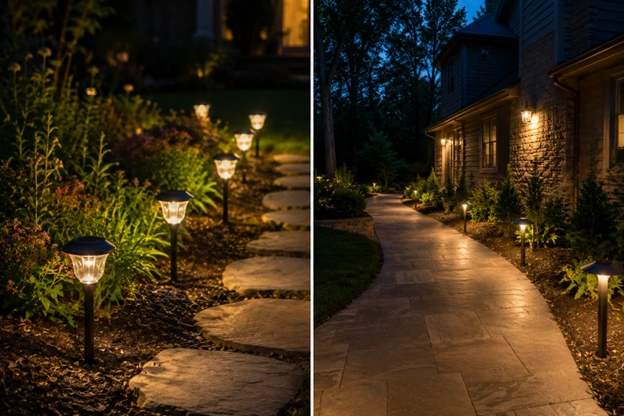
Solar walkway lights use sunlight to charge during the day and light up at night. Most of them have a small solar panel, a battery, and an LED bulb. They do not need wiring, which makes them easy to install.
These lights are often used along:
- Garden paths
- Side yards
- Front walkways
- Patio edges
- Driveway borders
For homeowners who want simple walkway lights solar options, this is often the easiest place to start.
What Wired Outdoor Lighting Is
Wired outdoor lighting connects to your home’s electrical system or to a low-voltage outdoor transformer. It usually gives brighter, more stable light than solar and works every night as long as the power is on.
Wired lights are often used for:
- Main front walkways
- Long paths
- Steps and changes in level
- Areas that need strong safety lighting
- More permanent outdoor designs
If your walkway lights outdoor project needs dependable brightness, wired lighting may be the stronger option.
Solar Lighting Pros
Solar lights are popular for a reason. They are easy to use, affordable, and flexible. You do not need to run wires or dig trenches, which saves time and effort.
Here are the main benefits:
- Easy installation
- Lower upfront cost
- No electricity use
- Flexible placement
- Good for DIY projects
These advantages make solar walkway lights a great choice for homeowners who want a fast and simple upgrade. They are also helpful if you want to test a layout before committing to a more permanent system.
Solar Lighting Cons
Solar lights are not perfect. Their biggest weakness is that they depend on sunlight. If the panels do not get enough sun during the day, the lights may be dim at night or not last very long.
Other downsides include:
- Less brightness than wired lights.
- Battery life can fade over time.
- Performance can drop in cloudy weather.
- Some models feel less durable.
- Light levels may vary from night to night.
If you need strong, constant light for safety, solar may not always be enough. This is important when planning serious walkway ideas for high-use areas.
Wired Lighting Pros
Wired lighting offers a lot of advantages, especially if you want a long-lasting system. It is usually brighter, more reliable, and better suited for important pathways.
Main benefits include:
- Stronger, more consistent light.
- Better for large or dark areas.
- Works every night.
- Can last longer with proper installation.
- More style and control options.
For homeowners who want a polished look and dependable walkway lights outdoor, wired lighting is often the better investment.
Wired Lighting Cons
Wired systems also have downsides. They cost more up front and usually require professional installation or more advanced DIY skills. You may also need permits or electrical work depending on the project.
Other drawbacks include:
- Higher installation cost.
- More planning needed.
- Wires may require trenching or hiding.
- Not as easy to move later.
- Repairs can be more involved.
If your budget is tight or you want something simple, wired lighting may feel like too much at first.
Brightness and Performance
Brightness is one of the biggest differences between the two. Wired lights usually shine more strongly and stay steady all night. Solar lights can be bright enough for many paths, but their output depends on the battery charge and sun exposure.
If your path is short and mostly decorative, solar may work well. If you need the area to stay well lit for safety, wired is often better. Good walkway ideas should always match the light level to the purpose of the path.
Installation Differences
Installation is where these two choices really separate.
Solar lights are usually very simple to install. Many just push into the ground or mount with a few screws. This makes them ideal for quick weekend projects.
Wired lighting needs more planning. You may have to run cables, connect to a power source, and place fixtures carefully. That process takes more time but usually gives a more finished result.
If you want a fast upgrade, walkway lights solar are easier. If you want a more permanent design, wired lighting is worth the extra effort.
Maintenance Differences
Both options need some care, but the type of maintenance is different.
Solar lights need:
- Clean panels
- Battery checks
- Occasional repositioning
- Replacement after battery wear
Wired lights need:
- Bulb or fixture checks
- Cleaning
- Wiring inspection if problems appear
- Occasional professional repair
Solar lights are usually easier to care for at first, but batteries may need replacement sooner. Wired systems take more work upfront, but they often hold up better over time when installed well.
Cost Comparison
Cost matters for most homeowners. Solar lights are usually less expensive at the start. You can buy several lights without paying for wiring or electrical work. That makes them good for smaller projects or tight budgets.
Wired lighting costs more because of the materials and labor involved. But the higher cost may pay off if you want brighter, more durable lights that work every night. For many homeowners, the choice depends on whether they want low-cost convenience or long-term performance.
Best Uses for Solar Lights
Solar lights work best when the goal is simple, decorative, or low-cost lighting. They are a strong fit for:
- Short walkways
- Garden paths
- Side yards with good sun
- Seasonal updates
- DIY projects
They also work well when you want to try out walkway ideas before making a larger investment. If the path is not used heavily at night, solar lights may be more than enough.
Best Uses for Wired Lights
Wired lights work best for places that need steady brightness and more control. These include:
- Front walkways
- Entry paths
- Stairs
- Long or dark paths
- High-traffic areas
If you want reliable walkway lights outdoors for safety and curb appeal, wired lighting is often the stronger choice. It is especially useful where people walk often or where extra light is needed for security.
Style and Design Choices
Both solar and wired lights come in many styles. You can choose from modern, classic, rustic, or decorative looks depending on the feel of your yard. The style should match the home and the walkway shape.
For a clean look:
- Use simple post lights
- Keep spacing even
- Choose warm white light
- Match fixture colors to the home
For a softer garden look:
- Use small solar stakes
- Place lights near plants
- Keep brightness low and warm
Strong walkway ideas use lighting that fits the style of the space, not just the budget.
Safety and Security
Safety is a major reason to add walkway lighting. A dark path can lead to slips, trips, and falls. Good lighting makes steps, edges, and turns easier to see.
Wired lights usually give better safety lighting because they are brighter and more reliable. Solar lights can still improve safety, especially in smaller or less-used paths. For stairs or steep spots, stronger walkway lights outdoor may be the safer choice.
Environmental Considerations
Solar lights are often seen as the more energy-friendly option because they use sunlight and do not add to your electric bill. That makes them appealing for homeowners who want a simple and low-energy solution.
Wired lights use electricity, but low-voltage systems and LED bulbs can still be efficient. If you want a greener system with stronger light, wired LEDs may be a good balance. The best choice depends on how much light you need and how often the path is used.
Which One Lasts Longer
Durability depends on product quality and weather exposure. Solar lights may wear out faster because the batteries and panels can degrade over time. Wired lights often last longer if the fixtures and wiring are done well.
If you want a system that stays reliable for many years, wired lighting may be better. If you want something easy to replace or update, solar is more flexible. For some homeowners, a mix of both is the smartest answer.
A Smart Mixed Approach
You do not always need to choose one or the other. Many yards use both solar and wired lighting in different areas. For example, you might use wired lights at the front entry and walkway lights solar in the garden path.
This approach gives you:
- Bright light where safety matters most.
- Easy installation in less critical areas.
- More design flexibility.
- Better use of your budget.
Mixing both can be one of the best walkway ideas for homeowners who want balance.
Best Walkway Lights: Solar or Wired?
Solar walkway lights and wired outdoor lighting both have real benefits. Solar lights are easy, affordable, and great for quick projects. Wired lighting is brighter, steadier, and better for long-term use. The best choice depends on your space, your budget, and how much light you need.
If you want simple upgrades and flexible placement, walkway lights solar may be the best fit. If you want dependable brightness and a more permanent look, wired lighting is often worth the extra effort. Either way, good walkway lights outdoor can make your yard safer, more beautiful, and easier to enjoy at night.
Ready to Light Your Walkway?
If your path feels too dark or unfinished, now is a great time to improve it. The right lighting can enhance safety, highlight your landscaping, and make your outdoor space more inviting after sunset. Use smart walkway lighting ideas to choose fixtures that complement your home’s style while improving visibility and curb appeal.
For expert guidance and installation, contact Hawkins Landscaping Inc.. With over 50 years of experience serving Frederick County and surrounding areas, our team designs and installs custom walkways, landscape lighting, patios, and outdoor living spaces that combine beauty, function, and lasting value.
Call (301) 898-3615 or visit hawkinslandscaping.com to schedule your consultation today. Ask about our flexible financing options and discover how a professionally lit walkway can transform your yard into a safer, more welcoming outdoor space day and night.