Hiring the right landscaping contractors can make the difference between a fall landscape project that looks good for years and one that creates drainage, safety, plant-health, or budget problems. Whether you need a new patio, planting plan, retaining wall, lawn renovation, drainage solution, walkway, outdoor lighting system, or seasonal cleanup, the contractor should have the right experience, insurance, communication habits, and written process.
The best landscaping services do more than install plants or spread mulch. A qualified team should understand drainage, grading, hardscape construction, soil, plant maturity, local permits, seasonal timing, and how every part of a landscaping design works together.
This guide explains what to look for in landscaping contractors for fall projects, which questions to ask, what should appear in the contract, how to compare proposals, and when a specialized contractor is necessary.
Important: Licensing, registration, insurance, permits, bonding, and contract requirements vary by state and municipality. Verify requirements with the relevant local and state agencies rather than relying only on claims in a contractor’s proposal.
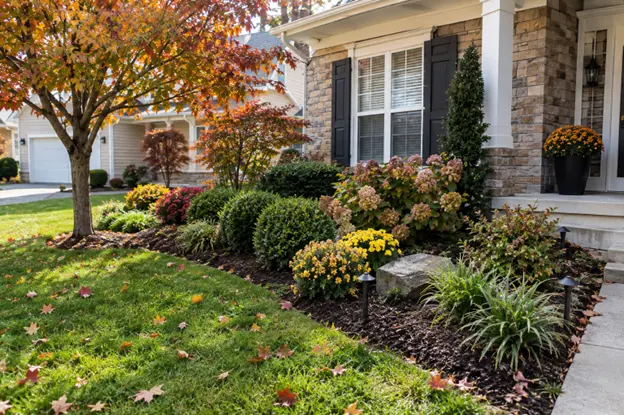
Why Fall Is a Good Time to Hire Landscaping Contractors
Fall can be a productive season for landscape work. Cooler temperatures may be better for many plant installations, while autumn rain can reveal drainage issues, erosion, settling paths, failing lawns, and water movement around foundations.
Common fall projects include:
- Tree and shrub planting
- Native plant gardens
- Perennial border installation
- Mulch and bed refreshes
- Lawn aeration and overseeding
- Drainage corrections
- Patio installation
- Walkway repair
- Retaining walls
- Outdoor lighting
- Fire-pit patios
- Irrigation winterization
- Landscape cleanup
- Grading and erosion control
Fall also gives homeowners a chance to prepare the yard before winter weather arrives. Projects such as drainage improvements, wall repairs, path stabilization, and planting can help prevent bigger problems during snowmelt, freezing rain, and spring storms.
However, the season creates time pressure. Landscaping contractors should not rush a project simply because colder weather is approaching. Good installation still requires proper base preparation, drainage, soil conditions, curing time, and plant care.
Start With Clear Project Goals
Before contacting contractors, write down what you want to improve. You do not need a complete professional drawing before the first consultation, but you should understand the main problems and priorities.
For example, your goal may be to stop water from pooling near a patio, replace an unused lawn area with a native garden, create a safer walkway to a fire pit, build a retaining wall on a slope, or add a fall-friendly outdoor dining area.
Think about:
- What is not working in the yard now?
- Which areas are unsafe or difficult to maintain?
- How do you want to use the space?
- What is your approximate budget?
- Are drainage issues involved?
- Do you need design help?
- Will the project require permits?
- Do you want low-maintenance plants?
- Are you planning work in phases?
- Do you need ongoing maintenance after installation?
The landscaping contractors you contact should be able to ask useful follow-up questions. They should want to understand the property rather than immediately recommend the most expensive option.
A homeowner hiring guide recommends first identifying the tasks that need attention and determining whether the project requires maintenance work, complete landscape redesign, hardscape construction, lighting, water features, or other specialized services.
Maintenance Landscaping Services
Maintenance companies often provide mowing, pruning, mulching, seasonal cleanup, leaf removal, fertilization, and regular plant care.
They may be a good fit if you need ongoing seasonal work rather than major renovation.
Landscape Design Services
Landscape designers help plan the layout, plant selection, circulation, materials, lighting, drainage concepts, and outdoor living zones.
A landscape design may include:
- Site analysis
- Planting plans
- Hardscape layouts
- Material palettes
- Drainage recommendations
- Outdoor lighting plans
- Phasing plans
- Seasonal interest strategies
- Maintenance guidance
Landscape Construction and Hardscaping Services
Construction-focused companies build patios, walkways, retaining walls, steps, pergolas, outdoor kitchens, fire pits, drainage systems, and other permanent outdoor features.
They should have experience with excavation, base preparation, compaction, drainage, masonry, pavers, wall systems, and utility coordination.
Specialized Services
Some projects require additional specialists, such as:
- Arborists for tree work
- Electricians for lighting
- Plumbers for outdoor kitchens
- Gas professionals for fire features
- Irrigation contractors
- Engineers for retaining walls
- Surveyors for property boundaries
- Pool contractors
- Drainage experts
A qualified contractor should be honest about what work falls outside their specialty. Be cautious if a company claims it can do everything but cannot show comparable projects, credentials, or licensed subcontractor arrangements.
Look for Relevant Fall Project Experience
Some landscaping contractors may have excellent reviews for mowing or mulch installation but limited experience with drainage systems, patios, retaining walls, or complex planting design.
Ask to see work that is similar to your project. For a paver patio, request examples of completed installations. Rain garden examples should show how drainage and native planting work together. If you’re installing a retaining wall, ask for projects with comparable height, slope, materials, and drainage conditions.
A contractor portfolio should help you evaluate:
- Overall design quality
- Material consistency
- Planting maturity
- Paver alignment
- Wall construction
- Edging details
- Drainage integration
- Stair design
- Lighting placement
- Finish quality
- Whether the project style matches your goals
Contractor-hiring guidance recommends reviewing projects that are genuinely comparable to your own, speaking with recent references, and verifying that completed work reflects the quality promised in the proposal.
Do not rely only on polished social-media photos. Ask to see photos taken during construction, including base preparation, drainage installation, retaining-wall backfill, and finished details. The work beneath the surface often matters more than the final photograph.
Verify Licensing, Registration, and Insurance
One of the most important steps is verifying that the landscaping contractors you hire have the required credentials for the work they will perform.
Ask for:
- Business name and address
- Contractor license number, if required locally
- Registration number, if applicable
- General liability insurance
- Workers’ compensation insurance
- Bonding information, if applicable
- Certificates of insurance
- Names of subcontractors
- Proof that subcontractors are properly insured
- Permit responsibility details
Do not simply accept a verbal assurance that the company is insured. Ask for a current certificate of insurance, often called a COI. A proper certificate typically identifies the insurer, policy number, coverage limits, and policy dates.
General liability insurance can help protect against accidental property damage or injury claims. Workers’ compensation is important because it helps protect workers and may reduce the risk that a homeowner is held responsible for job-site injuries.
If a contractor plans to use subcontractors, ask who is responsible for supervising them and whether their licenses and insurance have been verified. A contractor who cannot clearly explain the subcontractor arrangement may create unnecessary risk.
Check References and Reviews Carefully
Online reviews can be useful, but they should not be the only factor in your decision. Read reviews for patterns instead of focusing only on the star rating.
Look for comments about:
- Communication
- Timeliness
- Budget accuracy
- Change-order handling
- Cleanup
- Respect for property
- Problem solving
- Quality of materials
- Warranty response
- Project supervision
- Drainage performance
- Plant survival
- Long-term durability
Ask the contractor for recent references from projects similar to yours. When calling former clients, ask open-ended questions.
You might ask whether the contractor stayed close to the budget, whether the crew showed up consistently, whether the project was completed on schedule, whether the property was kept clean, and whether the client would hire the company again.
Get Multiple Detailed Estimates
It is wise to get more than one proposal, especially for significant projects. Three detailed estimates can help you compare scope, materials, timeline, construction method, and pricing.
However, do not choose based only on the lowest number. A low bid may exclude necessary excavation, drainage, base material, compaction, cleanup, permits, plant warranties, or proper installation methods.
Compare estimates line by line. Look for differences in:
- Scope of work
- Materials
- Brand or product lines
- Quantities
- Plant sizes
- Plant species
- Soil amendments
- Mulch depth
- Paver base depth
- Drainage material
- Retaining-wall system
- Lighting fixtures
- Labor
- Equipment
- Hauling
- Disposal
- Permit fees
- Warranty
- Cleanup
- Timeline
- Payment schedule
A trustworthy contractor should provide a clear written estimate that identifies labor, materials, additional fees, and work included in the project.
Ask About Drainage and Grading
Drainage is one of the most important parts of outdoor construction. A patio, retaining wall, garden bed, or walkway can fail if water is not managed correctly.
For fall projects, ask the contractor:
- Where will rainwater go?
- How will the project affect existing drainage?
- Will water move away from the foundation?
- Is a swale, drainpipe, catch basin, or rain garden needed?
- Will downspouts be extended?
- How will the patio slope?
- Is the property prone to standing water?
- What will happen during heavy rain?
- Does the retaining wall need drainage aggregate and pipe?
- Will the project increase runoff toward a neighbor?
A good contractor should inspect the property after considering slope, soil, downspouts, low areas, existing hardscape, and nearby structures. They should not simply install a patio or wall without discussing water management.
Ask About Materials and Installation Methods
The quality of materials and methods can strongly affect the life of a project.
For patios and walkways, ask:
- How deep will the excavation be?
- What base material will be used?
- How will it be compacted?
- How will the surface slope for drainage?
- What edge restraint will be installed?
- What joint material will be used?
- How will cuts be finished?
- What happens if pavers settle?
For planting, ask:
- Which plants will be used?
- What size will they be at installation?
- How much mulch will be applied?
- Will soil amendments be included?
- How will roots and mature tree areas be protected?
- What watering is required after installation?
- Is a plant warranty included?
A professional contractor should be able to explain the method in plain language. If they avoid details or say “we always do it this way” without explaining why, be cautious.
Understand the Project Schedule
Fall weather can create scheduling challenges. Rain may delay excavation, masonry, concrete, planting, staining, or sealing. Early freezes can affect concrete, mortar, plants, and certain installation materials.
Ask the contractor:
- What is the estimated start date?
- What is the expected completion date?
- What weather conditions could delay work?
- Will you complete the project in phases?
- How many crew members will the contractor assign?
- Will the same crew remain on site?
- Who will supervise daily work?
- How will the crew deliver and store materials?
- When will inspections occur?
- What happens if weather or other issues delay the project?
A good schedule includes reasonable flexibility for weather without being vague. The contractor should communicate delays promptly and explain the revised plan.
Your contract should list start and estimated completion dates for larger projects and explain how you and the contractor will manage change orders and weather delays.
Get a Comprehensive Written Contract
Never begin a significant project without a written contract. A clear contract protects both the homeowner and contractor by defining expectations before excavation begins.
The contract should include:
- Contractor contact information
- License or registration information
- Scope of work
- Project drawings, if applicable
- Material list
- Plant list
- Labor costs
- Total price
- Payment schedule
- Deposit amount
- Start date
- Estimated completion date
- Permit responsibility
- Cleanup responsibilities
- Warranty terms
- Change-order process
- Subcontractor details
- Insurance information
- Dispute process
- Conditions for delays
- Lien-release requirements where applicable
Hiring guidance recommends that contracts clearly describe the work, price, payment schedule, timeline, and guarantees. It also recommends tying payment to project milestones rather than simply calendar dates.
Understand Payment Schedules
A reasonable payment schedule should follow actual project progress. For example, a contractor may request a deposit to schedule the project and order materials, then collect additional payments as the team completes excavation, base preparation, installation, and other agreed milestones.
Ask:
- What deposit will the contractor require?
- When should you make progress payments?
- What work must the contractor finish before each payment?
- Does the payment schedule include material delivery?
- Should you complete a final walkthrough before making the last payment?
- Will the contractor provide lien releases?
- What should you do if materials arrive late?
Do not make payments based only on verbal promises. Record any changes to price, materials, timeline, or scope in a written change order.
Discuss Warranties and Aftercare
Fall projects may include plants, hardscape, drainage systems, lighting, or irrigation. Each may have a different warranty.
Ask:
- Is there a plant warranty?
- What does it cover?
- How long does it last?
- What watering is required from the homeowner?
- Are replacement plants included?
- Is hardscape work guaranteed?
- What happens if pavers settle?
- Is the lighting system covered?
- Is workmanship covered separately from materials?
- Who handles manufacturer claims?
- Is seasonal maintenance available?
A landscape contractor should explain not only what is covered but also what is excluded. For example, a plant warranty may not cover failure due to inadequate homeowner watering, deer damage, severe weather, or improper care after installation.
Hardscape warranties may not cover settlement caused by issues outside the installed area, severe weather events, or changes made by other contractors.
Choose Landscaping Contractors With Confidence
The right contractor can make your fall project smoother, safer, and more successful. Start by defining your goals, identifying whether you need maintenance, planting, hardscape, drainage, or complete landscaping design, and then compare contractors based on experience—not only price.
Before signing with landscaping contractors, verify credentials, review comparable projects, ask for references, compare detailed estimates, confirm insurance, and insist on a clear written contract. The best landscaping services will explain materials, drainage, timing, maintenance, and warranties in language you can understand.
Ready to improve your outdoor space this fall? Start with a professional site consultation to identify what your property needs most. Whether you’re dealing with drainage problems, outdated planting beds, an unused patio area, or a walkway that needs an upgrade, a detailed plan can help turn your ideas into a practical outdoor space.
At Hawkins Landscaping Inc., our professional landscaping services can help with everything from drainage solutions and new planting beds to patios, walkways, outdoor lighting, and complete landscape design. We can help you select materials and features that complement your home while creating a yard that is beautiful, functional, and built for changing seasons.
With thoughtful planning and quality installation, your favorite landscaping ideas can become long-lasting improvements you’ll enjoy for years to come.
Ready to start your fall landscaping project? Call (301) 898-3615 or visit Hawkins Landscaping Inc. to schedule your consultation. Ask about flexible financing options for your outdoor project.