October can be an excellent time for deck installation—provided the local weather, ground conditions, permit timeline, and concrete-footing schedule are all favorable. Cooler temperatures, lower humidity in many regions, and potentially better contractor availability can make fall a smart time to begin a project. The biggest limitation is simple: the work must be planned early enough to complete excavation, footings, inspections, framing, and weather-sensitive finishing before the ground freezes or prolonged cold weather arrives.
The answer is not the same for every property. Homeowners in mild or mid-Atlantic climates may have a long October construction window, while northern or high-elevation areas may need to move quickly because frozen soil and cold-weather concrete requirements can complicate footing work. A qualified deck builder can assess the site, local frost-depth requirements, permits, soil conditions, and forecast before recommending a schedule.
This guide explains when October deck construction works well, when it may be too late, what materials perform best in fall, how permits affect the schedule, and what to expect from professional deck installation services.
Important: Building codes, permit requirements, frost-depth rules, setbacks, structural requirements, and inspection processes vary by location. Confirm requirements with your local building department before work begins.
The Short Answer
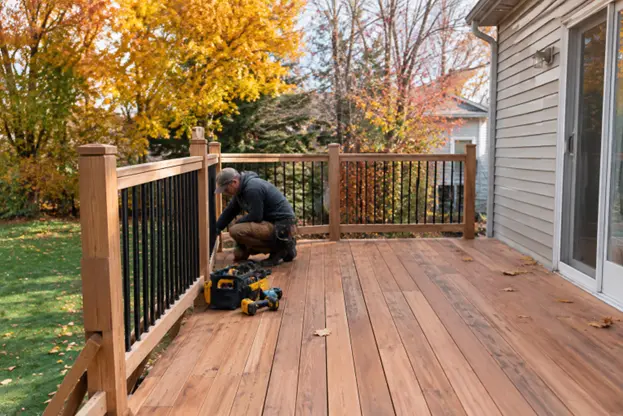
October is a good time for deck installation when the ground is still workable, temperatures remain suitable for footing concrete and finishing products, the contractor can secure permits on time, and there is enough time to complete the project before hard winter conditions arrive.
For many homeowners, fall offers a valuable advantage: the crew can finish the deck and have it ready for the first warm days of spring. Cooler weather can also be more comfortable for crews and may reduce some of the material movement associated with extreme summer heat and humidity.
However, October is not the right time to start every deck project. If the forecast includes persistent freezing temperatures, early snow, saturated soil, or long permit delays, it may be smarter to complete design and permitting in fall and schedule construction for spring.
Why October Can Be a Smart Time for Deck Installation
October has several advantages for new deck construction. Summer heat has passed, but the ground may still be unfrozen and dry enough for excavation, footings, and framing. Contractors may also have more schedule flexibility than during the spring and early-summer rush.
Many deck companies experience their busiest period from late spring through summer. By fall, homeowners may find better appointment availability and more time for a detailed design conversation.
Fall deck construction can offer:
- Cooler conditions for crews.
- Less extreme heat on decking materials.
- Potentially lower humidity.
- Reduced demand for contractor schedules.
- More flexibility for design and material selection.
- Less disruption to actively growing lawns and garden beds.
- A completed deck ready for spring.
- More time to plan furniture, lighting, pergolas, and landscaping over winter.
- Possible end-of-season material promotions.
Fall construction may also reduce the impact of equipment traffic on the yard because many plants are moving toward dormancy. Outdoor construction guidance notes that reduced active growth can make it easier for lawns and landscaping to recover by spring after foot traffic and excavation.
However, “fall” is not one consistent weather condition. October can be mild and dry in one region but cold, wet, or snowy in another. Always plan around your local climate rather than the calendar alone.
The Main Challenge: Footings and Frozen Ground
The biggest limitation for October deck installation is usually the footing stage.
Most decks require footings that extend below the local frost line. The frost line is the depth at which soil may freeze during winter. Footings installed too shallow can be affected by frost heave, which may cause posts, beams, and the deck structure to move.
Once ground begins to freeze, digging footing holes becomes slower, more difficult, and sometimes impractical. In very cold regions, the season for excavation may end much earlier than homeowners expect.
A recent cold-climate deck construction report noted that once ground freezes, hand-dug and auger-drilled footings can become slower and more expensive, while local codes may require footings to reach a specific frost depth below finished grade.
Before beginning a project in October, ask your deck builder:
- What is the local frost-depth requirement?
- Is there enough time to dig and pour footings?
- Does the site have rocky, clay-heavy, wet, or compacted soil?
- Are there existing drainage problems?
- Will the deck require helical piers, concrete footings, or another foundation system?
- Are inspections required before concrete is poured?
- What happens if weather delays footing work?
If the property is in a northern climate, mountain region, or area with an early frost date, schedule the project as soon as possible. Waiting until late October or November may create unnecessary risk.
Concrete Footings Need Proper Weather Protection
Concrete footings require attention in cool weather. Rather than simply “drying,” concrete cures through a chemical process. Low temperatures can slow curing, and freezing before the material reaches adequate strength can reduce its long-term performance.
Cold-weather concrete guidance commonly defines cold conditions as periods when temperatures fall to or are expected to fall below approximately 40°F during the protection period after placement. In those conditions, concrete may need insulated blankets, heated enclosures, special mix designs, or other protection to cure properly.
Municipal concrete guidance notes that concrete that freezes too early can lose significant potential strength and should be protected from freezing during the early curing period.
A professional deck builder should monitor the forecast before pouring footings. They may reschedule the pour, use cold-weather concrete practices, protect the footing with insulated blankets, or extend curing time when needed.
Do not assume that a contractor can safely pour concrete in any weather. If freezing conditions are expected immediately after the pour, it may be best to delay the work until a suitable weather window.
Material Performance in Fall
Decking materials respond differently to temperature and moisture. October conditions can be favorable for many installations, but proper storage, acclimation, spacing, and fastening remain important.
Pressure-treated lumber
Pressure-treated lumber is common for deck framing and can be installed in fall if the material is stored properly and the site is dry enough for construction.
The surface of treated lumber may be wet when delivered, so it should not automatically be stained or sealed immediately. Allow the wood to dry according to the manufacturer’s recommendations before applying a finish.
Cooler, drier fall conditions can be more favorable for staining or sealing wood than extreme summer heat, but check the product label for minimum and maximum temperature requirements.
Cedar and redwood
Cedar and redwood are popular for visible decking, railings, and pergolas. They offer natural warmth but still need maintenance and weather protection.
As with other wood products, avoid staining or sealing during rain, extreme humidity, or temperatures outside the coating manufacturer’s recommended range.
Composite decking
Composite decking is a strong choice for homeowners who want lower maintenance. It generally resists rot, insects, and many moisture concerns better than wood.
Composite boards expand and contract with temperature changes, so the installer must follow manufacturer spacing guidelines. Fall temperatures can make composite boards easier to handle than extreme summer heat, when materials may become softer or hotter to work with.
PVC decking
PVC decking is highly moisture-resistant and can work well in wet climates. Like composite materials, it needs correct spacing and installation according to the manufacturer’s instructions.
Aluminum decking
Aluminum decking is durable, lightweight, and resistant to rot. It can be useful for waterproof deck systems, upper-level decks, and modern designs.
A professional deck builder can recommend the best material based on exposure, maintenance preferences, budget, snow load, drainage, and the overall outdoor living plan.
Contractor Availability May Be Better in October
One reason homeowners choose fall construction is contractor availability. Spring and summer are often peak seasons for deck services, patios, landscaping, roofing, and exterior renovations. By October, some contractors may have more open project windows.
This does not mean every fall project will be cheaper. High-quality contractors may still be booked well in advance. However, fall can offer more flexibility for design meetings, site evaluations, material ordering, and project scheduling.
Fall construction sources frequently cite more flexible contractor scheduling and the chance to have a deck completed before spring demand returns.
When contacting deck installation services, ask:
- What is the earliest available start date?
- How long will permitting take?
- What is the expected construction duration?
- How many crew members will be assigned?
- Will the same crew work continuously?
- What weather conditions may delay the project?
- Is there a deadline for footing excavation before the ground freezes?
- Can materials be ordered and stored safely?
- What happens if cold weather interrupts construction?
A professional contractor should give a realistic answer. Be cautious of anyone who promises an unusually fast build without asking about permits, footing depth, inspections, site access, utilities, or weather.
Permits Can Determine the Schedule
Permits are often one of the biggest schedule factors. A project may be physically possible in October, but the permit process could delay construction until winter.
Many decks require a permit because they involve structural loads, footings, railings, stairs, electrical work, and attachment to the home. Some municipalities also require zoning approval, setback review, plot plans, or engineered drawings.
Permit requirements may apply to:
- Attached decks
- Elevated decks
- Decks above certain heights
- Roofed decks
- Pergolas
- Electrical lighting
- Outdoor kitchens
- Gas fire features
- Structural stairs
- Deck expansions
- Railings and guard systems
Do not begin construction without confirming permit requirements. Skipping permits can lead to stop-work orders, fines, failed inspections, insurance concerns, resale complications, and expensive reconstruction.
Fall may offer faster permit processing in some locations, but this varies widely. One deck-industry guide reports that fall permit turnaround may be shorter than spring in some markets, while other areas still have significant review times.
Start permit conversations early. A deck builder should explain who will prepare drawings, submit applications, pay permit fees, schedule inspections, and respond to plan-review comments.
October Is Ideal for Planning Even If You Build Later
Even if October is too late for actual construction in your area, it can still be one of the best months to begin the deck-building process.
A fall planning phase can include:
- Site assessment
- Design consultation
- Measurements
- Material selection
- Permit applications
- Structural drawings
- Budget planning
- Contractor selection
- Landscape coordination
- Lighting plan
- Furniture plan
- Drainage evaluation
- Spring scheduling
This approach gives homeowners time to make thoughtful decisions instead of rushing in spring when contractors may be fully booked.
A fall design-and-permitting process can help ensure the project is ready to start as soon as spring weather permits excavation and footing work.
Planning early also allows you to coordinate the deck with future projects such as patios, walkways, pergolas, outdoor kitchens, landscape lighting, drainage, planting beds, or fire-pit areas.
Questions to Ask a Deck Builder
Choosing the right deck builder is as important as choosing the right season. Ask questions that reveal experience, process, and attention to structural details.
Ask the contractor:
- Are you licensed or registered as required locally?
- Do you carry general liability and workers’ compensation insurance?
- Can you provide a certificate of insurance?
- Do you handle permits and inspections?
- Have you built decks similar to mine?
- Can you show recent project photos?
- What foundation system do you recommend?
- How deep will footings be?
- How will you handle cold-weather concrete?
- What decking material is best for my property?
- How will the deck drain?
- Will the deck attach to the house?
- How will you flash the ledger board?
- What railing system will you use?
- What is the estimated construction schedule?
- What warranty do you provide?
- Who will supervise the project?
- How are change orders handled?
- How will the yard be protected during construction?
- What is included in cleanup?
A qualified deck builder should be comfortable answering these questions clearly. They should explain why they recommend specific materials and methods rather than simply offering the cheapest option.
What a Professional Deck Installation Process Looks Like
A professional deck installation usually follows several stages.
The project begins with consultation and site assessment. The contractor measures the yard, evaluates access, reviews existing conditions, and discusses intended use.
The next stage is design. This may include a simple sketch for a basic deck or detailed drawings for a larger project with stairs, railings, lighting, pergolas, kitchens, or multiple levels.
Then comes permitting. The contractor or homeowner submits plans, plot information, and structural details to the local authority.
After permits are approved, materials are ordered. The contractor schedules excavation, footing work, inspections, framing, decking, railings, stairs, and final details.
During construction, the crew should protect nearby plants, lawn, siding, and hardscape. A good contractor will also manage debris, material storage, equipment access, and daily cleanup.
Final work may include lighting, skirting, fascia, gates, furniture layout, landscaping repairs, and a final walkthrough.
Deck installation sources emphasize that a successful project should account for layout, utility access, drainage, access from doors, furniture clearance, structure, and material compatibility before construction begins.
Coordinate the Deck With the Yard
A deck should not feel like an isolated platform attached to the house. The best design connects the deck to the landscape.
Consider adding:
- Steps to the lawn
- A paver landing
- A walkway to a fire pit
- Raised planters
- Privacy screens
- Pergola shade
- Low-voltage lighting
- Retaining walls
- Native planting beds
- A gravel seating area
- Under-deck drainage
- Storage
- Outdoor kitchen space
If the deck is elevated, plan how people will move between the deck and the backyard. A well-designed stairway, landing, and path can make the entire yard feel more usable.
Fall is also a good time to plan the landscaping around the deck. Depending on local weather and soil conditions, you can plant trees, shrubs, grasses, and perennials after construction is complete.
Fall Weather Risks to Consider
October construction has advantages, but it also comes with risks.
Rain can delay excavation, make soil difficult to compact, interfere with staining, and slow concrete work. High wind can delay railing installation, roofing, or pergola work. Early snow can limit access and create unsafe conditions.
Shorter days can reduce working hours. Heavy leaf fall can create slippery work conditions and complicate cleanup.
Cold weather may delay concrete curing, paint, stain, sealant, adhesive, and caulk. Many products have specific temperature and moisture requirements.
Deck construction guidance recommends checking the weather forecast before starting moisture-sensitive tasks such as staining and allowing enough time for weather delays during fall projects.
A professional contractor should have a weather plan. This may include covering materials, protecting fresh concrete, storing composite boards properly, delaying stain application, and adjusting the schedule rather than rushing work in unsafe conditions.
Signs You Should Wait Until Spring
October may not be the right time to build if:
- The ground is already freezing.
- The site is saturated.
- You cannot safely complete footing excavation.
- Permit review will extend into winter.
- You cannot protect concrete from freezing.
- The contractor cannot guarantee proper footing installation.
- Snow or severe weather may arrive soon.
- Important materials are unavailable.
- You have not finalized your budget or design.
- You need major grading or drainage work first.
- You need engineering for the site that cannot be completed in time.
Waiting until spring does not mean losing the entire season. Use fall and winter to complete the design, permits, material choices, and contractor selection. This can put your project ahead of the spring rush.
Deck Maintenance After a Fall Installation
If your deck is installed in October, it should still receive basic maintenance before winter.
Keep the surface clear of leaves, dirt, and standing water. Leaves can trap moisture and stain wood or composite boards.
Inspect railings, stairs, fasteners, and ledger connections after the first major storm. Check that water drains away from the home and does not pool beneath the deck.
Store furniture cushions and outdoor accessories. Use breathable covers for furniture that remains outside.
If the deck is wood, do not rush staining or sealing unless the wood moisture content, weather, and manufacturer instructions indicate that it is ready. New pressure-treated lumber may need additional drying time.
Use plastic or rubber-edged shovels rather than metal edges for snow removal. Metal shovels can scratch decking surfaces and catch on board edges.
Plan Your October Deck Installation Today
October can be an excellent time for deck installation when weather, permits, footing conditions, and contractor scheduling align. Cooler temperatures, potential schedule flexibility, and the chance to have a finished deck ready for spring make fall a smart season to explore your options.
The most important step is to start early. Contact a qualified deck builder for a site assessment, material recommendations, permit guidance, and a realistic schedule based on your local frost date and forecast.
Ready to create a better outdoor living space? Contact Hawkins Landscaping Inc. for professional deck installation services and a custom deck plan designed around your home, yard, budget, and lifestyle.
Whether you’re considering a small platform deck, a multi-level entertaining area, a pergola-covered dining space, or a low-maintenance composite deck, our experienced team can help you choose the right layout, materials, and features for your property. From planning and site preparation to installation and finishing details, we focus on creating an outdoor space that is functional, attractive, and built for everyday use.
With over 50 years of experience serving Frederick County and surrounding areas, Hawkins Landscaping Inc. can help bring your outdoor living ideas to life while considering Maryland’s changing weather and seasonal conditions.
Ready to upgrade your backyard with a professionally planned deck? Call (301) 898-3615 or visit Hawkins Landscaping Inc. to schedule your consultation. Ask about our flexible financing options for your outdoor project.