Late summer can be one of the toughest times of year for a landscape. Intense sun, dry soil, high humidity, warm nights, and inconsistent rainfall can leave many plants looking tired just when homeowners want their outdoor spaces to look their best. The good news is that the right walkway border plants can keep a garden colorful, structured, and inviting well into fall.
Whether you are updating a narrow path, creating new walkway designs, or improving the appearance of a walkway to the front door, plant choice makes a major difference. The best border plants for late-summer conditions combine long bloom periods, heat tolerance, foliage texture, drought resistance, and an appropriate mature size.
This guide covers 15 dependable plant options, practical layout strategies, maintenance advice, and creative walkway ideas to help you design a polished garden path that remains attractive during the hottest part of the growing season.
Why Walkway Border Plants Matter
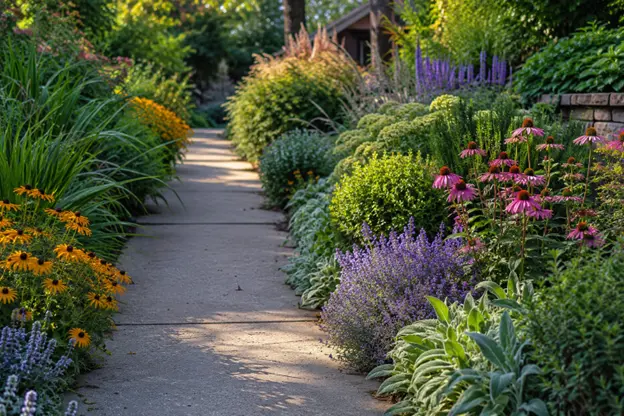
Walkway borders do more than add flowers beside a path. They guide visitors, frame the architecture of the home, soften hardscape materials, and create a more intentional transition from the street, driveway, or garden to the entry.
The right walkway border plants can make a simple concrete or paver path feel more welcoming. It can also reduce the visual dominance of a large lawn, hide the edge of a foundation, direct foot traffic, and add a seasonal focal point near the front entry.
For late-summer success, choose plants that can handle the exact conditions beside the walkway. Paths often create challenging microclimates because pavement reflects heat, limits root space, and can dry the soil quickly. Plants that thrive in a cool, moist garden bed may struggle next to a south-facing stone or concrete path.
When planning walkway designs, consider:
- How many hours of direct sun the path receives.
- Whether pavement reflects afternoon heat.
- Soil drainage and compaction.
- Width of the planting bed.
- Desired plant height at maturity.
- Foot traffic and whether plants may be brushed against.
- Water access during drought.
- Views from the street and inside the home.
- The style of the house and existing landscape.
A well-planned walkway border uses plants that look good from multiple angles and remain in scale with the path. Avoid tall, floppy plants that obscure the route or thorny plants that make visitors uncomfortable.
What Makes a Plant Suitable for Late Summer?
The best late-summer walkway plants often share several characteristics. They either begin blooming in midsummer and continue into fall, or they have foliage and seed heads that remain attractive after flowers fade.
Look for plants that offer:
- Heat and drought tolerance once established.
- Strong stems that do not collapse into the walkway.
- Long bloom windows or late-season flowering.
- Compact or manageable mature sizes.
- Resistance to pests and disease in humid weather.
- Attractive foliage between bloom cycles.
- Pollinator value where appropriate.
- Low maintenance needs.
1. Sedum
Sedum, often called stonecrop, is one of the most reliable walkway border plants for hot and dry conditions. Its fleshy foliage stores moisture, helping it tolerate dry soil and summer heat once established.
Low-growing sedums work well along the very edge of a path, between stepping stones, or in rock gardens. Upright sedums add more height and often develop late-summer flowers followed by attractive seed heads that persist into fall and winter.
Why sedum works near walkways:
- Tolerates heat and drought.
- Requires little maintenance.
- Handles lean, well-drained soil.
- Offers sculptural foliage.
- Attracts pollinators when in bloom.
- Works in modern, cottage, and naturalistic walkway designs.
2. Black-Eyed Susan
Black-eyed Susan, or Rudbeckia, delivers bright golden-yellow flowers with dark centers from summer into early fall. It is a classic choice for cheerful, pollinator-friendly walkway ideas.
These plants work especially well beside brick, stone, and natural paver paths because their warm color complements earthy hardscape materials. They can also create a welcoming effect along a walkway to the front door when planted in generous groups.
Black-eyed Susan typically performs best in full sun and is available in both compact and taller varieties. Some types can reach several feet high, so select shorter cultivars for narrow entry paths.
Benefits include:
- Long-lasting late-summer color.
- Strong visual impact.
- Pollinator appeal.
- Good performance in sun.
- Easy integration with ornamental grasses and asters.
3. Russian Sage
Russian sage adds airy clouds of lavender-blue flowers and silvery foliage to sun-drenched borders. Its upright but open habit can soften the edge of a wide pathway without creating a solid wall of foliage.
This plant thrives in heat, strong sun, and well-drained soil. It is a good option for homeowners seeking low-water walkway designs with a relaxed, Mediterranean-inspired appearance.
Russian sage can grow 3 to 5 feet tall, depending on the variety, so it is best for wider beds rather than narrow strips directly beside a path. Place it toward the back of the border and use lower plants in front to maintain clear access.
Pair Russian sage with:
- Sedum
- Ornamental grasses
- Coneflowers
- Yarrow
- Lavender
- White or yellow flowering perennials
4. Coneflower
Coneflowers, or Echinacea, are valuable for late-summer borders because they combine upright blooms, strong color, and wildlife value. Their daisy-like flowers come in purple, pink, orange, yellow, white, and red tones, making them easy to coordinate with many home styles.
Use compact coneflower varieties near a walkway to the front door, especially if the goal is a tidy but lively planting scheme. Taller cultivars work well farther back in wider borders.
Coneflowers are particularly effective when planted in groups of three, five, or seven rather than scattered individually. Repetition creates a stronger visual rhythm and makes the walkway feel more professionally designed.
Coneflowers prefer:
- Full sun to light shade.
- Well-drained soil.
- Moderate watering during establishment.
- Space for air circulation.
- Occasional division or cleanup as needed.
5. Lantana
Lantana is a heat-loving flowering plant that can provide continuous color during late summer. It is often grown as an annual in colder climates and as a perennial in warm regions.
Its clustered blooms may include yellow, orange, pink, red, purple, or multicolored flowers. It works well in sunny entry beds, containers, and the front edge of a border.
Lantana is especially useful for hot walkway designs because it:
- Handles strong summer heat.
- Blooms for an extended period.
- Attracts butterflies.
- Requires relatively low water once established.
- Works in garden beds and containers.
6. Ornamental Grasses
Ornamental grasses bring motion, texture, and late-season interest to walkway borders. As summer flowers fade, their leaves and plumes often become even more noticeable.
For narrow borders, choose compact clump-forming grasses rather than large, spreading varieties. Good options may include blue fescue, prairie dropseed, dwarf fountain grass, or other regional choices.
Grasses work well in many walkway ideas because they:
- Soften straight edges.
- Add movement in the breeze.
- Require less water than many traditional border plants.
- Complement flowering perennials.
- Provide fall and winter structure.
- Work in formal, contemporary, and naturalistic gardens.
Use grasses in repeated clusters rather than planting one of every type. A row of three or five identical clumps can create a clean, cohesive border along a path.
7. Coreopsis
Coreopsis is a sunny, cheerful perennial known for its long bloom period and low-maintenance character. Its yellow, orange, red, or bi-colored blooms can brighten a walkway border from summer into early fall, making it one of the more dependable walkway border plants for a sunny path.
Threadleaf types have fine, airy foliage that pairs well with bold-leaved plants, while broader-leaved varieties create a fuller look. Many cultivars remain compact enough for front-of-border positions.
Coreopsis grows best in:
- Full sun
- Well-drained soil
- Average to lean soil conditions
- Areas with good air circulation
Deadheading can extend the flowering period and keep the plants neat. However, not every variety responds the same way, so follow the recommendations for the specific cultivar you choose.
8. Salvia
Perennial salvia provides vertical flower spikes in shades of blue, violet, pink, and white. Many varieties bloom in early summer and repeat into late summer when deadheaded or trimmed back after the first flush.
Salvia is useful in walkway designs because it creates a strong upright shape without taking up excessive width. It also contrasts beautifully with rounded flowers such as coneflowers and black-eyed Susans.
Choose compact varieties for narrow pathways. Taller types should be positioned farther back in the border or paired with a wider path.
Many salvias prefer:
- Full sun
- Good drainage
- Moderate to low water after establishment
- A light trim after flowering
- Space between plants for airflow
9. Asters
Asters are among the most important late-season flowering plants. They often begin blooming when many summer perennials are fading, bringing shades of purple, lavender, pink, blue, and white to the walkway border.
Compact asters are excellent near paths because they create mounded color without blocking the route. Larger types can be used toward the back of a broader bed or along a long garden walk.
Asters are especially useful for:
- Extending color into early fall.
- Supporting pollinators.
- Pairing with ornamental grasses.
- Creating cool-toned contrast with yellow rudbeckia.
- Filling seasonal gaps in the border.
To prevent plants from becoming too tall or floppy, pinch back stems in late spring or early summer, depending on the variety. Do not pinch too late, as it may delay flowering.
10. Agastache
Agastache, sometimes called hyssop or hummingbird mint, produces aromatic foliage and tall flower spikes in shades of blue, purple, pink, orange, or red. Its upright form makes it a strong accent plant for sunny borders.
Many Agastache varieties bloom from summer into fall, and the flowers attract hummingbirds, butterflies, and bees. Garden Design identifies Agastache as a sun-loving perennial with a summer-to-fall bloom period.
Agastache works best in:
- Full sun
- Well-drained soil
- Areas with good air circulation
- Borders with room for upright growth
- Drought-tolerant planting combinations
11. Yarrow
Yarrow is a resilient perennial with feathery foliage and flat-topped flower clusters. Its blooms may be yellow, white, pink, coral, red, or gold, offering plenty of design flexibility.
Yarrow is one of the more reliable walkway border plants for hot, sunny, lower-water areas. Its fern-like leaves provide texture even when the flowers are not at their peak.
Use yarrow in drifts to create a casual, meadow-inspired effect. It pairs especially well with ornamental grasses, coneflowers, sedum, and black-eyed Susan.
Yarrow generally prefers:
- Full sun
- Well-drained soil
- Lean to average soil
- Moderate water while becoming established
- Occasional deadheading for a longer display
12. Lavender
Lavender brings fragrance, silvery foliage, and a clean, tailored look to a walkway to the front door. It is one of the most useful walkway border plants for sunny, well-drained sites, especially where the path receives reflected heat.
Lavender works beautifully with stone, gravel, brick, and paver walkways. Its mounded form can define the border while leaving the path open and easy to navigate.
For the best performance:
- Choose a variety hardy in your region.
- Plant in full sun.
- Provide sharp drainage.
- Avoid overwatering.
- Prune lightly after flowering.
- Keep mulch away from the crown.
13. Blanket Flower
Blanket flower, or Gaillardia, provides warm red, orange, yellow, and burgundy blooms that suit late-summer gardens. It thrives in bright sun and well-drained soil, making it useful beside warm pavement and in dry planting beds.
Its cheerful, daisy-like flowers work well in cottage-style, pollinator-friendly, and meadow-inspired walkway designs. Compact varieties are especially valuable along the front edge of a border.
Blanket flower is a good choice for gardeners who want:
- Bold late-summer color.
- Drought tolerance.
- Pollinator-friendly flowers.
- A relaxed, informal appearance.
- Low-fertility soil performance.
14. Autumn Joy Sedum and Other Upright Stonecrops
While low-growing sedum is useful at the path edge, upright stonecrops deserve their own place in late-summer walkway borders. Varieties often sold under names such as ‘Autumn Joy’ develop broad flower clusters that shift in color as the season progresses.
The flower heads may open pink, deepen to rose or red, and eventually turn coppery brown. This creates long-lasting interest even after peak flowering has passed.
Use upright sedum with:
- Blue fescue
- Salvia
- Asters
- Coneflowers
- Russian sage
- Gravel mulch
- Decorative boulders
15. Mums for Seasonal Color
Garden mums are a popular way to bring concentrated late-summer and fall color to a walkway to the front door. They are especially effective in containers, where they can be moved, replaced, and coordinated with seasonal décor.
Mums come in a wide range of colors, including bronze, burgundy, yellow, orange, white, purple, and pink. Use them in matching pairs beside an entry, in clusters along a path, or as temporary additions to perennial borders.
For longer-lasting results:
- Buy plants with mostly closed buds.
- Water consistently.
- Use well-drained soil.
- Remove faded flowers.
- Place containers where they receive enough sun.
- Avoid allowing pots to dry completely.
Choose the Right Walkway Border Plants
A beautiful walkway can transform how your home feels from the moment someone arrives. By choosing walkway border plants that thrive in late-summer heat, combining foliage with long-lasting flowers, and designing in layers, you can create an entry that looks polished from summer through fall.
Ready to refresh your walkway? Start by updating one section of your path, then choose three to five heat-tolerant plants that thrive in your local climate and repeat them in generous groupings for a cohesive, professional look. Pair your plant selections with quality edging and durable walkway materials to create a landscape that’s both beautiful and easy to maintain.
For expert guidance, contact the team at Hawkins Landscaping Inc.. With over 50 years of experience serving Frederick County and surrounding areas, we specialize in custom walkway design, landscape planting, hardscapes, patios, and complete outdoor living spaces tailored to your soil conditions, sunlight, drainage, home style, and maintenance preferences.
Whether you’re creating a welcoming front entrance or enhancing your garden pathways, the right walkway design can transform an ordinary path into one of your home’s most attractive features.
Call (301) 898-3615 or visit hawkinslandscaping.com to schedule your design consultation today. Ask about our flexible financing options and let us create a custom walkway and landscape plan that adds beauty, function, and lasting value to your home.