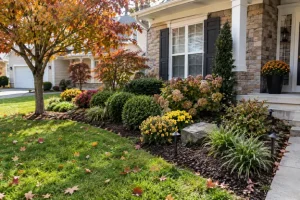
Landscape edging may seem like a minor finishing detail, but it has a major effect on how neat, durable, and easy to maintain a property feels. The right edge keeps mulch inside planting beds, prevents lawn from spreading into gardens, defines walkways, supports clean mowing lines, and gives your outdoor spaces a more intentional appearance.
When homeowners compare metal, brick, and concrete edging, the most common question is simple: Which lasts longer? The answer depends on the quality of the material, climate, installation method, soil movement, drainage, and maintenance. In general, professionally installed concrete and well-installed brick can last decades, while high-quality metal edging can also provide long service life—especially when the correct metal is selected for the climate.
This guide compares the durability, appearance, cost, maintenance, and installation needs of the three most popular landscape edging materials. It will help you choose the right option for your lawn, flower beds, walkways, patio borders, and overall landscape design.
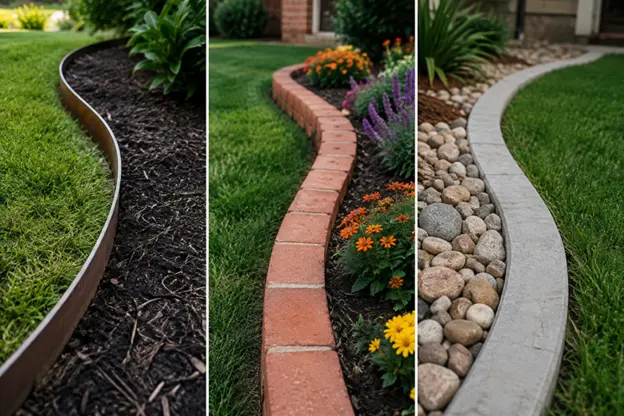
What Is Landscape Edging?
Landscape edging is a physical border installed between two landscape surfaces. It often separates lawn from mulch, gravel from planting beds, a walkway from turf, or a driveway from garden areas.
Edging serves both practical and visual purposes. It creates a clean line that makes a garden bed look organized, but it also helps control material movement and reduces ongoing maintenance.
A well-installed edge can:
- Keep mulch and decorative stone inside planting beds.
- Prevent grass roots from creeping into gardens.
- Create a cleaner mowing edge.
- Reduce the need for string trimming.
- Define paths and walkways.
- Separate gravel from lawn.
- Frame patios and outdoor living spaces.
- Improve curb appeal.
- Create structure in informal landscape ideas.
- Make planting beds easier to maintain.
The Quick Answer: Which Landscape Edging Lasts Longest?
There is no universal winner because each material performs differently in specific climates and applications. However, properly installed concrete and brick often provide the longest lifespan in residential landscapes.
Material | Typical Lifespan With Quality Installation | Best For | Main Limitation |
Concrete edging | 20 to 30+ years | Permanent borders, mow strips, formal beds | Cracking, difficult repairs, limited flexibility |
Brick edging | 20+ years | Traditional gardens, walkways, curved borders | Can shift or settle without a stable base |
Steel edging | 15 to 25+ years; longer for premium products | Modern borders, clean lines, flexible curves | Rust risk in wet or coastal areas |
Aluminum edging | 20 to 30+ years | Curved beds, moisture-prone landscapes | Can bend under heavy impact |
Corten steel edging | 30+ years in suitable conditions | Premium modern designs | Develops a rust patina; may stain nearby surfaces |
Concrete edging is frequently expected to last 20 to 30 years or more when properly installed and maintained. Brick can also last 20 years or longer, while high-quality steel and aluminum edging may offer strong long-term durability depending on climate and thickness.
Metal Landscape Edging
Metal edging is popular because it creates a thin, crisp line that almost disappears into the landscape. It is especially common in contemporary landscape design, minimalist gardens, gravel paths, and lawn-to-mulch transitions.
Available options include galvanized steel, painted steel, powder-coated steel, Corten steel, and aluminum.
Benefits of Metal Edging
Metal offers a number of practical advantages:
- Clean, modern appearance.
- Thin profile that does not visually dominate the garden.
- Flexible enough for gentle curves.
- Strong separation between lawn and mulch.
- Effective barrier against grass creep.
- Suitable for straight or curved landscape ideas.
- Often easier to install than masonry materials.
- Can create an easy mowing edge.
- Available in different finishes and heights.
Types of Metal Edging
Galvanized Steel
Galvanized steel has a protective zinc coating that helps delay corrosion. It is a good all-purpose choice for many residential gardens, particularly in areas without constant moisture or salt exposure.
Over time, the coating may wear, scratch, or corrode around cut edges and fastener points. Its lifespan depends heavily on thickness, installation quality, and climate.
Powder-Coated Steel
Powder-coated steel offers a colored protective finish, often black, brown, green, or bronze. It can blend into the landscape more easily than bare galvanized steel.
The coating may chip if hit repeatedly by lawn equipment or damaged during installation. Touch-up is important if bare steel becomes exposed.
Corten Steel
Corten, sometimes called weathering steel, develops a stable rust-colored patina. Many modern landscape designs use it as a decorative feature rather than trying to hide it.
Corten steel can be very long-lasting in appropriate climates, but it may stain nearby concrete, stone, or light-colored surfaces during the initial weathering process. It is not ideal for every setting, especially where runoff could discolor patios or walkways.
Aluminum
Aluminum does not rust like steel, making it a strong option for wet or humid regions. It is lightweight, easier to cut, and naturally corrosion-resistant.
However, aluminum can bend more easily than heavy steel when struck by a mower, vehicle tire, or heavy wheelbarrow. It is best for standard lawn and garden borders rather than locations exposed to frequent impact.
Metal Edging Durability
High-quality metal edging can last for decades, but it is not maintenance-free. Steel can corrode, and aluminum can bend. Coastal salt air, standing water, poor drainage, thin material, and repeated impacts can shorten the service life.
Metal edging is particularly effective for:
- Curved planting beds.
- Modern gardens.
- Gravel paths.
- Mulched borders.
- Lawn-to-garden transitions.
- Low-profile edging around ornamental grasses.
- Contemporary patio borders.
Metal Edging Maintenance
With minimal routine care, metal edging can stay in good condition, but seasonal inspections can help identify:
- Loose stakes.
- Bent sections.
- Rust spots.
- Exposed sharp edges.
- Soil buildup.
- Frost heave.
- Damage from mowers or trimmers.
Keep steel edging from sitting in persistently wet soil whenever possible. Good drainage and a small amount of exposed height above grade can help reduce the risk of corrosion.
Brick Landscape Edging
Brick edging brings a traditional, warm, and timeless appearance to a landscape. It works particularly well around historic homes, cottage gardens, colonial-style properties, patios, walkways, and formal front-yard planting beds.
Bricks can be installed upright, laid flat in a single row, angled in a sawtooth pattern, or stacked in low borders. Each approach creates a different look and affects durability.
Benefits of Brick Edging
Brick provides several aesthetic and practical benefits:
- Classic, durable appearance.
- Works with traditional and modern homes.
- Available in many colors and textures.
- Can create straight lines or gentle curves.
- Forms a stable mowing strip when installed flat.
- Resists rot and insect damage.
- Can complement brick homes, patios, and walkways.
- Individual units can be repaired or replaced.
- Provides a more substantial edge than thin metal.
Brick Edging Styles
Flat Brick Mow Strip
Bricks are laid flat at lawn level, creating a wide edge between turf and mulch. A mower wheel can often roll along the brick, reducing the need for string trimming.
Soldier Course
Bricks are installed upright, end to end, creating a narrow vertical border. This style offers a crisp traditional look and can keep mulch contained effectively.
However, upright bricks may shift if they are not set on a properly compacted base.
Angled or Sawtooth Pattern
Bricks are set diagonally to create a decorative zigzag edge. This look is common in cottage-style landscapes and historic gardens.
It is attractive but may be less practical for mowing because of the irregular surface.
Mortared Brick Border
Bricks are installed with mortar for a more permanent, structured edge. This can be appropriate near patios, formal walkways, or hardscape features.
Mortared borders are less flexible and may crack if the ground shifts significantly during freeze-thaw cycles.
Brick Edging Durability
Brick can last decades when it is made for exterior use and installed on a compacted base. Quality matters. Reclaimed or decorative brick may not always be rated for repeated freeze-thaw exposure, especially in colder climates.
In areas with cold winters, choose brick that is suitable for exterior paving and frost exposure. Bricks can crack, spall, or deteriorate when they repeatedly absorb water and freeze.
Brick Edging Maintenance
Brick edging requires periodic inspection and minor repairs:
- Reset shifted bricks.
- Remove weeds from joints.
- Replenish joint sand or stone dust.
- Remove soil and mulch that cover the edge.
- Check for cracked or crumbling units.
- Repair mortar joints if used.
- Correct drainage problems before they worsen.
The advantage is that brick repairs are localized. If one or two units sink, you can lift them, add base material, relevel the area, and reinstall the bricks without replacing the entire border.
Concrete Landscape Edging
Concrete edging is one of the most permanent landscape materials available. It may be poured in place as continuous curbing, installed as precast concrete blocks, or created using decorative stamped and colored concrete.
It is commonly used for front-yard flower beds, tree rings, driveway borders, lawn edges, and curved garden beds.
Benefits of Concrete Edging
Concrete edging is valued for:
- Long service life.
- Strong physical barrier.
- Resistance to rot and insect damage.
- Low ongoing maintenance.
- Ability to form continuous curves.
- Decorative color and texture options.
- Excellent mulch containment.
- Resistance to mower and trimmer damage.
- A substantial, finished appearance.
Professionally installed concrete landscape borders can last for decades with minimal maintenance because they create a continuous, solid boundary between lawn and planting beds.
Types of Concrete Edging
Poured Concrete Curbing
Poured curbing is formed on-site, often with specialized equipment that creates a continuous ribbon of concrete. It can be plain, colored, textured, or stamped to resemble brick or stone.
This option creates a clean, custom appearance and is especially useful for long, curved beds.
Precast Concrete Edging
Precast pieces are manufactured in standard sizes and installed individually. They can be more accessible for DIY projects than poured curbing, although they still need a stable base.
The joints between pieces can allow small amounts of movement, but they also make repairs easier than with continuous poured curbing.
Concrete Paver Borders
Concrete pavers can function similarly to brick edging. They are available in many colors, sizes, and shapes and can be installed flat or upright.
They offer more flexibility than a continuous concrete curb and may be easier to repair if a small area settles.
Concrete Edging Durability
Concrete often lasts the longest when properly mixed, installed, and drained. However, it is not immune to damage. Cracks may develop due to settlement, tree roots, freeze-thaw cycles, poor drainage, heavy impacts, or insufficient control joints.
Concrete edging is commonly estimated to last 20 to 30 years or more, but the lifespan can be shorter when it is installed on unstable soil or exposed to repeated freeze-thaw conditions without proper preparation..
Concrete Edging Maintenance
Compared with brick, concrete requires less routine maintenance, although repairs can be more complicated.
Inspect concrete edging for:
- Hairline cracks.
- Major separation cracks.
- Surface flaking or scaling.
- Settling.
- Water pooling.
- Damage near tree roots.
- Stains from irrigation or rust.
Installation Determines Longevity
No landscape material will perform well if it is installed poorly. A low-cost edging product installed on a stable, well-drained base may outlast a premium product installed directly into soft soil.
Base Preparation for Brick and Concrete
Brick and concrete borders require excavation, a compacted crushed-stone base, and a level bedding layer. The exact depth depends on climate, soil, material thickness, and expected traffic.
A strong installation typically includes:
- Excavation to the required depth.
- Compacted subgrade.
- Crushed aggregate base.
- Leveling sand or stone dust.
- Proper alignment and slope.
- Edge restraint where needed.
- Joint fill or mortar, depending on design.
Installation for Metal Edging
Metal edging is generally simpler, but it still needs proper placement. Install it deep enough to resist movement, use enough stakes, and make sure the top edge does not create a dangerous protrusion.
For a mowing edge, set the metal close to lawn level. For mulch containment, leave enough height above grade to hold the selected mulch depth.
Drainage Matters
Drainage is essential for every edging material. Standing water can cause steel to rust, brick bases to settle, and concrete to crack or scale.
Grade planting beds so water does not collect against the edging. Keep gutters, downspouts, and irrigation systems from discharging directly onto borders unless the area has been designed to handle runoff.
Cost Considerations
Material prices vary by region, thickness, finish, delivery needs, and installation complexity. Labor often makes up a substantial part of the final cost for brick and concrete projects.
Metal Edging Costs
Metal edging generally has a lower to moderate upfront cost. Thin aluminum or steel is more affordable than heavy-gauge powder-coated steel or Corten steel.
Costs may increase for:
- Heavy-gauge material.
- Custom heights.
- Curved layouts.
- Professional installation.
- Additional stakes and connectors.
- Difficult soil or root removal.
Brick Edging Costs
Brick edging has a moderate material cost but can become labor-intensive. Individual units need excavation, base preparation, leveling, and alignment.
Costs increase for:
- Curved borders.
- Mortared installation.
- Reclaimed brick sorting.
- Complex patterns.
- Deep base work.
- Premium or frost-rated brick.
Concrete Edging Costs
Concrete may have the highest upfront installation cost, especially for poured decorative curbing. However, it can offer strong long-term value because it requires little routine repair or replacement.
Costs increase for:
- Colored concrete.
- Stamped textures.
- Long curved runs.
- Removal of existing edging.
- Difficult access.
- Extensive grading or drainage work.
- Professional installation.
When to Hire a Professional
Many homeowners can install short runs of metal or brick edging themselves. However, professional installation is a smart investment for complex, high-visibility, or permanent projects.
Consider hiring a landscape contractor when you need:
- Decorative poured concrete curbing.
- Long or complex curves.
- Edging near a driveway or foundation.
- Significant grading or drainage correction.
- A large brick or paver mow strip.
- Integration with patios, walkways, or retaining walls.
- Tree-root protection.
- A coordinated landscape design plan.
Which Landscape Edging Is Best for Your Yard?
For maximum permanence and the fewest routine adjustments, concrete edging is often the longest-lasting choice when professionally installed on a stable, well-drained base. It is ideal for homeowners who want a continuous, formal border and do not expect to redesign the area often.
When a traditional, repairable, and highly attractive option is the priority, brick edging is an excellent long-term choice. It can last for decades, especially when frost-rated brick is installed over a compacted base. Brick is ideal for walkways, cottage gardens, mow strips, and classic front-yard designs.
For flexibility, clean lines, and modern style, metal edging is hard to beat. Heavy-gauge steel or aluminum can deliver long-lasting performance, but steel should be selected carefully in wet or coastal environments. Metal is ideal for curved beds, minimalist planting, and landscape designs where you want the border to disappear visually.
Ready to Upgrade Your Landscape Edging?
The right landscape edging can transform loose, undefined planting beds into a clean, polished landscape that is easier to mow, weed, mulch, and enjoy. Whether you prefer sleek metal, timeless brick, or permanent concrete, choose a material that suits your climate, yard conditions, maintenance habits, and long-term plans.
Start with a professional plan that combines beautiful design, durable materials, and expert craftsmanship. The right landscape design can improve curb appeal, simplify maintenance, and create an outdoor space you’ll enjoy for years to come.
Contact the experts at Hawkins Landscaping Inc. for a personalized site evaluation and professional recommendations on landscape edging, drainage solutions, planting beds, walkways, patios, retaining walls, and other high-quality landscape materials. With over 50 years of experience serving Frederick County and surrounding areas, our team designs and builds outdoor spaces that are both beautiful and built to last.
Call (301) 898-3615 or visit hawkinslandscaping.com to schedule today. Ask about our flexible financing options and let us transform your landscaping ideas into a functional, attractive outdoor space with borders, hardscapes, and plantings that will perform beautifully for decades.