Choosing the right outdoor pieces isn’t just about style—it’s about how your patio furniture will stand up to sun, rain, snow, salt air, and big temperature swings. The “best” material depends heavily on where you live and how much maintenance you’re willing to do. Teak, powder-coated aluminum, HDPE (poly lumber), and quality resin wicker show up again and again as top performers across a wide range of climates.
Below is a detailed, climate-specific guide so you can confidently answer “which patio furniture is best?” for your space—and build search-friendly content around practical, real-world performance.
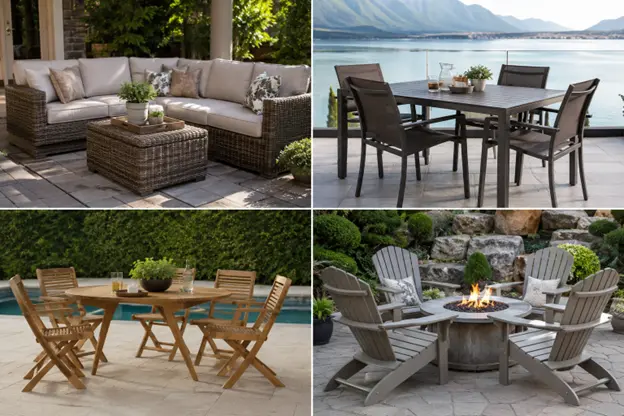
How Climate Should Shape Your Patio Furniture Choices
Before comparing materials, think about three core climate factors:
- Moisture: Frequent rain, snow, or humidity can cause rust, rot, mildew, and swelling.
- Sun & Heat: UV breaks down finishes and fabrics; dark metals can get scorching hot.
- Salt & Wind: Coastal air accelerates corrosion; wind can send lightweight furniture flying.
A smart patio design matches materials to these conditions instead of choosing a one-size-fits-all set. That’s how you get long-lasting, low-maintenance patio ideas that actually work where you live.
Top Patio Furniture Materials (Quick Overview)
Material | Best For | Watch Out For |
Teak hardwood | Hot, sunny, humid, coastal, four-season | Price, annual oiling/sealing |
Other woods (acacia, cedar) | Budget-friendly, covered patios, seasonal use | More upkeep, shorter lifespan than teak |
Powder-coated aluminum | Most climates, humid, rainy, coastal, windy | Can feel lightweight in extreme wind |
Wrought iron/steel | Windy, dry climates | Rusts in coastal/wet areas, heavy to move |
HDPE (poly lumber) | All-weather, coastal, humid, freeze–thaw | Heavier and more expensive than basic plastic |
Resin / synthetic wicker | Humid, rainy, hot sun (on covered spaces) | Cheap versions can crack or fade |
Natural wicker/rattan | Fully covered, three-season rooms only | Not suitable for rain, humidity, or snow |
Plastic & basic resin | Budget, low-maintenance, small spaces | Can fade, crack, and feel less premium |
Concrete & stone | Hot, dry, modern patios | Very heavy, can be cold/hard, needs cushions |
Now let’s break down which patio furniture is best by climate type.
1. Best Patio Furniture for Hot, Sunny Climates
Think desert heat, Southwest sun, or long, intense summers.
Best materials
- Teak hardwood
- Naturally high in oils that repel water and resist rot and insects.
- Handles strong sun and heat without warping when properly maintained.
- Ages to a silver-gray patina or can be oiled to keep a warm honey tone.
- Powder-coated aluminum
- Rust-free, lightweight, and resists UV damage with a quality powder coat.
- Stays relatively cooler than dark steel in direct sun.
- HDPE (poly lumber) & high-grade recycled plastic
- Formulated to resist fading, cracking, and warping in extreme temperatures.
- Great for Adirondack chairs, dining sets, and poolside loungers.
- High-performance fabrics
- Solution-dyed acrylic fabrics (e.g., Sunbrella-type) resist fading and mildew far better than standard polyester.
- Breathable, quick-drying, and more comfortable on hot days.
- Teak hardwood
Avoid or limit
- Thin, dark metal pieces (they get extremely hot).
- Cheap plastics that chalk, fade, and become brittle.
Design tips for hot climates
- Favor light-colored finishes to reduce heat absorption.
- Incorporate shade structures (pergolas, umbrellas, shade sails) into your patio ideas to protect cushions and prolong fabric life.
- Mix materials—for example, a teak dining table with aluminum chairs—for both performance and visual interest.
2. Best Patio Furniture for Rainy and Humid Climates
Think Gulf Coast, Pacific Northwest, and mid-Atlantic humidity.
Best materials
- Teak
- Top-tier choice for rainy and humid areas thanks to its natural water-resistant oils.
- Less prone to warping, rotting, or insect damage than many other woods.
- Powder-coated aluminum
- Non-rusting and quick to dry after storms.
- Ideal for frames with sling seating or mesh that sheds water.
- Resin / all-weather wicker on quality frames
- Synthetic wicker doesn’t absorb water and resists mildew when paired with breathable cushions.
- Look for UV-stable HDPE wicker woven over aluminum frames.
- HDPE poly lumber
- Does not rot, rust, or absorb moisture; excellent in persistent damp and heavy rain.
- Teak
Avoid or limit
- Untreated steel or low-grade iron that will rust quickly.
- Natural wicker and indoor rattan—these absorb moisture and degrade fast in humidity.
Design tips for wet climates
- Choose open designs that allow airflow around cushions and slings.
- Store cushions when heavy rain is expected or choose fast-drying outdoor foam.
- Include storage benches or deck boxes in your patio furniture plan so soft goods stay dry.
3. Best Patio Furniture for Coastal and Salt-Air Climates
Salt accelerates rust and corrodes metal finishes, so materials need to be especially resilient.
Best materials
- HDPE (poly lumber)
- Zero rust and highly UV-stable; top pick for beachfront decks and coastal patios.
- Teak (preferably FSC-certified)
- Handles moisture, sun, and salt when cleaned and maintained regularly.
- Powder-coated aluminum
- Non-ferrous (doesn’t rust), especially when paired with marine-grade finishes.
- HDPE (poly lumber)
Use with caution
- Stainless steel
- Choose marine-grade (316) if used near the ocean; lower grades can still pit and rust.
- Wrought iron and standard steel
- Often not recommended for direct coastal exposure unless you can commit to frequent inspection and touch-up of finishes.
- Stainless steel
Design tips for coastal patios
- Focus on slatted designs that allow sand and water to pass through.
- Incorporate storage for cushions during storms or off-season.
- Rinse salt spray off metal and wood periodically to prolong life.
4. Best Patio Furniture for Four-Season & Freeze–Thaw Climates
Think Northeast, Midwest, mountain regions with snow, ice, and big temperature swings.
Best materials
- Teak and dense hardwoods
- Naturally strong, with good resistance to moisture changes, especially when sealed or oiled.
- HDPE (poly lumber)
- Handles freeze–thaw cycles without cracking or splitting.
- Powder-coated aluminum
- Won’t rust, and a quality finish handles snow and ice well.
- Teak and dense hardwoods
Use thoughtfully
- Concrete and stone
- Great for tables and bases, but ensure they are properly sealed and not overly porous to avoid cracking in freeze–thaw cycles.
- Steel
- May be fine if stored or covered in winter and kept off bare ground.
- Concrete and stone
Design tips for cold climates
- Plan your patio ideas so furniture is easy to move or stack for winter storage.
- Add heavy-duty covers to protect frames and fabrics if you leave furniture outside year-round.
- Choose modular seating that can be reconfigured seasonally.
5. Best Patio Furniture for Windy Locations
Open plains, high-rise balconies, and exposed rooftop patios need heavier or well-anchored pieces.
Best materials
- Wrought iron and heavy steel
- Very stable and less likely to tip in strong gusts.
- Teak and substantial hardwood
- Heavier than aluminum and basic plastic, especially in larger sectionals and dining sets.
- Wrought iron and heavy steel
Use carefully
- Aluminum
- Excellent in most ways, but very light. Consider cast aluminum (heavier) or heavier bases for umbrellas and tables.
- Light plastic
- Can blow away easily; reserve for protected courtyards or weight it down.
- Aluminum
Design tips for windy spaces
- Choose lower-profile designs instead of tall, sail-like silhouettes.
- Secure umbrellas with heavy bases or mount them through tables.
- Consider built-in benches or seating walls as part of your overall patio design for ultimate stability.
6. Comparing Popular Patio Furniture Materials
To help you answer “which patio furniture is best?”, here’s a clean comparison you can use or adapt.
Material | Pros | Cons | Best Climates |
Teak | Extremely durable, rot/bug resistant, beautiful aging, versatile | High cost, needs periodic oiling or sealing | Most: sun, rain, coastal, four-season |
Other woods (acacia, etc.) | Warm, natural look, more affordable than teak | More maintenance, shorter lifespan, may warp or crack | Mild, dry, or covered spaces |
Powder-coated aluminum | Rust-free, lightweight, low-maintenance, many styles | Can blow over in extreme wind, cheap finishes may chip | Most climates, especially humid or coastal |
Wrought iron/steel | Very strong, stable, classic look | Prone to rust, heavy, can be hot to touch | Dry, sunny, windy inland areas |
HDPE / poly lumber | Ultra-durable, no rot or rust, low maintenance, eco-friendly options | Heavier, can be pricier upfront | All climates (especially coastal & four-season) |
Resin / all-weather wicker | Comfortable, stylish, moisture-resistant, easy to clean | Quality varies; cheap resin can fade or crack | Humid, rainy, hot sun (best under some cover) |
Natural wicker/rattan | Beautiful, organic look | Not weatherproof, best indoors/covered only | Covered porches, sunrooms |
Basic plastic | Lightweight, inexpensive, easy to move | Fades, cracks, less sturdy, can feel “cheap” | Budget-friendly, low-exposure areas |
Concrete/stone | Extremely durable, sculptural, modern aesthetic | Very heavy, hard, can crack if porous in freeze–thaw | Dry, modern patios, as tables/bases |
7. Matching Materials to Your Specific Patio Ideas
Once you understand how each material behaves, you can combine them into complete patio ideas tailored to your climate:
- Rainy coastal deck:
- HDPE dining set + teak lounge chairs + resin wicker storage box.
- All in marine-grade fabrics and powder-coated aluminum umbrella frames.
- Hot, dry backyard:
- Teak dining table with aluminum chairs and sling seating.
- Stone or concrete coffee table for a modern touch, shaded by a pergola.
- Small city balcony:
- Compact powder-coated aluminum bistro set + foldable HDPE stools.
- Wall-hung planters and narrow consoles to maximize space.
- Four-season family patio:
- HDPE sectional + teak coffee table + aluminum dining set.
- All pieces designed to be stackable or coverable in winter.
- Rainy coastal deck:
Blending materials often gives the best performance and visual balance—an important point when you’re writing content that has to feel both aspirational and practical.
8. Fabric, Cushions, and Finishes Matter Too
Even the best frames will fail early if cushions, fabrics, or finishes are not weather-ready.
For fabrics and cushions:
- Choose solution-dyed acrylic or high-grade polyester designed for UV and mildew resistance.
- Look for quick-dry foam and vented cushions in humid or rainy regions.
- Store cushions in a deck box or indoors when not in use for extended periods.
For finishes:
- Prefer powder-coated metal over simple painted finishes.
- For wood, follow a maintenance calendar—clean annually, oil or seal as recommended for your climate.
- For HDPE and resin, clean periodically with mild soap and water to remove grime and sunscreen buildup.
9. Practical Buying Checklist
When readers search “which patio furniture is best,” they’re really asking how to choose smart. Encourage them to walk through this checklist:
- Climate – Is your area mostly hot and dry, humid and rainy, coastal, or four-season?
- Exposure – Will the furniture sit in full sun, partial shade, under a roof, or fully exposed to wind and rain?
- Maintenance tolerance – Are you willing to oil teak annually or would you prefer nearly maintenance-free HDPE or aluminum?
- Use patterns – Daily lounging, occasional entertaining, or seasonal use only?
- Storage options – Can you store cushions and lighter pieces during storms or winter?
- Budget vs. lifespan – Would you rather invest once in teak or HDPE, or replace lower-cost plastic more often?
- Style – Do you prefer modern aluminum, classic teak, coastal wicker, or a mixed-material look?
Building content around these questions helps your article outperform generic guides by being genuinely actionable and tailored to user intent.
Ready to Choose the Best Patio Furniture for Your Climate?
The right patio furniture should look great, feel comfortable, and survive your local weather without constant repairs. Now that you understand how materials behave in different conditions, you can confidently decide which patio furniture is best for your space—whether that means teak and aluminum for a hot, sunny yard or HDPE and resin wicker for a humid coastal deck.
If you’re planning a full outdoor makeover and want climate-smart patio ideas that pair durable furniture with lighting, planting, and hardscaping, consider working with a professional outdoor living specialist or landscape designer. A pro can help you:
- Match materials to your exact climate and exposure
- Coordinate furniture with your patio layout, pathways, and planting beds
- Choose fabrics and finishes that last
- Create a cohesive, high-performing outdoor living space
Start by considering your climate, sun exposure, and maintenance preferences, then choose durable materials like teak, powder-coated aluminum, HDPE, or all-weather wicker that are built to perform season after season. The right furniture, paired with a professionally designed patio, can transform your backyard into a comfortable and inviting extension of your home.
Turn to Hawkins Landscaping Inc. for expert patio design and outdoor living solutions. With over 50 years of experience serving Frederick County and surrounding areas, our team creates custom patios, hardscapes, pergolas, fire features, and complete landscape designs that complement your outdoor furniture and lifestyle.
Call (301) 898-3615 or visit hawkinslandscaping.com to schedule today. Ask about our flexible financing options and let us help you create a beautiful, durable outdoor living space you’ll enjoy for years to come.