When homeowners plan a new patio, walkway, or driveway, one big question comes up: are landscaping bricks better than concrete, or is concrete the smarter choice? The right answer depends on your budget, style, and how you want to use your yard.
This guide compares landscaping bricks vs concrete in simple, clear language. You will learn the pros and cons of each, see landscaping ideas that work well with both materials, and understand why one might be a better fit for your outdoor space. If you are looking for landscaping near me, this article can also help you talk to local pros with more confidence.
What Are Landscaping Bricks?
Landscaping bricks are small, rectangular blocks made from fired clay or concrete. They are often used for patios, walkways, driveways, and garden borders. People like them because they look clean, warm, and classic.
Landscaping bricks come in many colors and textures. You can lay them in different patterns like herringbone, basket weave, or simple running bond. These patterns can turn a plain path into a stylish feature.
What About Concrete?
Concrete is a poured or pre‑cast material used for patios, sidewalks, driveways, and foundations. It can be smooth, stamped, or stained to look like stone, brick, or other textures. It is strong and widely available.
There are two main concrete options:
- Poured concrete slabs – one solid piece.
- Concrete pavers – small blocks that fit together like bricks.
Concrete is popular because it can be formed into almost any shape and works well for large surfaces.
Cost: Bricks vs Concrete
Money is often the first thing people think about. Here is a simple cost comparison.
- Landscaping bricks (clay brick pavers) are often more expensive to install than basic poured concrete because of the labor. Each brick must be placed and leveled, which takes time and skill. However, clay bricks can be cheaper than some high‑end concrete pavers in certain markets.
- Poured concrete is usually the lowest upfront cost for a simple project. You pay for materials and labor to pour and finish the slab.
- Concrete pavers often sit between basic concrete and clay bricks in price, depending on the style and pattern.
If you are on a tight budget, basic concrete may be the cheaper choice to start. If you want something that looks nicer and lasts longer, landscaping bricks may be worth the extra cost.
Durability and Longevity
Both landscaping bricks and concrete can last many years, but they wear in different ways.
- Landscaping bricks are very strong, especially clay pavers. They resist cracking, fading, and heavy traffic. If one brick breaks, you can usually replace it without redoing the whole surface.
- Poured concrete can crack over time due to ground movement, freezing, and heavy loads. Once it cracks, the repair can look patchy and uneven.
- Concrete pavers are more flexible than solid slabs and handle ground movement better, but their quality depends on the manufacturer.
If you care about long‑term looks and ease of repair, landscaping bricks often have an edge.
Appearance and Style
The way your yard looks is just as important as how much it costs.
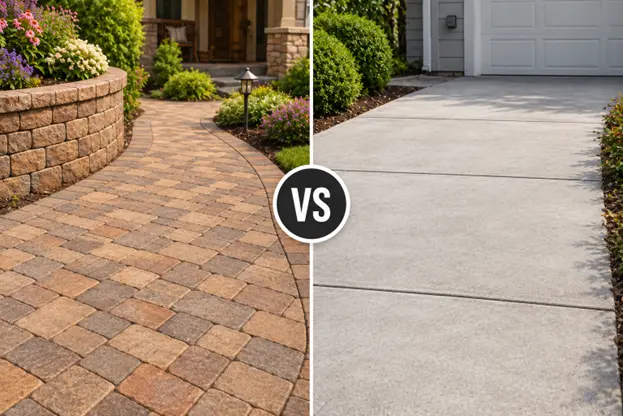
- Landscaping bricks give a warm, classic feel. Red, brown, and tan bricks go well with both older homes and modern houses. You can mix colors or use borders and patterns to make your space feel custom.
- Poured concrete is smoother and can be stamped or stained to look like stone, brick, or wood. It can be very attractive, but it usually looks more “modern” or “industrial” than brick.
- Concrete pavers can look like brick or stone but without the natural clay color range. They are good if you want a neat, uniform look.
If you want a cozy, timeless look, landscaping bricks are often the better choice. If you want a sleek, modern surface, concrete may match your style better.
Installation: Which Is Easier?
Installation complexity affects cost and time.
- Landscaping bricks require more detailed work. You must lay a solid base, set each brick, and keep the surface level. This is usually a job for a skilled installer, especially for large projects.
- Poured concrete needs careful mixing, forming, and finishing, but it is a continuous pour. Once it is poured and smoothed, the crew lets it cure. This can be easier for large, open areas.
- Concrete pavers are easier to install than clay bricks because they are lighter and more uniform, but they still need a good base and edge restraint.
For big, simple surfaces like a driveway or large patio, concrete is often faster. For smaller patios, garden paths, and decorative areas, landscaping bricks can be more flexible and interesting.
Maintenance and Upkeep
Low maintenance is a big plus for homeowners.
- Landscaping bricks need very little upkeep. You may need to sweep, rinse, or replace an occasional brick. Weeds can grow between joints, but sealers and sand‑fill products can help.
- Poured concrete can stain, crack, and collect dirt. Cracks often need patching or resurfacing, which can look uneven.
- Concrete pavers are easy to clean and repair, much like bricks, but they can shift if the base is not strong.
In terms of long‑term care, bricks and pavers usually win because they are easier to keep looking good without big jobs.
Climate and Weather Resistance
Your local weather plays a big role in which material works better.
- Landscaping bricks handle freeze‑thaw cycles well, especially when installed correctly. They are less likely to heave or crack suddenly.
- Concrete slabs can crack in cold climates when water freezes and expands. Stamped or colored concrete can fade over time in sunny, dry areas.
- Concrete pavers are good in many climates if the base is well‑prepared, but cheaper pavers may chip or fade.
In colder regions or places with big temperature swings, landscaping bricks often perform better than plain concrete.
Landscaping Ideas That Work with Bricks
When you choose landscaping bricks, you open up many landscaping ideas.
- Brick walkways – Create a classic path from the sidewalk to your front door. Add a curved edge or border stones for a softer look.
- Patio borders – Use bricks to frame a concrete or paver patio. This adds contrast and structure.
- Garden edging – Low brick borders can outline flower beds and keep soil and mulch in place.
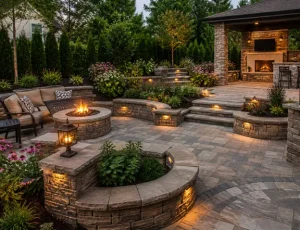
- Fire pit or seating areas – Build a circular or square seating ring with bricks. You can add cushion platforms and planters around the edges.
- Driveway accents – Use brick bands or patterns to break up a long driveway or highlight a turning area.
Bricks give you a lot of room to be creative while keeping your yard organized and clean‑looking.
Landscaping Ideas That Work with Concrete
Concrete also offers many design options.
- Stamped concrete patios – These can look like stone, brick, or wood at a lower cost. They are great for large entertaining areas.
- Concrete walkways – Simple, smooth paths look clean and modern. Add inlaid stones or border rows for style.
- Pool decks – Smooth concrete is common around pools because it is easy to keep clean and cool.
- Steps and low walls – Concrete steps and retaining walls can be colored or textured to match the rest of your yard.
- Driveways – Concrete driveways are strong and easy to maintain if properly sealed and repaired when needed.
Concrete is a good choice if you want clean, open spaces that look updated and low‑maintenance.
Which Is Better for DIY Projects?
If you plan to do some of the work yourself, this is important.
- Landscaping bricks are possible for DIYers but can be physically demanding. You must move a lot of heavy material and keep the layout precise. However, the modular nature means you can fix mistakes brick by brick.
- Poured concrete is hard for many homeowners because mixing, pouring, and finishing need experience. Thin or weak concrete can crack quickly.
- Concrete pavers are easier than bricks for DIY because they are lighter and more uniform, but they still need a steady hand and good prep.
If you are comfortable with tools and willing to learn, bricks or pavers can be a rewarding project. If you want something very simple, hiring a pro for concrete is often safer.
Strength and Load‑Bearing Ability
Both materials can handle heavy use, but they behave differently.
- Landscaping bricks spread weight across many small units. This helps reduce stress on any one spot. Vehicle traffic is fine if the base is strong.
- Poured concrete can support heavy loads, but cracks can form under stress or from ground movement.
- Concrete pavers are strong for driveways and patios, but they can shift if the base settles.
For driveways, patios, and heavily used paths, a good base is just as important as the top material. Bricks and pavers often perform better than thin concrete in these areas.
Environmental and Permeability Factors
Water and runoff matter in many yards.
- Landscaping bricks can be laid with permeable joints, allowing water to drain through and reducing runoff. This is good for eco‑friendly landscaping.
- Poured concrete is usually non‑permeable. It can direct water toward drains or low spots, which can cause erosion if not planned well.
- Concrete pavers can also be used in permeable designs depending on the joint material.
If you care about water management and less runoff, landscaping bricks and proper paver joints can be a better choice.
When You Should Choose Landscaping Bricks
Consider landscaping bricks as your main choice if:
- You like a warm, classic look.
- You want something that lasts and is easy to repair.
- You plan to invest in quality work and don’t mind paying a bit more.
- You want flexible landscaping ideas like patterns, borders, and decorative walkways.
- You live in a climate with freezing winters or heavy traffic.
Bricks can improve your curb appeal and make your yard feel more established and intentional.
When You Should Choose Concrete
Concrete may be better if:
- You want the lowest upfront cost for a large area.
- You prefer a smooth, modern surface.
- You need a simple design with few joints or details.
- You are okay with possible cracking and later repairs.
- You are building a driveway, pool deck, or large patio.
Concrete can be a practical choice, especially for high‑use areas that need a hard surface quickly.
How to Decide: A Simple Checklist
If you still feel unsure, use this checklist to decide which is better for your yard.
- Style – Do you want warm, classic (brick) or clean, modern (concrete)?
- Budget – Do you have money for a more expensive install (brick) or a lower upfront cost (concrete)?
- Use – Will this be a driveway, walkway, patio, or border?
- Climate – Do you have freeze‑thaw cycles?
- Maintenance – Do you want something easy to fix patch by patch or accept bigger repairs later?
- Landscaping ideas – Do you want creative borders, patterns, and borders (brick) or simple, open surfaces (concrete)?
Your answer to these questions will help you choose.
Working with Pros for Landscaping Near Me
If you search for landscaping near me, you may see companies that use bricks, concrete, or both. Use what you have learned here to talk to them with confidence.
Ask them:
- Which material they recommend for your project and why?
- How long each option should last in your area?
- How much the job would cost with bricks vs concrete?
- Whether they use permeable or standard joints?
- What maintenance they suggest after the project?
Getting clear answers helps you avoid surprises and pick the right material for your yard.
Final Thoughts
Both landscaping bricks vs concrete have strengths. Bricks often look nicer, last longer, and are easier to repair. Concrete can be cheaper and faster, especially for big, simple spaces. Your choice should match your budget, style, and how you use your yard.
If you want a classic, long‑lasting, and flexible look, landscaping bricks are often the better option. If you want a smooth, modern surface and a lower starting price, concrete can still be a strong choice.
Ready to decide between landscaping bricks vs. concrete for your yard? Start by thinking about your design goals, your budget, and your local climate. Each option has its strengths—brick offers a warm, classic look, while concrete provides a clean, modern finish and can be more cost-effective for larger areas.
If you want expert guidance, connect with Hawkins Landscaping Inc.. Their experienced team can walk you through the pros and cons, recommend the best materials for your space, and design a solution that fits your style and long-term needs.
Whether you choose landscaping bricks for a cozy walkway or smooth concrete for a spacious patio, the right decision will make your outdoor space more beautiful, functional, and enjoyable for years to come.
Call (301) 898-3615 or visit hawkinslandscaping.com to schedule your consultation. Ask about flexible financing options and start building a yard that works perfectly for your home.