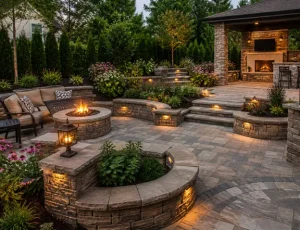
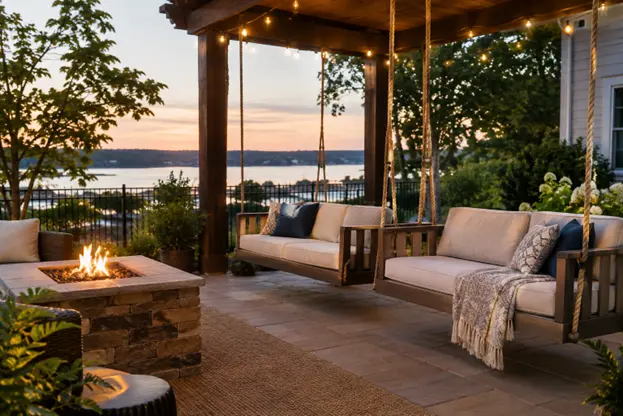
A patio with swings can make a Maryland backyard feel like a private fall retreat. With crisp mornings, colorful leaves, cooler afternoons, and earlier sunsets, autumn is the perfect season to create an outdoor space that encourages you to slow down. A well-placed swing can become the best seat in the backyard for coffee, reading, conversation, or simply enjoying the sound of leaves moving in the breeze.
The most successful patio ideas for backyards combine comfort, safety, and practical design. A swing should not be treated like an ordinary chair. It needs enough clearance for movement, a stable surface beneath it, durable materials, outdoor-rated hardware, and strong structural support when it is suspended from a porch, ceiling, pergola, or deck structure.
This detailed guide explains how to plan a patio with swings, choose the right swing, prepare the patio surface, create a cozy fall layout, protect furniture from Maryland weather, and build a space that remains comfortable long after summer ends.
Safety note: A suspended swing must be attached to a structural joist or beam that is adequately supported at both ends. Decorative beams, lightweight pergola rafters, plywood ceilings, trim boards, and unverified structures are not safe supports for a swing.
Why a Patio With Swings Is Perfect for Fall
Fall weather makes outdoor seating more appealing. During summer, patios can be too hot in direct sun. In winter, many homeowners prefer to stay inside. Early and mid-fall often offer a comfortable middle ground, with cooler air, colorful foliage, and enough daylight to enjoy a patio with swings.
A swing adds a level of comfort that standard patio furniture does not always provide. The gentle motion can make a seating zone feel relaxed, informal, and welcoming. It also creates a visual focal point for the patio, especially when framed by planters, lighting, a pergola, or a garden view.
A swing setup can improve the backyard by creating:
- A quiet morning coffee area
- A family conversation zone
- A reading corner
- A garden-view seating space
- A sheltered spot for fall entertaining
- A cozy place near a fire feature
- An outdoor lounge area
- A comfortable seating option for guests
- A transition between the house and landscape
- A focal point for an otherwise plain patio
Outdoor hanging chairs, hammocks, egg chairs, and patio swings are popular because they bring a relaxed, resort-like feeling to a backyard while still serving as practical seating.
The most important part of patio design is to make the swing useful. It should be in a location that feels pleasant, safe, and easy to reach rather than placed only for appearance.
Choose the Right Patio Swing Style
The best swing depends on the size of your patio, the type of support available, the number of people using it, and the overall look you want to create.
Classic Porch Swing
A classic porch swing usually seats two or three people. It can be made from wood, HDPE poly lumber, metal, composite materials, or weather-resistant resin. This is a timeless option for covered porches, decks, screened patios, and structural pergolas.
A traditional swing works well with farmhouse, cottage, colonial, rustic, and transitional patio design. It can be painted to match the home or left in natural wood tones for a warmer appearance.
Many standard two-person porch swings are designed for total capacities in the range of 450 to 550 pounds, though the actual safe limit depends on the manufacturer, swing frame, chains, hardware, and supporting structure. Always follow the manufacturer’s exact weight rating rather than assuming every swing holds the same amount.
Hanging Egg Chair
A hanging egg chair is ideal for one person and can work in smaller spaces. It is a good choice for a reading corner, garden-view patio, balcony, or compact deck.
The chair may hang from a freestanding stand or from a verified structural beam. A freestanding frame is often the safer option when you are uncertain about the strength of a porch ceiling, deck roof, or pergola.
Egg chairs fit well with modern, bohemian, coastal, and contemporary patio ideas. Add a small side table, an outdoor rug, a planter, and a rechargeable lantern to create a complete seating zone.
Swing Bed
A swing bed is a larger suspended platform that may hold a mattress-style cushion, pillows, and blankets. It creates a luxurious outdoor lounging experience and works best on a large covered patio, pavilion, or professionally engineered pergola.
Swing beds need substantial support because they are heavier than ordinary porch swings. The weight of the bed, cushions, occupants, and movement all must be considered. A swing bed should never be hung from a basic decorative pergola or a deck beam without structural verification.
This option is best for homeowners who want a high-end patio design with a dedicated relaxation area. Place it where there is enough room for the bed to move gently without hitting posts, railings, walls, or nearby furniture.
Freestanding Swing
A freestanding swing comes with its own frame. It does not need to be attached to the home, patio roof, pergola, tree, or deck.
This is one of the easiest patio ideas for backyards because it offers flexibility. You can move the swing to a sunnier location, shift it out of the wind, or store it during winter if necessary.
Freestanding swings work well on:
- Paver patios
- Concrete patios
- Stable decks
- Compacted gravel pads
- Level lawn edges
- Garden patios
- Fire-pit seating areas
- Covered outdoor rooms
The frame must sit on a stable, level surface. Do not place it directly on soft soil, uneven grass, or a steep slope where it can shift or sink.
Hammock Chair
A hammock chair is a relaxed option for one person. It can hang from a freestanding stand or a structural beam. It often takes up less visual space than a full swing but still adds movement and comfort.
Hammock chairs work well in small patios, covered decks, pergola corners, and garden seating areas. A patio with swings can include a hammock chair as a compact seating option. Choose outdoor-rated rope, fabric, and hardware. Do not use indoor rope or decorative hooks outdoors.
Plan the Best Swing Location
The best location for a swing should make you want to use it every day. Before installation, spend time on the patio during morning, afternoon, and evening to understand sun, wind, privacy, and views.
A good swing location may have:
- A view of a garden, lawn, pond, or mature tree
- Morning sun and afternoon shade
- Protection from strong wind
- Easy access from the house
- Enough room for gentle movement
- Nearby outdoor lighting
- A stable patio surface
- Space for a small side table
- Distance from grills and fire features
- Visual connection to the rest of the yard
Avoid hanging the swing directly in front of a patio door, at the base of stairs, along the main route to the yard, or beside a grill. A patio should remain easy to navigate even when someone is sitting on the swing.
A swing can also be used to frame a view. If your backyard includes a garden border, water feature, ornamental tree, or attractive sunset direction, position the swing so occupants naturally face that feature.
If the yard has no obvious focal point, create one with planters, a small fountain, a fire pit, ornamental grasses, or a garden sculpture.
Allow Enough Clearance
Clearance is essential for both comfort and safety when planning a patio with swings. A swing needs room behind, beside, and in front of it. It should not hit a wall, post, railing, table, planter, or another person.
Home Depot recommends providing at least 18 inches of clearance behind a porch swing and 14 to 16 inches of space on both sides. It also recommends setting hooks 2 to 4 inches wider than the swing so chains do not rub against the frame and weight is better distributed.
For a more comfortable patio setup, consider allowing 18 to 24 inches behind the swing and extra room in front. Swing beds, hammock chairs, and freestanding frames may require even more space.
The height of the seat should also be comfortable for sitting and standing. Many hanging-chair installation guides suggest keeping the bottom of the seat approximately 18 to 24 inches above the ground, although the proper height depends on the swing model and manufacturer instructions.
Before drilling holes or installing posts, use painter’s tape, cardboard, garden hoses, or temporary chairs to mark the swing area. Walk around the layout, open doors, and test access to stairs, pathways, grills, and outdoor furniture.
Verify Structural Support Before Hanging
A suspended swing creates more force than a stationary chair. As the swing moves, it increases the demand on the beam, joist, hardware, fasteners, posts, and footings.
For a patio with swings, the support system must transfer weight safely into structural framing. A decorative beam may look substantial but not be designed to support people. Never attach a swing to ceiling trim, thin boards, a lightweight arbor, unreinforced pergola rafters, or a beam with signs of rot or movement.
Home Depot guidance states that a swing should be supported by a joist that is adequately supported at both ends. It also notes that load-rated hardware and exterior-rated chains or ropes are essential for safe installation.
Before hanging a swing, verify:
- The beam size
- Joist size and spacing
- Post connections
- Condition of the lumber or metal
- Presence of rot, corrosion, cracks, or splitting
- Span length
- Fastener type
- Load path to footings
- Deck framing beneath the posts
- Required local building permits
For a swing bed, multi-person swing, or pergola-mounted chair, work with a qualified deck builder or structural professional. The support structure may need reinforcement, additional blocking, larger beams, or stronger footings.
Use the Right Hardware
A patio swing is only as safe as its weakest component. Chains, eye bolts, carabiners, ropes, hooks, brackets, and fasteners all need to be rated for outdoor use and the expected load.
Use high-quality hardware such as galvanized or stainless-steel eye bolts, swing hangers, heavy-duty chains, outdoor-rated rope, load-rated carabiners, shackles, through-bolts, washers, and lock nuts.
Avoid decorative hooks, lightweight S-hooks, indoor rope, small screw eyes, non-rated clips, and rusted chain. If a part does not have a stated working-load rating, do not use it for a suspended swing.
For exterior installations, galvanized and stainless-steel hardware can provide better corrosion resistance than untreated steel. This matters in Maryland, where autumn rain, humidity, snow, and winter freeze-thaw cycles can accelerate damage.
Inspect all hanging points regularly. Replace hardware if it becomes bent, cracked, heavily corroded, frayed, or loose.
Create a Comfortable Patio Layout
A swing should be part of a complete patio design. Add furniture and accessories around it carefully so the space feels comfortable without becoming crowded.
A two-person porch swing can face a pair of lounge chairs across a low coffee table. This creates a conversation zone where the swing is the focal point. Keep chairs outside the swing’s movement path and leave room for people to stand, walk, and move around the patio.
A hanging egg chair works best as a separate reading nook. Place it near a side table and a planter, rather than crowding it with additional furniture. A compact outdoor rug can visually anchor the corner, while a small rechargeable light makes the space usable in the evening.
A swing bed can serve as the main lounging area. Pair it with a small storage bench for blankets, a side table for drinks, and low-level lighting. Keep the rest of the patio open so the swing bed feels like a retreat rather than an obstacle.
Use furniture materials that can tolerate Maryland weather. Teak, HDPE poly lumber, powder-coated aluminum, and quality resin wicker are strong choices for patios exposed to changing rain, sun, and temperature conditions.
Add Fall Comfort and Seasonal Style
A patio with swings becomes more inviting in fall when it includes warmth, texture, and natural color. You do not need to decorate heavily. A few well-chosen items can make the patio feel seasonal without creating clutter.
Use outdoor cushions in rust, burgundy, mustard, caramel, forest green, cream, warm gray, or navy. Add weather-resistant throw blankets, but store them in a dry deck box or bring them inside after use.
Add seasonal containers near the swing with hardy mums, asters, pansies, ornamental kale, heuchera, sedum, dwarf evergreens, or ornamental grasses. These plants bring color and texture to the patio while connecting it to the larger garden.
Use pumpkins, gourds, lanterns, dried grasses, and a natural wreath sparingly. Keep decorations away from walking routes, stairs, fire features, and swing movement areas.
A simple design is often strongest. For example, two large containers beside a porch swing, a weather-resistant rug, warm outdoor pillows, and a lantern may create more impact than numerous small decorations.
Add Outdoor Lighting
Fall sunsets arrive earlier, and lighting can make a patio with swings safer and more enjoyable. Use lighting in layers rather than depending on one bright fixture.
Ambient lighting creates overall warmth. String lights attached to fixed pergola beams, wall-mounted sconces, lanterns, and portable lamps can create a soft glow around the seating area.
Task lighting helps with practical needs. Use brighter light near doors, steps, grill stations, outdoor kitchens, storage areas, and pathways.
Accent lighting highlights features such as ornamental grasses, stone walls, planters, trees, or water features. This gives the patio depth and creates a more relaxing view from the swing.
Never attach lighting directly to moving swing chains, rope, hardware, or fabric. Secure string lights and lanterns to stable posts, beams, exterior walls, or dedicated cable systems.
Use warm-white LEDs instead of harsh cool-blue lighting. Warm light makes fall textiles, wood, stone, and foliage look more inviting.
Protect the Swing From Maryland Weather
Maryland weather can shift quickly in fall. Rain, wind, falling leaves, damp conditions, frost, and early snow can affect the swing and patio furniture.
Wood swings should be cleaned and inspected for cracks, rot, splinters, loose joints, and peeling finish. Teak can be left untreated to weather naturally, while cedar and other woods may benefit from a suitable exterior sealer.
HDPE poly-lumber swings are especially low maintenance. They resist moisture, rot, and insect damage. Clean them with mild soap and water, inspect the hardware, and store removable cushions.
Powder-coated aluminum swings are also durable, but the finish should be checked for chips and scratches. Touch up damaged areas to prevent corrosion around hardware and joints.
Synthetic wicker swings work well when they have a quality aluminum frame, but leaves and debris can become trapped in the weave. Brush or vacuum the surface, wash gently, and allow it to dry completely.
Store cushions, pillows, blankets, and fabric accessories during prolonged rain. Outdoor fabrics are water-resistant, but they are not always waterproof. A cushion left damp beneath a cover can develop mildew.
Use breathable fitted covers for furniture that remains outside. Avoid sealing wet furniture under a tarp for weeks or months. Trapped moisture can cause stains, mildew, and corrosion.
Make the Patio Safer
A patio swing should always be treated as a moving piece of furniture. Children should not stand on the seat, twist chains, jump from the swing, or use it like a playground swing.
Keep pets, small children, furniture, and décor away from the swing’s movement area. Never place a fire pit, heater, grill, planter, or sharp-edged table directly in front of the swing.
Inspect the swing after windstorms, heavy use, and seasonal weather changes. Look for loose bolts, worn rope, bent chains, cracked wood, damaged brackets, or movement in the support beam.
Swing and hanging-chair safety guidance emphasizes regular inspection of anchors, chains, ropes, hooks, frames, and structural connections.sunjoyshop+1
Stop using the swing immediately if you notice creaking, sagging, splitting wood, frame movement, rusted hardware, frayed rope, or a loose anchor point. Have the system repaired or inspected before anyone sits on it again.
Patio Swing Ideas for Different Backyard Styles
A traditional Maryland porch can use a white or natural wood swing with brick steps, black lanterns, evergreen planters, and warm fall flowers. This design works well for colonial, farmhouse, and cottage-style homes.
A modern patio can use a black metal freestanding egg chair, gray pavers, low-profile outdoor furniture, tall grasses, and simple planters in charcoal or concrete finishes. Keep colors restrained and use warm lighting for contrast.
A rustic garden patio may include a cedar porch swing beneath a timber pergola, a stone path, fieldstone planters, climbing plants, and a small fire-pit zone nearby. Use soft blankets, lanterns, and natural wood accessories.
A small patio can use one hanging egg chair on a freestanding frame. Place it near a compact bistro table, tall planter, and outdoor rug. This creates a private reading corner without using too much floor space.
A large patio can include a swing bed beneath a professionally engineered pergola or pavilion. Add a dining area nearby, a fire-table lounge farther from the structure, and a clear path connecting all zones.
When to Hire a Professional
Freestanding swing frames can often be assembled by homeowners when installed on a level surface and according to manufacturer instructions. Suspended swings require more careful planning.
Hire a qualified contractor, deck builder, or outdoor-living professional for a swing bed, a large porch swing, a pergola-mounted swing, an attached swing chair, structural modifications, electrical lighting, patio construction, drainage changes, or a new deck or pergola.
Professional help is particularly important if the patio is on a slope, the existing structure is older, the swing will carry multiple people, or you are unsure whether a beam is load-bearing.
A professional can evaluate the support system, verify the load path, recommend safe hardware, coordinate patio furniture placement, and make sure the project supports your larger patio design goals.
Create Your Maryland Patio With Swings
A patio with swings can become the most comfortable part of your backyard this fall. Start with a swing that fits your available space, verify that the support structure is safe, allow enough movement clearance, and create a warm setting with lighting, weather-ready furniture, fall containers, and practical storage.
For a simple upgrade, a freestanding egg chair or swing can create an inviting reading corner when paired with a small side table, outdoor rug, and planters. It’s an easy way to add comfort and personality without taking on a major construction project.
For a larger outdoor transformation involving a porch swing, swing bed, pergola, deck, drainage improvements, or integrated landscape lighting, Hawkins Landscaping Inc. can help bring your vision together. Our team can develop a practical patio design that considers your space, how you want to use it, and the seasonal conditions your Maryland property faces.
With the right patio ideas, quality installation, and thoughtful seasonal details, your backyard can become a comfortable destination for crisp fall mornings, colorful afternoons, and peaceful evenings outdoors.
Ready to create your own backyard retreat? Call (301) 898-3615 or visit Hawkins Landscaping Inc. to schedule your consultation. Ask about flexible financing options for your outdoor project.