Hiring local landscaping experts can help you make better decisions about fall planting, drainage, lawn renovation, hardscape repairs, and winter preparation. A qualified landscaping company brings more than labor and equipment. It combines site-specific planning, regional knowledge, construction experience, and follow-up support to help your yard perform well after the project is finished.
For Frederick, Maryland, homeowners, timing is particularly important. University of Maryland Extension identifies late summer through early autumn as the prime season for establishing tall fescue lawns and completing several lawn-renovation tasks. Its calendar recommends sowing seed or laying sod no later than mid-October, while recognizing that establishment depends on conditions.
The right contractor can help you prioritize work before colder weather arrives, avoid rushed installations, and create a landscape that remains useful beyond one season. This guide explains what local expertise offers, which fall projects deserve attention, and how to choose dependable landscaping services.
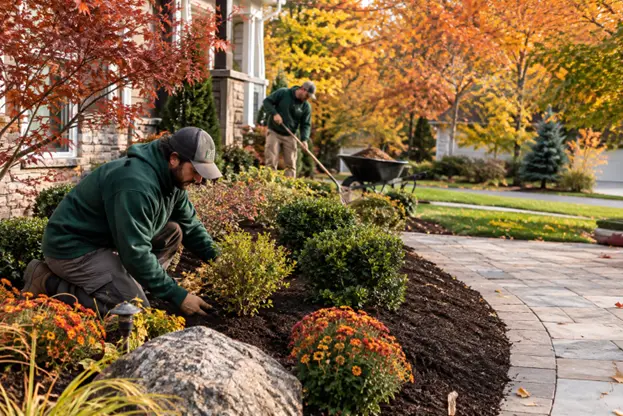
Why Local Landscaping Experts Look Beyond Seasonal Cleanup
Fall landscaping is often associated with leaf removal, fresh mulch, and seasonal flowers. Those services matter, but autumn also provides an opportunity to address problems that affect the entire property.
A worn lawn may need soil improvement rather than another application of seed. A muddy side yard may need drainage correction and a walkway. A planting bed that repeatedly loses mulch may require reshaping, edging, or erosion control. A patio that collects water needs more than a surface cleaning.
Local professionals can connect these issues instead of treating each symptom separately. That matters because planting, grading, hardscape, and drainage influence one another.
For example, installing a new garden before correcting runoff may expose young plants to washout. Building a patio without checking nearby downspouts may create standing water. A useful fall plan identifies these relationships and puts work in the right order.
1. How Local Landscaping Experts Understand Regional Timing
The calendar alone does not determine whether a project should begin. Soil moisture, temperature, plant type, site exposure, and the time needed for establishment all influence the decision.
A locally experienced contractor should understand these factors and explain when the remaining fall window is suitable. They should also know when postponing a task is more responsible than promising immediate results.
Maryland’s lawn calendar illustrates why this judgment matters. Late summer and early autumn are preferred for establishing tall fescue, while seeding later increases the chance that young seedlings encounter damaging cold before becoming established.
A contractor should assess whether lawn renovation is still practical, whether sod offers an appropriate alternative, or whether temporary erosion protection is the better choice. Local experience is valuable when it leads to clear recommendations—not when it becomes a blanket promise that every fall project will succeed.
2. They Can Match Plants to Your Property
Plant selection should begin with the site, not a nursery display. The right plant for a sunny, well-drained front bed may be wrong for a shaded backyard depression.
A knowledgeable landscaper evaluates sunlight, drainage, soil conditions, mature size, deer pressure, exposure, and maintenance expectations before recommending a planting plan.
This approach reduces avoidable problems such as oversized shrubs beneath windows, thirsty plants in dry strips beside pavement, and species that struggle in persistently wet soil.
Ask the contractor to explain why each plant belongs in its proposed location. A clear answer should connect the plant’s needs to the property’s conditions.
Native plants may be appropriate, but “native” does not automatically mean suitable for every bed. Moisture-loving native plants and drought-adapted native plants have different requirements. Good landscaping services select plants for the actual location and provide an establishment-care plan.
3. They Evaluate Soil Before Recommending Repairs
Recurring lawn or plant failure can reflect soil problems rather than poor maintenance. Compaction, construction debris, inadequate rooting depth, unsuitable pH, and drainage limitations can all affect performance.
Local landscaping experts should investigate before recommending fertilizer, topsoil, or replacement plants. Depending on the project, that may involve soil testing, examining the root zone, assessing compaction, or observing drainage after rain.
For compacted lawns, core aeration may be useful. University of Maryland Extension notes that aeration before overseeding can improve germination and overall lawn growth.
However, aeration will not correct every wet lawn. A low area receiving concentrated roof runoff may need a different solution.
The benefit of professional assessment is that it distinguishes the underlying cause from the visible symptom. That can prevent repeatedly paying for the same unsuccessful repair each autumn.
4. Local Drainage Knowledge Protects the Whole Yard
Drainage deserves attention before patios, planting beds, and other decorative improvements. Water collecting near a foundation, crossing a walkway, or eroding a slope can affect both usability and long-term durability.
Frederick-area contractors offer drainage approaches such as grading, swales, rain gardens, French drains, and dry creek beds. These are different tools, not interchangeable solutions.
Local landscaping experts should explain where the water originates, how it moves, and where it can safely go. They should also distinguish surface runoff from subsurface water problems.
Ask what the proposed installation will do during heavy rain, how it will be maintained, and whether local approvals apply.
Be cautious of a recommendation made without examining the site. A drainage trench without an appropriate outlet or a grading change that shifts the problem elsewhere is not a complete solution.
5. They Know Which Local Authorities to Consult
Local familiarity can make it easier to identify the correct permitting and inspection authority. It does not replace verification, but it helps a contractor ask the right questions early.
This is important because a Frederick mailing address does not necessarily establish whether a property falls under city or county jurisdiction. The scope of work also matters.
For example, the City of Frederick’s construction guidance requires a tree-planting permit for trees installed within the public right-of-way. It also identifies inspection requirements and coordination for certain stormwater work.
That does not mean every backyard tree or drainage improvement requires the same approval. It means location and project details must be checked.
A trustworthy contractor should explain which approvals may apply, who obtains them, and whether fees are included. Avoid anyone who dismisses permitting questions without reviewing the actual project.
6. They Can Coordinate Construction and Planting
A fall renovation often involves several connected tasks. Excavation may be followed by drainage work, hardscape installation, soil restoration, planting, mulching, and lighting.
The order matters. Heavy equipment crossing freshly seeded ground can undo lawn work. Installing shrubs before a walkway is excavated may damage roots. Finishing a patio before planning electrical routes can create unnecessary disruption.
A coordinated landscaping company can establish a sensible sequence and identify which specialists are needed.
Ideally, one project manager oversees the schedule and communicates with the homeowner. Licensed trades may still handle regulated work, but the overall plan should explain how those tasks fit together.
Ask whether the company completes each service in-house or uses subcontractors. Neither arrangement is automatically better; what matters is clear responsibility, appropriate qualifications, and consistent supervision.
7. They Can Protect Existing Features
A renovation should improve the property without unnecessarily damaging what already works. Mature trees, established shrubs, fences, irrigation, driveways, and existing patios need protection during construction.
A professional site plan should identify equipment routes, material-storage locations, soil-disposal arrangements, and areas where access is restricted.
For tree-adjacent work, ask how roots and soil will be protected. Significant grading, excavation, or compaction around established trees may require specialist guidance rather than a routine construction approach.
Discuss restoration before work starts. If a crew must cross the lawn to install a backyard patio, the proposal should state who repairs the disturbed area and what that repair includes.
Local experience is most useful when it supports careful site management. A familiar neighborhood is not a reason to skip utility checks, property-boundary verification, or protection measures.
8. They Help Plan Beyond Installation Day
The best fall projects should still look intentional after seasonal flowers fade. That requires thinking about winter structure, future plant growth, maintenance, and everyday use.
A layered planting may include evergreen anchors, deciduous shrubs, perennials, ground covers, and grasses. A hardscape project should consider circulation, furniture placement, drainage, lighting, and access from the house.
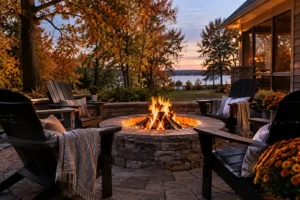
For example, a fire-pit patio is more useful when connected by a stable walkway. A privacy planting works better when mature spread is considered. A new bed needs an accessible watering plan.
Ask your landscaper what the project will look like in winter and after several growing seasons. A useful design explains both.
Avoid evaluating proposals solely through attractive renderings. Drawings should support practical decisions, including plant spacing, construction details, service access, and long-term care.
9. Local Follow-Up Can Be More Convenient
Nearby contractors may be easier to reach for inspections, adjustments, maintenance, and warranty work. This can be helpful after planting, drainage installation, or hardscape construction.
Nevertheless, proximity does not guarantee responsiveness. Ask how follow-up is scheduled and what support is included.
New plants need clear watering instructions. Drainage features need maintenance access. Pavers and other hardscape should have written workmanship terms explaining how concerns are handled.
The contractor should identify which issues are covered, which are excluded, and what responsibilities remain with the homeowner.
A scheduled walkthrough after completion is especially useful. It gives you a chance to review plant care, controls, drainage outlets, and maintenance requirements while the installer is present. Written guidance is better than relying on a brief conversation you may forget later.
10. They Can Build a Practical Long-Term Plan
A fall project does not have to become a complete renovation. Local landscaping experts can help divide improvements into manageable phases.
Start with urgent concerns such as unsafe steps, drainage, erosion, or failing structural features. Next, address functional needs such as paths, patios, privacy, and storage. Planting and decorative details can then build on that foundation.
For instance, correcting backyard drainage this fall may prepare the site for a patio next spring. Restoring a compacted lawn may be more urgent than adding seasonal containers. Repairing a walkway can improve access before installing a distant garden retreat.
A written phased plan helps prevent paying twice for excavation or damaging completed work during later construction.
The value is not simply having more projects proposed. It is knowing which projects deserve attention, which can wait, and how each investment supports the larger property.
Fall Projects Worth Discussing With Your Landscaper
Not every service is appropriate for every property. Use a consultation to connect your priorities to the remaining seasonal window.
Project | What professional planning should address |
Lawn renovation | Grass type, timing, compaction, seed establishment, watering |
Tree and shrub planting | Site suitability, mature size, planting depth, aftercare |
Drainage improvements | Water source, grade, safe outlet, maintenance, approvals |
Patio or walkway repair | Settlement cause, base condition, drainage, edge support |
Retaining-wall work | Structural requirements, drainage, site constraints |
Landscape lighting | Visibility, glare, power, weather-rated installation |
Fall cleanup | Diseased material, access routes, healthy habitat, disposal |
Irrigation winterization | System-specific shutdown and qualified servicing |
For lawn work, local landscaping experts should follow regional guidance rather than generic deadlines. Maryland Extension identifies the main fall establishment window and advises against delaying seed or sod beyond mid-October under its recommended calendar. Actual site conditions still need assessment.
How to Choose Landscapers in Frederick, MD
When comparing “landscapers Frederick MD” search results, look beyond location and star ratings. Local landscaping experts should have relevant experience, proper documentation, reliable communication, and provide a detailed proposal.
Compare experience with your exact project
A company known for mowing may not be the best choice for a retaining wall or complex drainage correction. Ask for recent examples similar in scope, site conditions, and materials.
Discuss how those installations have performed over time. Construction photos can reveal useful details about bases, drainage, and work sequencing—not just the finished appearance.
Verify qualifications for the proposed work
Requirements depend on the service. Basic maintenance, pesticide application, structural construction, and electrical work should not be treated as one identical licensing category.
Verify applicable credentials directly with the relevant Maryland and local authorities. Request current insurance documentation and clarify whether subcontractors are covered through their own policies or another appropriate arrangement.
Compare complete proposals
A useful estimate identifies quantities, materials, plant sizes, construction methods, preparation, cleanup, and exclusions. For drainage, it should explain the intended water route. For planting, it should include aftercare responsibilities.
Compare equivalent scopes rather than only totals. A cheaper proposal may omit restoration, disposal, base preparation, or permit handling.
Put the agreement in writing
The contract should describe scope, price, payment milestones, estimated scheduling, weather delays, change orders, and warranties. Confirm who communicates updates and approves changes.
Do not assume that a verbal promise becomes part of the agreement. If a detail matters, ask for it to be documented before work begins.
Questions to Ask Before Hiring
A productive consultation should leave you with clear answers to a few essential questions:
- What is causing the problem, and how will this project address it?
- Is fall still suitable for the work, or should part wait?
- Who handles approvals, inspections, and specialist trades?
- How will existing trees, hardscape, utilities, and lawn be protected?
- What maintenance and warranty support follow installation?
The contractor should be willing to explain alternatives. If the preferred solution exceeds your budget, ask whether the work can be phased without creating new problems.
Pressure to sign immediately, vague drainage claims, missing insurance documentation, and refusal to provide written details deserve caution. Local presence is a benefit only when paired with professional practices.
Does Hiring Locally Save Money?
Local hiring may reduce some travel or mobilization costs, but it does not guarantee a lower price. Project size, materials, equipment, access, construction complexity, and scheduling all affect the proposal.
The stronger financial argument is avoiding unsuitable work. Correct diagnosis can reduce repeated plant replacement, recurring lawn repair, or reconstruction after drainage failure.
Still, no contractor can promise that landscaping will return a fixed amount at resale. Focus first on usability, safety, durability, and reasonable maintenance.
When reviewing cost, ask what the project solves and what remains unresolved. A clearly scoped repair may be better value than a broad cosmetic makeover that leaves the underlying issue untouched.
Keep Fall Timing Realistic
October appointments can feel urgent, especially when homeowners want everything completed before winter. A responsible contractor should balance that urgency against weather, establishment needs, product requirements, and approvals.
Some projects may be completed now. Others may be better designed, permitted, or scheduled for a later window.
For stormwater-related work, Maryland’s official design manual provides the state’s guide to stormwater management principles and practices. Whether particular requirements apply to a residential project depends on its scope and jurisdiction.
The safest approach is to prioritize essential work without rushing preparation. A delayed but properly installed project is preferable to one completed quickly with unresolved drainage, unstable soil, or missing approvals.
Plan Your Fall Landscape With Local Landscaping Experts
Hiring local landscaping experts can help you turn seasonal maintenance into a more durable, functional outdoor plan. Begin with the areas that need attention most: drainage, lawn condition, planting, unsafe paths, hardscape repairs, and winter preparation.
Ready to improve your property this fall? Choose Hawkins Landscaping Inc. for professional landscaping services tailored to your home, outdoor goals, and budget. Schedule a site consultation and discuss your project with a team that can help you understand your options, materials, project timeline, aftercare, and installation requirements.
When researching landscapers in Frederick, MD, look for a landscaping company that understands your property’s needs and can coordinate the details of your outdoor project. From drainage solutions and seasonal planting to hardscape repairs, landscape lighting, patios, walkways, and complete landscape design, Hawkins Landscaping Inc. can help you prepare your yard for winter while planning improvements for the seasons ahead.
With over 50 years of experience serving Frederick County and surrounding areas, our team is ready to help you create an outdoor space that is attractive, functional, and suited to your lifestyle.
Ready to get started? Call (301) 898-3615 or visit hawkinslandscaping.com to schedule your consultation. Ask about our flexible financing options for your landscaping project.