October is one of the most productive months for outdoor work. The heat of summer has passed, fall rain can reveal drainage problems, and the yard is still active enough for planting, lawn repair, and hardscape maintenance. With the right landscaping ideas and priorities, you can prepare the property for winter while also creating a stronger foundation for spring.
The best October projects do more than create a tidy yard. They improve soil, protect plants, strengthen lawns, repair paths, manage water, and add structure to the landscape. These landscaping ideas can help homeowners make meaningful improvements before freezing weather, snow, and winter dormancy arrive.
This guide covers 10 practical October projects, including lawn care, planting, mulch, drainage, hardscape, fall containers, and irrigation preparation. It also explains when professional landscaping services can help with larger work such as grading, retaining walls, patios, drainage systems, and complete landscaping design.
Why October Is the Perfect Time to Put Landscaping Ideas Into Action
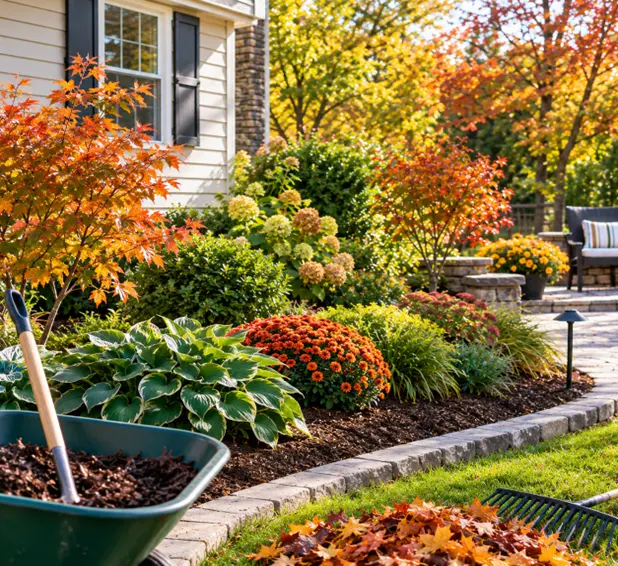
October is a transition month. Trees begin dropping leaves, annuals fade, lawns slow down, and cool-season plants become more visible. It is also a good time to see the basic “bones” of the yard, including walkways, patios, drainage routes, walls, trees, and planting beds. This makes it easier to put landscaping ideas into action while conditions are still workable.
Many projects are still possible in October because the soil may remain workable even as air temperatures cool. Trees, shrubs, and many perennials can establish roots while top growth slows. Fall is also a productive time for lawn aeration, overseeding, bulb planting, garden cleanup, and soil improvement.
Extension guidance notes that fall is often a good time for lawn aeration, seeding, bulb planting, garden cleanup, and winter preparation. It also recommends continuing to mow turf while it is still growing and keeping leaves from building up heavily on the lawn.
The key is to work with the season rather than against it. Do not rush major construction in saturated soil, plant tender material too late for establishment, or prune plants aggressively when the correct pruning time is late winter or early spring.
1. Repair and Refresh the Lawn
A thin, compacted, weedy, or patchy lawn often needs attention in October. Cool-season turf can benefit from aeration, overseeding, soil testing, leaf management, and proper mowing during fall.
Aeration is particularly useful in areas with compacted soil, high foot traffic, poor drainage, heavy clay, or a thick thatch layer. Core aeration removes small plugs of soil, allowing water, air, and nutrients to reach the root zone more effectively.
After aerating, overseed bare or thin areas with a grass seed blend suited to your climate, sunlight, and use. Keep new seed consistently moist until it is established, but avoid creating puddles or washing seed away.
Leaves should not be allowed to sit in thick layers on the lawn. Heavy leaf cover can block light, hold moisture, and create conditions that encourage disease. You can rake leaves, compost them, or mulch them with a mower if the layer is not too thick.
Michigan State University Extension suggests mowing leaves when they are dry or only lightly damp, avoiding excessively thick layers, and using shredded leaves as a source of organic matter for turf or garden beds.
Keep mowing while grass is growing. Avoid scalping the lawn, but do not leave it excessively tall going into winter. The right final mowing height depends on grass type and local conditions.
2. Plant Trees, Shrubs, and Perennials
October can be a strong planting month for many trees, shrubs, and perennials. Cooler air reduces heat stress, while soil may remain warm enough for roots to establish before winter.
This is a good time to add:
- Native trees
- Evergreen shrubs
- Flowering shrubs
- Ornamental grasses
- Fall-blooming perennials
- Ground covers
- Privacy planting
- Pollinator gardens
- Foundation planting
- Small ornamental trees
Before putting these landscaping ideas into place, evaluate sunlight, mature plant size, soil drainage, and proximity to buildings, utilities, patios, and walkways. A plant that looks small at the nursery may become much larger over time.
Dig a hole that is wide enough for roots to spread but avoid planting too deeply. The root flare should remain visible above the final soil grade. Backfill with appropriate soil and water deeply after installation.
October garden guidance commonly notes that fall is an excellent time to plant larger plants, trees, and shrubs because roots can establish during cool weather before next summer’s heat arrives.
New plants still need water. Check soil moisture during dry weeks and continue watering as needed until the ground freezes.
3. Add Spring-Blooming Bulbs
October is one of the best months to plant bulbs for spring color. Bulbs can create a dramatic effect along walkways, beneath trees, in foundation beds, around patios, and in containers.
Consider planting:
- Tulips
- Daffodils
- Crocuses
- Hyacinths
- Alliums
- Grape hyacinths
- Snowdrops
- Scilla
- Fritillaria
Plant bulbs in drifts or groups rather than rigid rows. A cluster of 10, 25, or more bulbs often creates a more natural and impressive display than scattered individual bulbs.
Choose bulbs suited to your hardiness zone, soil moisture, and wildlife pressure. Some bulbs are more resistant to deer and rodents than others.
Lowe’s fall garden guidance recommends planting spring-blooming bulbs such as crocus, hyacinth, daffodils, and tulips in fall for early-season color.
Mark bulb locations if you plan to add new perennials or do additional digging in spring. This helps prevent accidentally disturbing bulbs before they emerge.
4. Improve Drainage Before Winter
October rain can reveal drainage problems that are easy to overlook during dry summer weather. Water pooling near the foundation, running across a patio, washing mulch into the lawn, or cutting channels through a slope should be addressed before winter.
Inspect:
- Downspouts
- Gutter outlets
- Patio edges
- Walkways
- Driveways
- Low lawn areas
- Retaining walls
- Drain grates
- Dry creek beds
- Swales
- Rain gardens
- Foundation planting beds
Common drainage improvements include extending downspouts, reshaping low spots, installing a swale, adding a rain garden, using permeable hardscape, repairing a French drain, or adding a gravel drainage strip.
Do not move water from one problem area to another without a plan. Water should flow safely away from the house and not be directed toward a neighbor’s property, public sidewalk, or septic system.
Autumn landscape-renovation guidance recommends using fall observations to identify runoff routes, low spots, and drainage needs before winter saturation makes the problems worse.
For foundation water issues, major grading, retaining walls, or complex drainage systems, hire qualified landscaping services or a drainage professional.
5. Refresh Mulch and Landscaping Borders
Fresh mulch can make a landscape look cleaner immediately, but it is also one of the simplest landscaping ideas to improve the yard. It helps regulate soil temperature, reduce weeds, protect roots, and limit erosion.
Use mulch around:
- Trees
- Shrubs
- Perennial beds
- Native plant gardens
- Vegetable gardens
- Walkway borders
- Foundation planting
- Fall containers
Apply a moderate layer, often around 2 to 3 inches, depending on the material and planting type. Keep mulch away from tree trunks, shrub stems, and perennial crowns.
Do not create deep “mulch volcanoes” around trees. Excess mulch against bark can trap moisture, encourage pests, and damage the trunk.
October is also a good time to improve landscaping borders. Repair metal edging, reset loose brick, replace shifted landscape blocks, or sharpen spade-cut edges around garden beds. A crisp edge helps contain mulch and makes the entire yard look more maintained.
Healthy fallen leaves can also be used as mulch in appropriate areas. Penn State and Michigan State guidance recommends using leaves as mulch or compost material, while removing diseased plant material and heavily infested debris from the garden.
6. Clean Up Vegetable Gardens and Plant Cover Crops
October is a valuable month for cleaning vegetable beds and preparing them for next year. Remove spent plants, rotting vegetables, weeds, and debris that may harbor insects or disease.
Healthy plant material can be composted. Diseased plants, moldy vegetables, and heavily infested material should be disposed of according to local recommendations rather than added to a home compost pile.
After cleanup, improve the soil with compost or well-aged organic matter. Avoid unnecessary tilling, especially in wet soil, because it can damage structure and increase erosion.
Cover crops can protect bare soil, reduce erosion, and add organic matter. Winter rye is one option that may still be planted in October in many regions, depending on local conditions. Penn State Extension notes that cover crops can be planted on fallow vegetable beds and that winter rye may be planted in October.
October is also a good time to plant garlic in many climates. Garlic generally needs time to establish roots before winter, then resumes growth in spring.
7. Divide and Replant Perennials
Overcrowded perennials may become less productive, develop bare centers, or compete for water and nutrients. October can be a useful time to divide certain summer-blooming perennials, depending on regional conditions and the plant species.
Plants that may be divided in fall include:
- Daylilies
- Irises
- Coneflowers
- Phlox
- Hostas
- Bee balm
- Garden mums
- Some ornamental grasses
- Certain asters
Dig carefully around the root mass, divide healthy sections, remove dead or damaged material, and replant promptly. Water the new divisions well so roots can establish.
Illinois Extension suggests dividing and transplanting suitable perennials in fall while avoiding excessive pruning of healthy plants. It notes that dormant-season pruning is often preferable for many shrubs and trees, while clearly dead limbs can be removed when visible.
Do not cut every perennial back to the ground. Some seed heads, grasses, and stems provide winter interest and food for birds. Remove diseased foliage and plants that have collapsed into walkways, but leave healthy structure where appropriate.
8. Repair Patios, Walkways, and Hardscape
Fall is a good time to inspect hardscape before snow, ice, and freeze-thaw cycles make small problems worse.
Check:
- Paver patios
- Brick walkways
- Stone steps
- Gravel paths
- Retaining walls
- Driveway edges
- Fire-pit areas
- Deck stairs
- Landscape lighting
- Edging
- Drainage channels
Look for loose pavers, cracked concrete, open joints, shifted stones, leaning blocks, exposed base material, standing water, washed-out gravel, or uneven steps.
Small repairs can prevent larger winter damage. Reset loose pavers, refill joints where appropriate, replace broken edging, stabilize gravel, and clean leaves from drainage routes.
Autumn is often a productive time for hardscape projects such as patios, walkways, retaining walls, and drainage improvements because work can be completed before spring demand and new planting season begin.
Avoid starting projects if the soil is saturated or freezing conditions are imminent. Proper excavation, base compaction, drainage, and curing time are essential.
9. Winterize Irrigation, Water Features, and Outdoor Equipment
Freezing water can damage irrigation lines, hoses, fountains, pumps, outdoor faucets, and plumbing connections. October is the time to create a winterization plan before the first hard freeze.
Prepare irrigation by:
- Reducing watering as temperatures cool
- Shutting off irrigation water where appropriate
- Draining hoses
- Disconnecting hoses from outdoor spigots
- Protecting backflow preventers
- Blowing out irrigation lines if recommended
- Inspecting sprinkler heads
- Checking valves and controllers
Many systems require professional winterization. An irrigation contractor can use compressed air correctly to clear water from the lines and reduce the risk of freeze damage.
For water features, follow manufacturer instructions. Some fountains need to be drained and covered. Pumps may need to be removed, cleaned, and stored indoors. Ponds may require a different plan if fish or aquatic plants remain in the system.
Clean garden tools, sharpen mower blades, drain fuel or add stabilizer when appropriate, and store equipment in a dry location.
10. Add Fall Lighting and Outdoor Living Features
Lighting is one of the simplest landscaping ideas for making the yard more comfortable after dark. Shorter days mean patios, paths, decks, and garden seating areas need safe, attractive lighting.
Use:
- Low-voltage path lights
- Step lights
- Deck lights
- Outdoor string lights
- Lanterns
- Wall sconces
- Tree uplights
- Fire-pit lighting
- Pergola lighting
- Motion-sensor lights near gates or side yards
Lighting should guide movement and improve safety without creating glare. Use warm-white LEDs for patios, dining areas, and garden views. Add brighter task lighting near grills, outdoor kitchens, doorways, and storage zones.
October is also the right time to prepare outdoor living spaces for cooler weather. Clean patio furniture, store cushions, inspect fire features, and add blankets, outdoor rugs, weather-resistant pillows, and fall planters.
A simple fire-pit zone or heated patio can extend the outdoor season. Always follow local fire rules and appliance clearances, and keep dry leaves, mulch, fabric, and furniture away from open flames.
Build a Month-End October Checklist
By the end of October, your yard should be safer, cleaner, and better prepared for winter. Use this quick checklist to make sure the essential projects are complete.
- Continue mowing while grass grows.
- Keep leaves from smothering turf.
- Aerate and overseed thin lawn areas where appropriate.
- Plant trees, shrubs, perennials, garlic, and bulbs.
- Water new plantings during dry periods.
- Remove diseased plant material.
- Apply mulch correctly.
- Repair loose paths, walls, and edging.
- Clear drainage routes.
- Inspect gutters and downspouts.
- Winterize irrigation and hoses.
- Store outdoor furniture accessories.
- Inspect lighting.
- Prepare fire features.
- Record notes for next year’s landscaping design.
Taking photos in October can also help with future planning and landscaping ideas. Once trees lose their leaves, you may see views, slopes, drainage paths, and structural landscape problems that are hidden during summer.
Common October Landscaping Mistakes
Avoid over-pruning shrubs and trees in fall. While dead, damaged, and diseased branches may be removed, aggressive pruning can stimulate tender growth or remove winter structure. Many plants are best pruned during dormancy or after they bloom at the appropriate season.
- Avoid allowing leaves to build up on lawns, patios, and drains. Thick leaf layers can smother grass, block drainage, stain pavers, and create slippery paths.
- Avoid planting too late if there is not enough time for roots to establish before the ground freezes. Check local frost dates and plant recommendations.
- Avoid using too much mulch. More is not better. Keep mulch away from trunks and crowns.
- Avoid ignoring water problems because winter will only make them worse. If fall rain reveals standing water, erosion, or foundation runoff, address it before freezing temperatures arrive.
- Avoid putting off irrigation winterization. A frozen irrigation line can create expensive damage that is much harder to repair in spring.
When to Hire Landscaping Services
Many October projects are manageable for homeowners. Leaf cleanup, container planting, mulch refreshes, basic garden cleanup, and small perennial divisions can often be DIY tasks.
Professional landscaping services are valuable when the project involves:
- Major drainage corrections
- Landscape grading
- Retaining walls
- Paver patios
- Large walkways
- Outdoor kitchens
- Fire-pit patios
- Irrigation winterization
- Tree pruning or removal
- Large tree planting
- Electrical landscape lighting
- Native planting design
- Complete yard renovation
- Slope stabilization
- Water-feature winterization
A professional can help develop a long-term landscaping design that connects fall cleanup with future projects. For example, a drainage repair this October may prepare the yard for a patio next spring, while a new planting bed may become part of a larger native landscape plan.
Bring Your Landscaping Ideas to Life This October
October is the ideal time to prepare your yard for winter while making practical improvements that will pay off next spring. Start with the projects that matter most: repair drainage, refresh planting beds, strengthen the lawn, plant trees and bulbs, winterize irrigation, and improve outdoor safety with paths and lighting.
Ready to turn your best landscaping ideas into a healthier, more functional yard? Fall is a great time to address landscape problems before winter arrives. Whether your property needs new planting, hardscape repairs, drainage improvements, irrigation winterization, or a thorough seasonal cleanup, the right plan can make a lasting difference.
At Hawkins Landscaping Inc., our professional landscaping services can help you care for your property and prepare it for the seasons ahead. From planting and drainage solutions to hardscape improvements and complete landscaping design, we can develop an approach that fits your home, property conditions, and outdoor goals.
With thoughtful planning and quality workmanship, your landscape can look better, function more efficiently, and be better prepared for Maryland’s changing weather.
Ready to get your yard ready for the season? Call (301) 898-3615 or visit Hawkins Landscaping Inc. to schedule your consultation. Ask about flexible financing options for your next outdoor project.