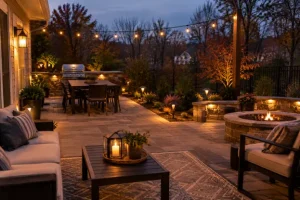
The best November fire pit designs combine an appropriately selected fire feature with comfortable seating, a stable surface, clear walking routes, and practical lighting. A beautiful fire pit should feel connected to the backyard—not like an isolated object surrounded by unused space.
Start by choosing between wood and gas, confirming local requirements, and identifying a suitable location. Then build the design around how you plan to gather, cook, and maintain the area.
From classic masonry surrounds to contemporary fire tables, these fire pits ideas can help you create an inviting outdoor setting for cooler evenings. This guide also explores fire pits with bricks, fire pits with grill features, and the planning details that make a backyard gathering area work.
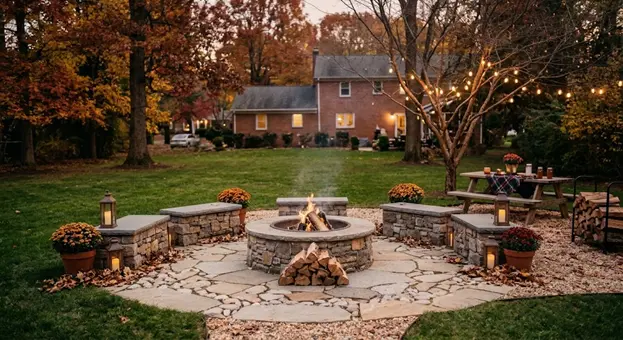
Choose Fire Pit Designs That Fit the Way You Gather
Before selecting a shape or finish, decide what you want the space to do.
A couple enjoying short evening breaks may prefer a convenient gas feature. A household that enjoys tending a wood fire may prioritize a traditional gathering circle. Frequent outdoor cooks might want a purpose-built cooking system.
Consider:
- How many people usually gather.
- Whether cooking is a priority.
- How much maintenance you want.
- Where fuel and accessories will be stored.
- Whether the feature will be permanent or portable.
- How people will reach the area after dark.
These decisions guide the design more effectively than choosing a fire pit from a photograph.
Plan the whole gathering area with your preferred fire pit designs in mind before purchasing the centerpiece.
1. Create a Classic Circular Gathering Space
A round fire pit can anchor an informal seating arrangement and encourage conversation.
Use the surrounding patio to define the gathering area, then position chairs where guests can move comfortably without crossing close to the fire.
Avoid filling every available section with seating. Leave clear connections to the house, garden gate, and other outdoor spaces.
Choose movable chairs if you want flexibility. Fixed seating requires more careful placement because guests cannot adjust its distance from the heat.
The National Fire Protection Association recommends arranging chairs a safe distance from the fire and keeping children and pets at least three feet away. Manufacturer instructions and local rules may require additional separation.
A circular design works best when circulation is planned as carefully as appearance.
2. Use Fire Pits With Bricks for Traditional Character
Fire pits with bricks can complement a traditional house, brick walkway, or established garden.
The key is distinguishing the decorative exterior from the materials exposed to heat. Do not assume any leftover brick, landscape block, adhesive, or mortar is suitable for every part of a fire pit.
Choose a purpose-designed system or have a qualified mason specify the assembly.
Some masonry fire pit designs use a metal liner to protect the surrounding blocks. A Home Depot construction guide, for example, includes a protective fire ring and directs builders to follow the product manufacturer’s instructions for the interior materials.
Coordinate brick color and joint appearance with nearby features, but prioritize heat suitability and construction details over visual matching.
3. Choose a Square or Rectangular Fire Feature
Straight-edged fire features can suit contemporary patios and more structured garden layouts.
A rectangular design may relate neatly to a long outdoor sofa, while a square feature can anchor a compact arrangement.
Keep the surrounding layout balanced without assuming every edge needs seating. One open side may provide the most practical access.
If the feature is gas-fired, plan the approved fuel supply, controls, ventilation, and service access before completing the surrounding construction.
Do not conceal required openings behind decorative cladding or planting.
A clean appearance should come from coordinated detailing, not from hiding components that need to remain accessible.
Use the manufacturer’s installation requirements as the foundation for the design.
4. Add Grill Features to Your Fire Pit Designs for Outdoor Cooking
Fire pits with grill accessories can turn a gathering area into a cooking destination, but the equipment must be designed for that purpose.
Look for a compatible cooking grate or manufacturer-approved system rather than placing a makeshift rack over a decorative fire feature.
Consider how you will:
- Add or manage fuel
- Adjust the cooking surface
- Handle hot utensils
- Set down food and serving dishes
- Separate raw and cooked ingredients
- Clean the cooking components
Do not assume a gas fire table or decorative burner can be used for cooking. Check the appliance instructions before introducing food or accessories.
Purpose-built cooking bundles are available for some fire pits, with specific fuel recommendations and compatible grill components.
5. Design a Compact Conversation Corner
A small backyard does not need an oversized fire feature.
Begin with the required clearances. If a compliant location is available, choose a feature and seating arrangement that fit within it rather than forcing a large design into the space.
Two or three suitable chairs may create a more comfortable setting than a crowded sectional.
Keep accessories restrained. A small side table outside the heat zone can be more useful than several decorative pieces competing for space.
If the property cannot accommodate the required separation from structures or combustible materials, choose another outdoor-living approach rather than compromising fire safety.
Compact design is about selecting fewer elements—not reducing essential clearances.
6. Consider a Portable Fire Pit Before Building Permanently
A portable model can provide flexibility, but “portable” does not mean suitable for any location.
NFPA recommends using fire pits outdoors on even ground or a level, noncombustible surface and keeping them away from structures, vegetation, and overhead hazards.
Check the appliance instructions for surface compatibility and any required protective accessories.
Do not assume a stand or mat makes every deck, patio finish, or artificial surface appropriate.
Once the approved location is established, keep the surrounding furniture arrangement simple.
Never move a hot or burning fire pit. Wait until the appliance and contents are fully cool, then follow the manufacturer’s handling instructions.
Portability is a storage and layout benefit, not an exemption from safe placement.
Choose Between Wood and Gas Thoughtfully
Fuel choice affects the atmosphere, maintenance, and installation requirements of different fire pit designs.
Consideration | Wood-burning fire pit | Gas fire feature |
Experience | Visible logs and active fire tending | Controlled flame through an approved appliance |
Fuel planning | Suitable dry wood and storage | Approved propane or natural-gas supply |
Cleanup | Ash and combustion residue | Appliance-specific cleaning and service |
Cooking | Possible with a suitable system | Only where the appliance permits it |
Installation | Depends on feature and local requirements | May require qualified gas installation |
Operation | Regular fuel management | Manufacturer-directed ignition and shutdown |
Neither option should be described as maintenance-free.
Confirm what the chosen appliance permits before planning cooking accessories, decorative media, or surrounding construction.
The best choice is the one that matches your routine and can be installed appropriately.
Put Fire Safety Ahead of the Floor Plan
A November backyard can contain dry leaves, stored furniture, and seasonal decorations. Check the entire surroundings before deciding where the fire feature belongs.
NFPA recommends locating fire pits outdoors at least 10 feet from anything that can burn, away from siding, decks, railings, vegetation, eaves, and overhanging branches. Local rules or manufacturer instructions may require greater distances.
Do not treat 10 feet as a universal approval for every product or setting.
Verify restrictions, permits, and temporary burning bans with the relevant authority.
Keep the fire away from exits and everyday walking routes. The gathering area should not force people to pass close to flames when entering or leaving the house.
Plan the Surface and Drainage Together
The fire pit needs a stable setting, and the people around it need dependable footing.
Choose a surface and construction method suitable for the appliance, site, and intended use. Confirm whether heat protection is required for the specific paving material.
Avoid placing chairs partly on paving and partly on soft or uneven ground.
Inspect the proposed location after rain. Water collecting beneath the fire pit or across the approach may require a separate drainage solution.
For a permanent installation, discuss foundations, excavation, drainage, and service access before work begins.
A decorative gravel area, paved patio, and built-in masonry structure can have different preparation requirements. Do not copy a construction detail without checking whether it fits your project.
Make Seating Comfortable Without Crowding the Fire
November comfort comes from thoughtful positioning in fire pit designs, not simply moving closer to the flames.
Arrange seating according to the appliance instructions and the heat it produces. Preserve clear routes behind or between chairs where practical.
Keep cushions, blankets, bags, and clothing away from sparks and hot surfaces.
Avoid placing a fire feature where prevailing conditions repeatedly direct smoke toward the seating or neighboring windows. Never use an improvised enclosure to control wind.
NFPA advises maintaining safe distances and not operating a fire when conditions could allow it to spread.
If the weather is unsuitable, postpone the fire. The seating area can still function as an outdoor gathering space without it.
Add Lighting Beyond the Fire
Firelight creates atmosphere, but it does not reliably illuminate steps, furniture edges, or the route back to the house.
Provide independent lighting for access and serving areas.
Possible options include shielded path fixtures, appropriate wall lights, or suitable outdoor table lamps positioned away from heat.
Keep electrical cords outside the walking route and follow outdoor-use instructions.
A useful lighting plan lets you prepare the area before ignition and leave safely after the fire is extinguished.
Avoid hanging decorative strands directly above the fire feature unless the complete arrangement is expressly permitted by the relevant instructions and requirements.
The fire should remain the visual centerpiece without becoming the only source of visibility.
Use Planting to Frame—not Enclose—the Space
Planting can connect a fire pit patio to the rest of the garden, but it should remain outside required clearances.
Do not surround the feature with dry grasses, fallen leaves, combustible mulch, or overhanging branches.
NFPA specifically recommends clearing away materials that can burn and keeping fire pits away from vegetation.
Choose the planting layout after the safe operating area is established.
Leave access for inspection and maintenance. Dense planting should not conceal fuel connections, appliance controls, or other service points.
For visual warmth, use coordinated containers or planting beyond the clearance area rather than crowding the fire itself.
A well-framed space can still feel open and connected to the backyard.
Burn Appropriate Wood and Consider Smoke
For wood-burning designs, fuel quality matters.
The U.S. Environmental Protection Agency recommends burning only seasoned, dry wood. It advises checking moisture content, with about 20 percent identified as an appropriate target.
Do not burn construction waste, plastic, garbage, yard waste, or green wood. The EPA warns that these materials create more smoke and can be toxic.
Pressure-treated and painted wood should also stay out of the fire.
Store firewood so it remains dry while allowing airflow.
Consider neighbors and household members who may be sensitive to smoke. The EPA advises against burning during air-quality alert days.
An inviting backyard should remain considerate of the people around it.
Build Storage Into the Overall Plan
Firewood, cooking tools, covers, and maintenance equipment need a designated place.
Keep stored fuel and combustible accessories outside required clearances. Do not turn the area beneath or beside a hot appliance into convenient storage.
For cooking setups, provide a suitable place for tools and serving items away from flames and pedestrian movement.
Store removable grill components according to their care instructions.
If the design includes gas cylinders or connections, follow the appliance and supplier requirements rather than improvising an enclosure.
A clear storage plan reduces clutter and makes shutdown easier.
Choose accessories you will use regularly. Extra equipment can make a simple gathering space more demanding to maintain.
Budget for the Complete Gathering Area
The fire feature is only part of the cost.
A realistic project may include:
- Site preparation and excavation
- A suitable base or paved surface
- The appliance or masonry system
- Fuel supply and specialist installation
- Seating and circulation
- Lighting
- Drainage
- Covers and storage
- Cleanup and restoration
Compare proposals using equivalent scopes.
A low appliance price may not reflect the work required to create a suitable location.
If the budget is limited, simplify decorative finishes rather than omitting essential preparation.
Phased construction can work when the overall plan is established first. Avoid installing landscaping that later needs removal for utility work or paving.
Common Fire Pit Design Mistakes
Avoid these recurring problems when planning fire pit designs:
- Selecting the location before checking clearances.
- Assuming ordinary masonry is suitable for direct heat.
- Adding cooking accessories to a decorative appliance.
- Crowding the area with fixed seating.
- Relying on firelight for steps and access.
- Leaving dry leaves around the feature.
- Treating a portable model as safe on every surface.
- Ignoring local restrictions or poor weather.
NFPA emphasizes appropriate location, supervision, clearance, and complete extinguishment—not just the appearance of the fire pit.
A responsible design should make those habits easier to follow.
Your November Fire Pit Checklist
Before using the space:
- Confirm local restrictions and current conditions.
- Review the appliance instructions.
- Clear combustible debris.
- Check the surface and surrounding access.
- Position furniture appropriately.
- Prepare the manufacturer-recommended extinguishing equipment.
- Keep children and pets at a safe distance.
- Assign a responsible adult to supervise.
- Follow the correct shutdown procedure.
- Confirm the fire is fully extinguished before leaving.
NFPA recommends supervision throughout use and complete extinguishment before leaving a fire unattended.
Recheck the area after wind or rain changes the setup.
Create a Welcoming November Gathering Space With Fire Pit Designs
The most successful fire pit designs combine atmosphere with a clear plan for placement, seating, lighting, fuel, and maintenance.
Ready to make your backyard more inviting this November? Hawkins Landscaping Inc. can help you create an outdoor gathering space with thoughtful landscaping and hardscaping features. Whether you are planning a cozy patio, adding seating areas, or exploring different fire pit designs, the right layout can make your backyard more comfortable and enjoyable during cooler evenings.
From classic fire pits with bricks to purpose-built fire pits with grill accessories, choosing the right feature starts with your property’s layout, available space, drainage, and maintenance needs. A well-planned design can complement your patio and surrounding landscape while creating a welcoming place for family and friends. For gas connections, electrical work, and other regulated installations, always use qualified specialists.
With over 50 years of experience serving Frederick County and surrounding areas, Hawkins Landscaping Inc. can help bring your outdoor living ideas to life with practical, attractive landscaping and hardscaping solutions.
Ready to upgrade your backyard? Call (301) 898-3615 or visit hawkinslandscaping.com to schedule your consultation. Ask about our flexible financing options for your outdoor project.