November landscaping in MD should focus on protecting plants, managing leaves thoughtfully, maintaining safe access, and identifying problems before winter makes them harder to address. It is also an opportunity to evaluate what worked in your landscape and plan improvements for next year.
The most useful tasks are not always the most visible. Checking soil moisture, keeping mulch away from trunks, clearing drainage routes, and respecting seasonal lawn-care limits can matter more than making every garden bed look freshly installed.
This guide explains how to prioritize November maintenance, refine your landscaping design, and choose landscaping services that address your property’s actual needs. It also outlines what to ask when comparing landscaping professionals in Frederick.
Start With Your Property When Planning Landscaping in MD
Maryland landscapes vary considerably. A sheltered urban garden, an exposed Frederick-area property, and a coastal yard do not experience identical conditions.
For landscaping in MD, use the calendar as a planning tool, but make decisions based on soil moisture, plant condition, weather, and how you use the space.
Begin with a walk around the property. Inspect the entrance, lawn, planting beds, trees, patio, and drainage routes. Take photographs of recurring puddles, thin grass, damaged plants, and awkward access points.
Separate your observations into three categories:
- Maintenance that should happen now.
- Problems requiring professional assessment.
- Improvements to plan for a more suitable season.
This prevents a busy November schedule from becoming a collection of unnecessary treatments and rushed construction projects.
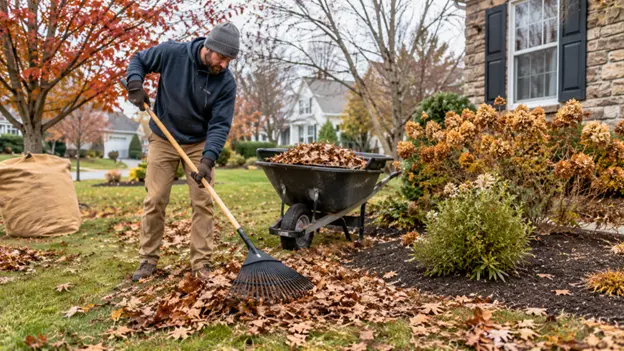
1. Manage Leaves Where They Cause Problems
Leaf cleanup should be selective rather than automatic.
Remove heavy accumulations from lawns, steps, entrances, and drainage openings. Keep essential walking routes visible and usable.
However, you do not need to remove every leaf from every corner of the yard. University of Maryland Extension recommends retaining some leaves, dead plant stalks, and branches in suitable areas to support wildlife. Leaves can also be moved from lawns to planting beds or composting areas.
Where leaves remain on grass, manageable quantities can be shredded with a mulching mower so they decompose more readily. Keeping leaves intact elsewhere is better for the wildlife using them.
For properties with several mature trees, schedule repeated visits rather than expecting one cleanup to remain effective throughout the month.
2. Respect Maryland’s November Fertilizer Deadline
One of the most important November lawn-care details is timing, especially for landscaping in MD.
University of Maryland Extension states that homeowners may not apply lawn fertilizer between November 15 and March 1 under Maryland’s lawn fertilizer law.
Do not apply fertilizer simply to use up a bag before the deadline. First review what the lawn has already received and whether another application is appropriate.
If a contractor proposes late-season treatment, ask them to explain the current rules applicable to professional applicators, the product, and the planned rate. Do not assume homeowner guidance and professional requirements are identical.
Keep treatment records to prevent overlapping applications.
A responsible service provider should explain why a treatment is needed—not merely include it because “winter feeding” appears in a seasonal package.
3. Do Not Rush Lawn Seeding in November
Thin grass can become especially noticeable after leaves and seasonal decorations are removed. However, November is not the time to assume new seed will establish successfully.
University of Maryland Extension advises that November is too late to sow lawn seed and expect it to survive winter. It also cautions that shorter days limit establishment even for sod.
Its lawn-establishment guidance identifies mid-August through mid-October as the preferred period for cool-season seeding and notes that November frosts can harm young seedlings.
Instead of rushing, document the affected areas and investigate why they struggle.
Persistent shade, wet soil, repeated foot traffic, or unsuitable grass selection may require more than another application of seed.
Plan the repair around the cause and an appropriate establishment window.
4. Continue Mowing According to Growth
A lawn does not need mowing because a service visit is scheduled, nor should mowing stop solely because November has arrived.
Assess growth and surface conditions. Avoid unnecessary equipment traffic where the ground is saturated or the grass is vulnerable.
For newly seeded areas, follow the establishment instructions rather than treating them like mature turf. Short November days already limit grass growth and establishment, according to University of Maryland Extension.
Remove heavy leaf cover and keep frequently used shortcuts from becoming worn tracks.
If lawn maintenance repeatedly conflicts with the way people move through the property, record that issue for a future design review.
A properly positioned path or a different planting approach may serve the area better than repeated lawn repairs.
5. Check Soil Moisture Around Trees and Shrubs
Cool weather does not guarantee that plants have enough water.
University of Maryland Extension recommends checking soil moisture beneath the surface, approximately six inches deep. Moist or damp soil generally does not need watering; dry soil calls for thorough watering appropriate to the plant and site.
Pay particular attention to recent plantings and evergreens.
The university advises deeply watering evergreens in fall before the ground freezes when precipitation has been insufficient. They continue losing water during winter, particularly during sunny, windy conditions.
Do not water by habit or rely only on the appearance of the mulch.
Check the root-zone soil and adjust according to rainfall. The aim is adequate moisture, not persistently saturated ground.
6. Correct Mulch Problems Before Adding More
Fresh mulch can make a yard look organized, but repeated applications can create excessive depth.
Inspect existing beds before ordering a delivery. Determine whether mulch needs replenishing, redistribution, or removal.
University of Maryland Extension advises keeping organic mulch no more than three inches deep and approximately three inches away from trunks. Mulch piled against bark can encourage decay and provide an entry point for pests and disease.
Do not build mulch “volcanoes” around trees.
Also check whether water penetrates the mulch into the soil. Light watering may wet only the surface while leaving roots dry.
A careful adjustment can provide a cleaner appearance without the cost or risk of adding another unnecessary layer.
7. Plant Selectively, Not Just Because Stock Is Discounted
Late-season nursery discounts can be appealing, but price should not determine plant selection.
Consider mature size, sunlight, soil moisture, exposure, and the time available for aftercare.
University of Maryland Extension’s gardening calendar notes that trees and shrubs can be planted until the ground freezes. That does not mean every species or every site is equally suitable for a late planting.
Ask about the requirements of the specific plant before purchasing.
Avoid working soil when conditions make proper installation difficult. Confirm who will water and monitor the planting after installation.
If the right plant or suitable conditions are unavailable, use November to complete the design and source plants for a better window.
Planning is productive work, even when planting waits.
8. Leave Appropriate Garden Structure Standing
A tidy landscape does not require cutting every perennial to ground level.
University of Maryland Extension encourages leaving some dead stalks, leaves, and branches in portions of the garden for wildlife habitat.
Choose where that approach fits your property. A defined naturalistic bed can remain intentional while entrances and paths stay clear.
Remove or manage plant material that obstructs access. Where disease is suspected, obtain appropriate guidance rather than assuming all debris should remain.
Use selective maintenance to preserve texture without allowing plants to collapse across walking surfaces.
The result can be a garden that looks quieter in November but still has structure and ecological value.
Explain these preferences to your contractor so retained material is not mistaken for unfinished work.
9. Evaluate Drainage After Rain
November is a useful time to observe how water moves across the property before winter obscures the ground.
Look for puddles near foundations, runoff crossing walkways, sediment washing from beds, and downspouts emptying into inconvenient locations.
Photograph the pattern during or shortly after rainfall when it is safe to inspect.
Do not approve a drainage feature without understanding its purpose and outlet. Ask where water originates, where it will be directed, and how the system will be maintained.
Some concerns require grading, plumbing, or engineering expertise rather than routine garden maintenance.
Avoid making substantial changes based on guesswork. A landscape professional should explain which observations are clear and which require further investigation.
A good approach to landscaping in MD coordinates water, planting, paving, and property use.
10. Inspect Walkways, Patios, and Steps
Your November checklist should include the surfaces connecting the house to the driveway, garden, and outdoor storage.
Remove leaves and inspect for rocking paving, loose steps, raised transitions, and deteriorated edges.
List issues separately from cosmetic stains. The priority is dependable access, not making every surface look new.
For repairs, ask the contractor to diagnose the cause. Resetting a paver may be straightforward, but repeated movement can indicate a deeper problem.
Consider winter maintenance as well. Identify where snow will be stored and whether fixtures, containers, or edging interfere with clearing.
If a route cannot remain usable, plan an appropriate alternative.
A beautiful yard becomes less functional when essential connections are overlooked.
11. Review Outdoor Lighting Before Darker Evenings Set In
Inspect the property after dark rather than assuming daytime fixture placement guarantees useful visibility.
Follow the route from parking to the entrance, then check gates, steps, and any backyard areas you expect to use.
Look for blocked fixtures, failed lamps, uncomfortable glare, and locations where furniture or planting interrupts the light.
Have damaged or uncertain electrical equipment assessed by a qualified professional.
Do not add brightness automatically. Better placement or shielding may address the problem without illuminating unnecessary areas.
If permanent lighting improvements are planned, coordinate them with future paving and planting work.
Include access for maintenance in the design. A fixture hidden permanently behind dense growth is difficult to service and unlikely to perform as intended.
12. Prepare Containers, Furniture, and Outdoor Equipment
Inventory the items that will remain outside through winter.
Check the manufacturer’s instructions for containers, furniture, cushions, portable lighting, and other accessories. Outdoor use does not necessarily mean suitable for every winter condition.
Clean and dry stored items appropriately. Keep storage arrangements from blocking doors, drains, or essential routes.
For irrigation, outdoor sinks, pumps, and water features, arrange equipment-specific winterization where needed. Ask a qualified specialist about systems you do not know how to shut down safely.
Do not assume one generic procedure applies to all equipment.
Label disconnected or winterized components and retain instructions. Clear records make spring reopening easier and help prevent accidental operation before a system is ready.
13. Use November for Soil Testing and Next-Year Planning
Not every productive task involves installing something.
University of Maryland Extension identifies this period as a good time for laboratory soil testing to establish nutrient and pH needs for the following year.
Use the results alongside your observations. A soil test can inform decisions about landscaping in MD, but it does not replace assessment of shade, drainage, or wear.
Review planting combinations that performed well and identify areas needing redesign.
Consider whether a struggling lawn section should become a suitable planting bed or whether a frequently used shortcut needs a path.
Planning now gives you time to compare options without the pressure of an immediate installation deadline.
The strongest improvements address recurring problems rather than simply changing appearances.
A Practical November Yard Preparation Schedule
Organize work by urgency rather than trying to finish everything in one weekend.
Stage | Main Priorities |
Early November | Assess the property, review lawn treatments, begin selective leaf management |
Before the homeowner fertilizer cutoff | Confirm whether any lawful, appropriate treatment remains necessary |
Throughout the month | Check plant moisture, clear essential routes, inspect after storms |
Before freezing conditions affect equipment | Complete appropriate winterization and protected storage |
Late November | Review records, obtain estimates, and plan deferred projects |
Weather and site conditions should guide the exact timing of landscaping in MD.
University of Maryland’s November guidance emphasizes leaf management, fertilizer restrictions, and realistic expectations for lawn establishment rather than a universal “do everything” approach.
Choose Landscaping Services That Match the Work
A seasonal cleanup, a drainage assessment, and a landscape redesign are different services to consider when planning landscaping in MD.
Before requesting estimates, identify which outcomes you need.
A written proposal should explain:
- Leaf handling and disposal.
- Lawn maintenance and treatment scope.
- Plant watering or protection.
- Mulch adjustment or replacement.
- Hardscape inspection and repairs.
- Equipment winterization responsibilities.
- Cleanup and restoration.
- Work that requires specialist coordination.
Clarify exclusions.
For example, routine landscaping services may not include electrical repairs, tree-risk assessment, or irrigation shutdown.
Compare equivalent scopes rather than total prices alone. One proposal may include several leaf visits and hauling; another may cover a single cleanup.
A useful provider makes those differences easy to understand.
Hiring Landscaping Professionals in Frederick
When comparing landscaping professionals in Frederick, look for experience with properties and project types similar to yours.
Ask how the provider distinguishes necessary maintenance from optional improvements.
A good assessment should account for your site, not automatically prescribe the same package used everywhere.
Request references or relevant project examples, verify applicable credentials and insurance, and clarify who performs specialist work.
For design projects, ask whether the plan includes plant maturity, drainage, circulation, maintenance access, and phased scheduling.
For maintenance, ask how service decisions change with weather.
Avoid providers who promise successful late seeding, universal plant suitability, or permanent drainage solutions without evaluating the property. Maryland Extension’s seasonal guidance makes clear that timing and conditions matter.
Common November Landscaping Mistakes
Watch for these frequent problems:
- Removing every leaf regardless of location.
- Applying fertilizer without checking timing and need.
- Expecting November lawn seed to establish reliably.
- Watering automatically without checking soil.
- Adding mulch over an already deep layer.
- Buying plants without a site and care plan.
- Prioritizing decoration over access and drainage.
- Paying for services without a defined scope.
Maryland Extension recommends selective leaf retention, appropriate watering, restrained mulch depth, and seasonally realistic lawn care.extension.
Often, better preparation means doing the right work—not doing more work.
Prepare Your Yard for Winter With Landscaping in MD
Start with the essentials: usable paths, sensible leaf management, appropriate plant moisture, and attention to recurring problems.
Ready to prepare your yard for the colder months? Hawkins Landscaping Inc. offers professional landscaping and hardscaping solutions to help homeowners in Frederick County keep their outdoor spaces attractive, functional, and manageable. November is a great time to assess your property’s needs, address seasonal maintenance, and plan improvements before winter arrives.
Whether you need seasonal cleanup or a more comprehensive landscaping design, the right landscaping services can make a difference. Consider clearing fallen leaves, checking drainage, preparing planting beds, and addressing walkway or patio concerns. An on-site assessment can help identify which improvements to your landscaping in MD need immediate attention, which require specialist assistance, and which can wait until spring.
With over 50 years of experience serving Frederick County and surrounding areas, Hawkins Landscaping Inc. can help you create a practical outdoor maintenance and improvement plan tailored to your property.
Ready to get your yard winter-ready? Call (301) 898-3615 or visit hawkinslandscaping.com to schedule your consultation. Ask about our flexible financing options for your outdoor project.