A front yard should look inviting long after summer flowers begin to fade. The best fall-ready landscape design combines colorful foliage, late-blooming perennials, ornamental grasses, evergreen structure, clean hardscape, and seasonal containers. When these elements work together, a property can look polished from early fall through winter rather than relying on a short-lived display of mums and pumpkins.
The key is to build a front yard with strong “bones”—walkways, trees, shrubs, edging, lighting, and layered planting—then add seasonal color as an accent. This approach creates curb appeal in fall while also making the landscape easier to maintain year-round.
This guide shares 15 practical landscape ideas for front yards that remain attractive through the fall season. Whether you want a simple weekend refresh or a larger renovation, these landscape design strategies can help you create a more welcoming and long-lasting outdoor space.
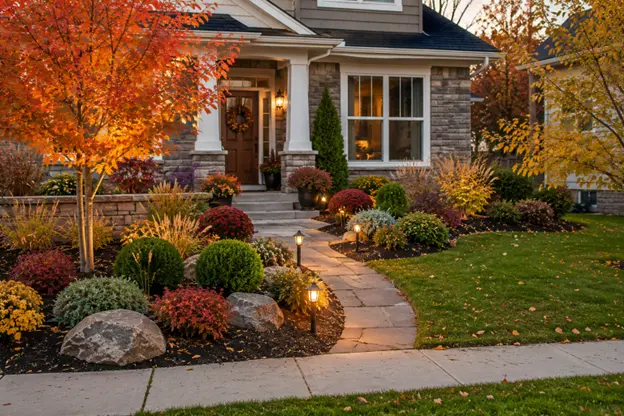
Why Fall Front Yard Landscape Design Matters
Fall is often the season when a landscape either proves its strength or starts to look tired. Summer annuals fade, leaves begin to fall, and the front yard becomes more visible as days shorten and people spend more time arriving home after dark.
A strong landscape design should provide:
- Color from foliage, flowers, berries, or seed heads.
- Texture from grasses, bark, stone, and evergreen leaves.
- Structure from shrubs, trees, paths, and edging.
- Safe access along walkways and steps.
- A clear visual route to the front door.
- Interest that continues after the first frost.
- Easy maintenance before winter.
Good garden “bones” include evergreen shrubs, trees with attractive form or bark, ornamental grasses, pathways, raised beds, fences, gates, and other hardscape features. Seasonal flowers can enhance these features, but they should not be the only thing making the landscape look good.
1. Build a Layered Foundation Planting
Foundation planting creates the visual bridge between the house and the yard. In fall, it should provide depth and structure without blocking windows, doors, walkways, or architectural details. A well-planned landscape design can balance these elements while keeping the home’s architecture visible.
Use three planting layers:
- Low layer: Ground covers, compact perennials, sedges, and low-growing evergreens.
- Middle layer: Flowering shrubs, mounded grasses, asters, sedum, and medium-size evergreen shrubs.
- Back layer: Taller shrubs, small ornamental trees, upright grasses, or screening plants.
Choose plants based on their mature size, not their size at the garden center. Overcrowded foundation beds become difficult to maintain and can hide the home’s best features.
2. Add Ornamental Grasses
Ornamental grasses are among the most effective plants for fall landscape design. They add movement, seed heads, texture, and warm tones at a time when many flowering plants are slowing down.
Use grasses to:
- Frame a walkway
- Soften the edge of a driveway
- Add privacy near windows
- Fill gaps in large planting beds
- Create a backdrop for fall flowers
- Add texture near a mailbox
- Bring height to containers
- Create a focal point at the corner of the house
Many ornamental grasses tolerate heat, drought, and common pest pressure, and they can remain visually appealing into winter.
3. Plant Shrubs With Fall Foliage
Shrubs with colorful autumn leaves can provide weeks of interest without the constant replacement required by annual flowers. Look for plants that offer multiple seasons of value: spring blooms, summer foliage, fall color, berries, winter stems, or attractive bark.
Strong choices to research for your region include:
- Oakleaf hydrangea
- Ninebark
- Aronia or chokeberry
- Viburnum
- Fothergilla
- Blueberry
- Serviceberry
- Dogwood
- Virginia sweetspire
- Sumac
- Burning bush alternatives where invasive concerns exist
Choose species that suit your local climate and site. For example, some shrubs prefer moist soil, while others thrive in dry, sunny locations.
4. Use Late-Blooming Perennials
Late-blooming perennials provide color and pollinator value when summer flowers begin to fade. They are ideal for front-entry beds, walkway borders, mailbox gardens, and containers.
Good fall performers may include:
- Asters
- Sedum
- Black-eyed Susan
- Goldenrod
- Japanese anemone
- Autumn-blooming salvia
- Helenium
- Joe Pye weed
- Coreopsis
- Hardy mums
Use large drifts of two or three plants rather than placing one of every variety throughout the bed. Repetition creates a more professional, intentional look.
5. Create a Defined Walkway to the Front Door
The front walkway should guide guests clearly and safely to the entry. A path that is cracked, overgrown, muddy, or poorly lit can make even a beautiful landscape feel neglected.
Refresh the walkway by:
- Pulling weeds from paver or stone joints
- Power-washing hardscape
- Resetting uneven pavers
- Repairing cracked concrete
- Adding fresh gravel where appropriate
- Trimming plants away from the path
- Installing low-level landscape lighting
- Defining bed edges with metal, brick, or stone
- Framing the route with repeated plantings
For a cohesive effect, repeat plants, mulch, edging material, or lighting fixtures along the walkway. This draws the eye toward the front door and makes the entry feel purposeful.
6. Add Seasonal Containers at the Entry
Containers deliver immediate fall color and can be changed seasonally without rebuilding a planting bed. They are especially useful around front doors, porches, steps, mailboxes, and driveway entrances.
A balanced container design often includes:
- A tall “thriller” plant, such as ornamental grass, dwarf evergreen, or millet.
- Mid-height “filler” plants, such as mums, asters, pansies, heuchera, or ornamental kale.
- A trailing “spiller,” such as ivy, creeping Jenny, or another regionally appropriate trailing plant.
Place matching containers on either side of a symmetrical entry, or group three different-sized pots for a more relaxed look. Fall container combinations often use mums, kale, pansies, trailing vines, and ornamental grasses for seasonal color and texture.
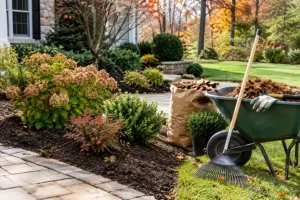
7. Refresh Mulch and Bed Edges
Fresh mulch creates one of the fastest curb-appeal improvements. It gives planting beds a clean, dark background that makes foliage and flowers stand out.
Before applying mulch:
- Pull weeds
- Remove dead annuals
- Rake old mulch flat
- Prune only damaged or diseased stems as needed
- Repair edging
- Check irrigation heads and drainage
Apply a moderate layer of mulch, generally around 2 to 3 inches. Keep mulch away from plant stems and tree trunks to avoid trapping moisture against bark.
8. Include Evergreen Structure
Evergreens are essential to a front yard that remains attractive after deciduous plants lose their leaves. They provide a stable backdrop for fall flowers, grasses, containers, and seasonal décor.
Use evergreens around:
- Foundation beds
- Front corners of the home
- Walkway entrances
- Mailbox gardens
- Driveway edges
- Porch plantings
- Privacy screens
Options may include boxwood, inkberry, holly, yew, arborvitae, juniper, dwarf spruce, and climate-appropriate native evergreen shrubs. Avoid creating a solid wall of identical evergreens. Mix different textures, heights, and tones of green. Pair broadleaf evergreens with conifers, grasses, and perennials for more depth.
9. Add a Small Ornamental Tree
A small ornamental tree can become the focal point of a front-yard landscape. It adds height, shade, spring flowers, fall color, berries, or winter branch structure, depending on the species.
Potential choices include:
- Serviceberry
- Redbud
- Dogwood
- Japanese maple
- Crabapple
- Eastern red cedar
- Witch hazel
- Fringe tree
- Compact magnolia
- Regionally native small trees
Choose a tree with a mature size that fits the site. Keep it away from overhead wires, underground utilities, foundations, sidewalks, and driveways.
10. Use Fall-Blooming Plants Around the Mailbox
A mailbox garden is a small but high-impact landscape feature because it is visible from the street. It can become a colorful focal point with little space or expense.
A fall mailbox bed may include:
- Compact ornamental grasses
- Sedum
- Asters
- Coneflowers
- Low evergreen shrubs
- Black-eyed Susan
- Native ground covers
- Seasonal containers
- Decorative stone or mulch
Keep plants low enough to maintain safe sightlines for drivers and access for mail delivery. Avoid thorny or sprawling plants that might interfere with the mailbox door.
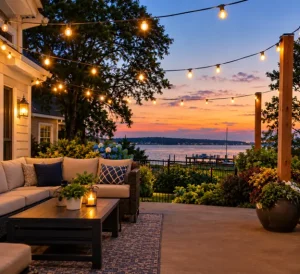
11. Improve Outdoor Lighting
Shorter fall days make lighting more important for safety and curb appeal. A few carefully placed fixtures can transform the front yard after sunset.
Use landscape lighting for:
- Walkway edges
- Front steps
- House numbers
- Driveway transitions
- Mature trees
- Entry columns
- Mailbox areas
- Architectural features
- Porch seating
Choose warm-white LEDs for an inviting appearance. Use low-voltage path lights to guide walking routes, step lights for elevation changes, and subtle uplights to highlight one or two focal-point trees or architectural details.
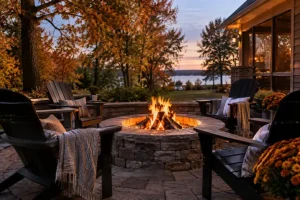
12. Add a Front-Yard Seating Area
A small bench, pair of chairs, or bistro set can make a front yard feel more welcoming and less purely decorative. It can also create a destination within a larger landscape.
Use a seating area near:
- A porch
- A wide front walk
- A shade tree
- A garden bed
- A side-yard garden
- A front patio
- A bay window
Choose weather-resistant furniture and maintain a clear route to the front door. A seating area should not block the walkway or make the front entry feel crowded.
13. Create a Pollinator-Friendly Fall Garden
A pollinator garden can add color, movement, and ecological value to the front yard. Late-season flowers are especially important because they can provide nectar and pollen when fewer plants are blooming.
Include a mix of:
- Asters
- Goldenrod
- Sedum
- Native grasses
- Coneflowers
- Joe Pye weed
- Bee balm
- Salvia
- Native shrubs with berries
Planting in groups makes it easier for pollinators to find flowers and gives the garden a stronger visual effect from the street.
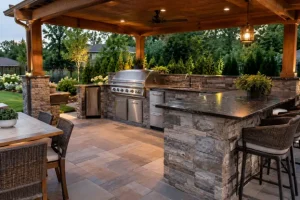
14. Update Hardscape and Edging Materials
Hardscape creates the durable framework for a front-yard landscape. Even simple upgrades can make the property feel more finished and easier to maintain. The right landscape design can also help these hardscape elements work together with planting beds, walkways, and the home’s architectural style.
Consider:
- Brick or stone edging
- A paver walkway
- Decorative gravel around planting beds
- A small front patio
- A stone border around a tree
- A new mailbox post
- A pathway to the side yard
- A decorative gate or arbor
- Retaining walls on slopes
- A refreshed driveway edge
Hardscape should complement the home’s style. A rustic stone path may suit a cottage-style home, while clean concrete pavers and metal edging can work well with contemporary architecture.
15. Use Seasonal Décor With Restraint
Seasonal décor can enhance an already strong landscape, but it should not be the only source of fall appeal. Use décor as an accent rather than filling every open space.
Simple options include:
- Pumpkins and gourds
- A natural wreath
- Lanterns
- Cornstalk bundles
- Decorative baskets
- Dried hydrangeas
- Fall-themed doormats
- Outdoor-safe candles
- A small harvest display near the porch
For an elevated look, choose a limited color palette. White pumpkins, deep burgundy mums, dark green evergreens, and natural wood accessories can look sophisticated. Traditional orange pumpkins, gold flowers, and red foliage create a brighter classic fall palette.
When to Hire Landscape Services
Homeowners can handle many small fall projects themselves, including planting containers, refreshing mulch, cleaning paths, dividing perennials, or adding simple seasonal décor.
However, professional landscape services may be worthwhile for:
- Complete front-yard landscape design
- Large tree planting or pruning
- Drainage corrections
- Retaining walls
- New walkways or patios
- Low-voltage lighting systems
- Irrigation installation
- Major shrub removal
- Grading and erosion control
- Large-scale planting plans
A professional can evaluate sunlight, drainage, soil, traffic flow, plant maturity, and maintenance needs before recommending a design. This helps prevent common problems such as oversized shrubs, poor drainage, crowded beds, and materials that clash with the home.
Create Lasting Front Yard Beauty With Landscape Design
A front yard that stays beautiful through fall begins with strong structure: healthy shrubs, evergreen anchors, ornamental grasses, clear walkways, clean edges, and lighting that makes the home feel inviting after dark. Seasonal flowers and décor then become finishing touches, not the entire design.
Ready to upgrade your curb appeal? Start with one or two simple landscape ideas—refresh your mulch, add a colorful fall container display, improve your walkway, or introduce a late-season planting bed that adds texture and interest.
For a complete transformation, turn to the experts at Hawkins Landscaping Inc. for a customized landscape design that complements your home, property, and lifestyle. With over 50 years of experience serving Frederick County and surrounding areas, our team can help you create seasonal color, stronger curb appeal, and an outdoor space designed to look beautiful throughout the year.
Whether you need a simple landscape refresh or a complete front-yard makeover, professional landscape services can help you choose the right plants, materials, edging, walkways, and hardscape features for lasting results.
Call (301) 898-3615 or visit hawkinslandscaping.com to schedule your consultation today. Ask about our flexible financing options and start creating a more beautiful, welcoming home exterior this season.