Few things make a bigger first impression on guests than the path that leads to your front door. A well-designed walkway not only looks inviting but also makes your yard safer, more functional, and more beautiful, which is why choosing the right walkways to front door design is so important. Many homeowners simply ask, “What’s the best material for my walkway?”
The truth is there’s no single “best” choice. The right walkway ideas for your home depend on your budget, style, climate, and how you plan to use the path. Whether you’re looking at paving walkways in brick or stone, or cheerful walkways for backyard use, this guide will help you choose the perfect design for your front door and beyond.
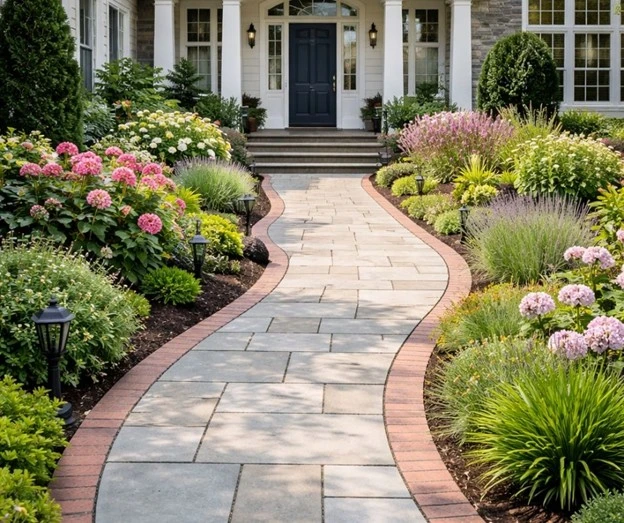
Why Walkways to Front Door Matter for Your Home
A walkway is much more than a path across the grass, especially when planning functional and attractive walkways to front door. It:
- Guides visitors safely to your door.
- Protects your lawn from worn, muddy patches.
- Adds structure and style to your front yard.
- Improves curb appeal and may even increase your home value.
When guests arrive, they notice the walkway first. A clean, attractive path tells people your home is cared for and welcoming.
Common Walkway Materials
Different materials suit different styles and budgets for walkways to front door. Here are the most popular options.
1. Concrete
Concrete is one of the most common materials for paving walkways. It’s strong, long‑lasting, and can be shaped into many designs.
- Pros:
- Affordable compared to brick or stone.
- Can be stained, stamped, or textured to look like stone.
- Easy to keep clean and plow‑safe in snowy areas.
- Cons:
- Can crack in extreme climates.
- Plain gray concrete can look dull without color or texture.
- Pros:
Best for: Straight, simple paths from the sidewalk or driveway to the front door.
2. Brick
Brick gives a classic, timeless look that works with almost any home style.
- Pros:
- Very durable when installed correctly.
- Adds warmth and charm to your entrance.
- Comes in many colors and patterns.
- Cons:
- More expensive than plain concrete.
- Can shift if the base isn’t solid.
- Pros:
Best for: Formal front walkways, curved paths, and decorative borders.
3. Stepping Stones
Stepping‑stone paths are playful and natural, especially with grass or gravel between stones.
- Pros:
- Simple to install, even for beginners.
- Creates a garden‑like feel.
- Lets you mix shapes and sizes for a custom look.
- Cons:
- Less stable than a solid surface.
- Can be tricky for people with mobility issues.
- Pros:
Best for: Informal walkways for backyard gardens or side entries.
4. Gravel
Gravel paths are low‑cost and easy to build. They’re popular for more rustic or budget‑friendly designs.
- Pros:
- Very affordable.
- Works well on slopes.
- Easy to reshape over time.
- Cons:
- Gravel can shift or get tracked indoors.
- Needs occasional raking or refilling.
- Pros:
Best for: Secondary paths, garden paths, or budget‑friendly entries.
5. Natural Stone
Flagstone, slate, or other natural stone pieces create a high‑end, organic look.
- Pros:
- Beautiful, unique patterns.
- Ages gracefully.
- Feels cool and solid underfoot.
- Cons:
- More expensive than concrete or gravel.
- Cutting and fitting stones can be labor‑intensive.
- Pros:
Best for: Upscale homes, winding paths, and flagstone front walkways.
6. Wood and Composite
Wood or composite decking can be used for raised walkways or boardwalk‑style paths.
- Pros:
- Warm, natural look.
- Great for decks that extend toward the front door.
- Composite resists rot and insects.
- Cons:
- Wood needs regular sealing or staining.
- Can be slippery when wet.
- Pros:
Best for: Deck entries, waterfront or woodland homes.
Walkways Ideas: Style and Layout
Even the simplest material can look stunning with the right layout for walkways to front door. Here are some easy walkways ideas to consider.
1. Straight and Simple
A straight path from the street or driveway to your front door is clean and easy to follow. This works well for small front yards or modern homes.
- Add lighting or plants along the edges to soften the look.
- Use pavers or concrete blocks for a neat, professional finish.
2. Gentle Curves
Curved walkways feel friendlier and more inviting. They also hide the view of the house from the street, adding privacy.
- Use a garden hose or rope to lay out the curve before digging.
- Brick or stone pavers are excellent for paving walkways with curves.
3. Stepping Stone Garden Path
A stepping‑stone path through a flower bed or lawn feels like a secret garden.
- Place larger stones where you naturally step.
- Leave grass or ground cover between stones for a soft, natural look.
This also works well as walkways for backyard use, connecting the patio to a garden or shed.
4. Boardwalk Style
A boardwalk‑style wooden or composite walkway is great for homes near ponds, pools, or wet areas.
- Use wide boards or planks for a stable surface.
- Add railings or lighting if the path is raised.
5. Split‑Level or Tiered Path
If your yard slopes, build a path with small steps or tiers.
- Use brick or stone steps to break up the slope.
- Add plants or low lighting on each tier for visual interest.
How to Choose the Right Walkway for Your Front Door
When you stand at the curb, ask yourself: What kind of story do I want my path to tell, especially when designing walkways to front door? Here are four key factors to help you choose the perfect walkway.
1. Consider Your Home Style
Your walkway should match your home’s personality.
- Traditional or Craftsman homes: Brick or natural stone work beautifully.
- Modern or minimalist homes: Sleek concrete with clean lines or subtle patterns.
- Farmhouse or cottage homes: Curving stone paths with cottage plants.
Sticking to a style that matches your house makes your front yard look intentional and polished.
2. Think About Usage
How will you use the walkway every day?
- Is it mainly for guests and delivery carriers?
- Do your kids run back and forth frequently?
- Do you need space for wheelchairs or strollers?
For heavy traffic, choose durable, stable surfaces like concrete, brick, or large pavers.
3. Climate and Weather
Your local weather affects how long your walkway lasts.
- Hot, dry climates: Concrete or stone stands up well to sun and heat.
- Cold or snowy areas: Concrete with proper slope and drainage helps prevent cracking.
- Wet or humid climates: Gravel or permeable pavers can handle moisture better than solid surfaces.
Choose materials that tolerate your climate to avoid constant repairs.
4. Budget and Maintenance
Be honest about how much you want to spend and how much upkeep you can handle.
- Low budget and low maintenance: Concrete or gravel.
- Mid‑range budget: Bricks or small pavers.
- Higher budget: Natural stone or custom stamped concrete.
Also, think about how long you plan to stay in the home. If you’re preparing to sell, a higher‑quality walkway can improve curb appeal.
Paving Walkways: Simple Steps to Build One
If you want to install paving walkways to front door yourself, follow these basic steps.
1. Plan the Layout
- Use stakes and string to mark the path from the street to your front door.
- Make sure the path is wide enough:
- 36 inches is comfortable for one person.
- 48 inches or more is better for two people side by side.
2. Prepare the Ground
- Remove grass and level the soil.
- Add a base layer of gravel (about 4–6 inches) for drainage and stability.
3. Lay the Base Sand
- Spread a thin layer of sand over the gravel.
- Use a straight board to screed (smooth) the sand.
4. Place the Pavers
- Start laying pavers from the house outward.
- Leave small gaps between pavers for sand.
- Use an edging to keep pavers in place.
5. Finish the Surface
- Spread fine sand over the pavers and sweep it into the joints.
- Compact the surface lightly with a hand tamper or rubber mallet.
- Add lighting or plants along the edges for a polished look.
Walkways for Backyard: Connecting Spaces
1. Patio to Garden Path
- Use stepping stones or small pavers between raised beds.
- Add low lighting or solar lights along the path.
2. Poolside Path
- Choose slip‑resistant materials like textured concrete or stone.
- Keep the path wide enough for towels and chairs.
3. Shed or Garage Access
- Gravel or simple concrete paths are practical and low‑maintenance.
- Line the edges with plants or mulch for a tidy look.
Safety Tips for Walkways
A beauty walkway is great, but safety comes first.
- Keep the path level and avoid tripping hazards.
- Add lighting along the path for night use.
- Follow local codes for width and handrails if your path is raised.
- Use non‑slip materials on steps or near water.
Making Your Walkway Look Cohesive
The best walkways feel like a natural part of the yard, not an afterthought.
- Match the color of your walkway to your home’s siding or trim.
- Use the same material for your front walkway and side or walkways for backyard use.
- Add planters or small shrubs along the edges to soften the hard surface.
How Long Do Walkways Last?
Durability depends mostly on material and installation.
- Concrete: 20–40 years with proper care.
- Brick or pavers: 20–30 years or more.
- Natural stone: 30+ years in good conditions.
- Gravel: May need small refills every few years.
- Wood/Composite: 10–25 years, depending on material and maintenance.
Easy Upgrades for Existing Walkways
Even if you already have a walkway, you can upgrade it without starting over, especially walkways to front door that get the most daily use.
- Add lighting: Solar or low‑voltage lights along the edges.
- Resurface: Overlay old concrete with stamped patterns or stains.
- Refresh joints: Replace sand in paver joints or add polymeric sand.
- Add plants: Flower beds or grass on either side make the path feel fresh.
Walkways Ideas Summary
Here are some quick, easy walkways ideas you can consider:
- Straight brick path from the driveway to the front door.
- Curving gravel path lined with low shrubs.
- Flagstone front walkway with soft lighting.
- Stepping‑stone path through a flower garden.
- Simple concrete path with decorative border tiles.
Choosing Walkways to Front Door That Fit Your Home
Ready to turn your front yard into a welcoming entrance?
Start by choosing the right material and layout for your walkway, then plan a design that matches your home style and budget.
Explore creative walkway ideas, learn more about paving walkways, and consider adding attractive walkways for your backyard to make your whole yard functional and beautiful.
If you’d like help designing a custom walkway, reach out to the experts at Hawkins Landscaping Inc. today. A well-planned walkway can transform your entrance, improve safety, and make every arrival feel special.
With over 50 years of experience serving Frederick County and surrounding areas, Hawkins Landscaping Inc. specializes in custom walkways, paver installations, natural stone paths, and complete landscape design solutions tailored to your home and budget.
Call (301) 898-3615 or visit hawkinslandscaping.com to schedule your consultation. Ask about flexible financing options and start creating an entrance that stands out for all the right reasons.