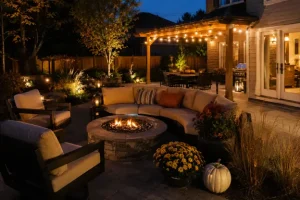
A patio with fire pit can transform a Maryland backyard into a comfortable outdoor retreat for cool evenings, family gatherings, and fall entertaining. Before winter arrives, however, the design needs to account for more than appearance. Rain, humidity, snow, freezing temperatures, changing soil conditions, and local fire regulations can all affect the safety and durability of the project.
The best patio design combines a stable foundation, proper drainage, noncombustible materials, comfortable seating, warm lighting, and a fire feature suited to the space. Whether you are planning a new paver patio, upgrading an existing outdoor area, or adding a portable fire table, careful preparation can help you enjoy the space safely through late fall and beyond.
This guide covers practical Maryland patio ideas, material choices, fire-pit layouts, winter preparation, maintenance, and when to hire a professional for a patio for outside living.
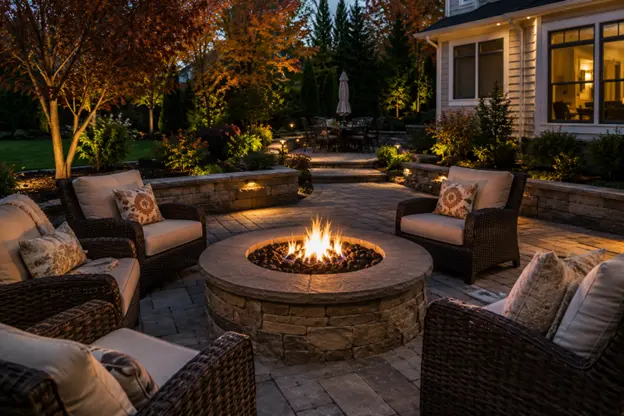
Why Build a Patio with Fire Pit Before Winter?
Maryland’s fall weather creates a natural opportunity for outdoor living. Days may remain comfortable while evenings become cool enough for a fire, warm drink, or outdoor dinner.
Installing or upgrading a patio with fire pit before winter can help you:
- Extend outdoor entertaining.
- Create a dedicated gathering area.
- Improve backyard circulation.
- Add a visual focal point.
- Make an unused lawn section more functional.
- Prepare the landscape for year-round use.
- Add seating and warmth near the home.
- Improve the connection between indoor and outdoor spaces.
- Create a defined patio for outside dining and relaxing.
A fire pit is not only a heat source. It gives the backyard a destination and helps organize furniture around a central feature. However, it should be placed on a stable, noncombustible surface with sufficient clearance from structures, plants, furniture, fences, railings, and overhead branches.
Start With the Patio Location
The location of your patio with fire pit determines safety, comfort, drainage, and how often you will use the space.
Choose a location that:
- It is easy to access from the house.
- Has good natural drainage.
- Is away from low branches.
- Does not sit directly beneath a roof overhang.
- Has enough room for seating and circulation.
- Is not adjacent to combustible siding or fencing.
- Does not interfere with utility lines or septic systems.
- Provides a comfortable view of the yard.
- Can be reached safely after dark.
- Does not direct smoke toward doors or windows.
A patio near the kitchen or family room may be more convenient for serving food. A patio farther into the backyard may offer greater privacy and a better view, but it may require a walkway, lighting, and additional drainage planning.
Before excavating, observe the area after rainfall. Avoid building a patio in a low spot where water collects unless the grading and drainage will be corrected first.
Assess Maryland Soil and Drainage
Maryland properties may have clay-heavy, compacted, sandy, or mixed soils. Soil conditions affect how quickly water drains and how stable a patio base will remain.
Look for:
- Standing water
- Muddy soil
- Erosion
- Water flowing toward the house
- Soil washing from slopes
- Existing drainage pipes
- Saturated areas near downspouts
- Cracks or settlement in nearby hardscape
A fire-pit area needs particular attention to drainage. Water that remains around the fire pit can freeze, expand, and shift the base. It may also create muddy or slippery conditions around the seating area.
A Maryland fire-pit site preparation guide recommends choosing stable ground with good drainage, excavating approximately 8 to 12 inches depending on local conditions, and using compacted crushed stone, stabilizing stone, and a leveling layer.
Choose the Right Patio Materials
The patio surface should be attractive, stable, slip-resistant, and capable of handling Maryland’s changing weather.
Concrete Pavers
Concrete pavers are one of the most versatile options for a patio with fire pit. They are available in many colors, patterns, textures, and sizes.
Benefits include:
- Easy layout options
- Individual paver replacement
- Good durability
- Compatibility with fire-pit surrounds
- Many colors and textures
- Formal or informal appearance
- Permeable options available
Choose pavers rated for exterior use and suitable for freeze-thaw conditions. A properly compacted base is essential to prevent settling.
Natural Stone
Natural stone creates a high-end, organic appearance. Options may include bluestone, granite, flagstone, fieldstone, and other regionally appropriate stone.
Use natural stone for:
- Patio surfaces
- Fire-pit rings
- Seating walls
- Steps
- Walkways
- Retaining walls
- Accent borders
Choose a textured surface rather than polished stone for better traction in wet fall weather. Some natural stones are porous, so confirm that the product is appropriate for outdoor freeze-thaw exposure.
Brick
Brick patios and brick fire-pit surrounds work well with traditional Maryland architecture. This material offers warm color, classic character, and individual units that can be replaced if damaged.
Use exterior-rated paving brick rather than interior brick. A compacted gravel base and proper drainage help prevent shifting and cracking during winter.
Concrete
Poured concrete can create a clean, continuous patio surface. It may be plain, broom-finished, colored, stamped, or textured to resemble stone or brick.
For Maryland conditions, consider:
- Proper slab thickness
- Reinforcement where appropriate
- Control joints
- Suitable concrete mix
- Correct curing
- Drainage away from structures
- Protection from harsh deicing salts
Broom-finished or textured concrete is usually more suitable than polished concrete for areas exposed to rain, ice, and foot traffic.
Gravel
Gravel can provide an affordable patio surface, particularly for a fire-pit seating area. It drains well and can be easier to install than a full masonry patio.
Choose compactable crushed stone for the base and a suitable decorative gravel for the finished surface. Smooth pea gravel may shift under furniture and foot traffic, especially on slopes.
Build the Patio Base Correctly
The patio base is one of the most important parts of the installation. Surface materials may look beautiful, but they can settle, crack, or shift when installed over unstable soil, affecting the long-term performance of a patio with fire pit.
A typical patio base may include:
- Excavated subgrade
- Compacted native soil
- Crushed-stone base
- Stabilizing aggregate
- Leveling sand or stone dust
- Pavers, stone, brick, or concrete
- Joint material
Remove organic soil, roots, grass, and debris before adding structural material. Organic material decomposes and creates settlement.
Add aggregate in shallow lifts and compact each layer. Do not install the entire base at once without compaction.
Design the Fire Pit for Safety
The fire pit should be the focal point, but it should not be placed so close to guests that heat, smoke, or sparks become uncomfortable.
For a patio with fire pit, a safe design considers:
- Fuel type
- Fire-pit diameter
- Clearances
- Wind direction
- Overhead structure
- Patio material
- Furniture placement
- Fire-extinguishing equipment
- Local rules
- Manufacturer requirements
Wood-burning fire pits typically require more clearance than gas or propane fire features because of smoke and sparks. Gas fire tables may offer a cleaner experience, but they still require proper clearances and safe connections.
Use a fire pit made from approved steel, brick, concrete, masonry, or another suitable noncombustible material. Do not assume that a decorative container or improvised metal bowl is safe for burning wood.
Maryland fire-safety guidance commonly emphasizes approved fire-pit materials, adult supervision, safe clearances, acceptable fuels, and fully extinguishing the fire after use. Exact requirements vary by jurisdiction.
Choose Between Wood, Propane, and Gas
The fuel source affects installation, maintenance, convenience, and local compliance.
Wood-Burning Fire Pit
A wood-burning fire pit offers a traditional campfire experience with natural flames, crackling wood, and stronger smoke.
Benefits include:
- Classic fire-pit atmosphere
- No gas line required
- Suitable for larger open spaces
- Lower equipment complexity
- Natural warmth and light
Considerations include:
- Smoke
- Sparks
- Ash removal
- Firewood storage
- Greater clearance requirements
- Wind sensitivity
- Local restrictions
- More cleanup
Burn only dry, untreated natural firewood where allowed. Do not burn leaves, construction debris, painted wood, plastic, trash, or treated lumber.
Propane Fire Table
A propane fire table is convenient and often suitable for smaller patios. It can provide warmth and a tabletop surface when not in use.
Benefits include:
- Easy ignition
- No smoke or ash
- Adjustable flame
- Portable options available
- Convenient for compact patios
- Can combine fire and table function
Keep the propane tank and fuel connections positioned according to manufacturer instructions. Never store spare tanks beneath an enclosed structure or in an unventilated location.
Natural-Gas Fire Feature
A natural-gas fire feature may be convenient for homeowners who want a permanent installation. It requires professional gas-line work and an approved design.
Benefits include:
- No need to refill propane tanks
- Clean, consistent operation
- Permanent integration into the patio
- Suitable for built-in fire bowls and tables
Installation should be completed by qualified professionals. Gas lines, shutoff valves, ventilation, and ignition systems must meet applicable codes.
Patio Layout Ideas for a Fire Pit
The patio layout should make conversation, movement, and safety easy.
Circular Conversation Layout
Place a round fire pit in the center with lounge chairs arranged around it. This creates an intimate, social arrangement.
Use:
- Adirondack chairs
- Deep lounge chairs
- Curved benches
- Low side tables
- Outdoor rugs rated for fire-pit areas
Leave enough space behind chairs for guests to move comfortably.
Fire Table Dining Layout
A fire table can sit between lounge seating and dining furniture. This is useful for homeowners who want one feature to serve multiple purposes.
Place the fire table where:
- Guests can see the flame.
- It does not block the dining route.
- There is sufficient clearance from cushions.
- The table can be covered when not in use.
- The patio has adequate ventilation.
Split-Level Patio
A split-level design separates activities while keeping the fire feature central. One level can hold dining furniture, while a lower or upper terrace provides lounge seating around the fire pit.
This design may work well on a sloped Maryland property, but it requires careful grading, retaining walls, stairs, and drainage.
Fire Pit at the Patio Edge
Placing the fire pit toward the edge of the patio can preserve open space while giving guests a view toward the garden or yard. This layout works well when the patio connects to a lawn or natural area.
Add Comfortable Patio Furniture
Furniture should match the size of the patio with firepit and the heat conditions around the fire pit.
Good options include:
- Adirondack chairs
- Teak lounge chairs
- Powder-coated aluminum seating
- HDPE poly-lumber chairs
- All-weather wicker sofas
- Built-in masonry benches
- Outdoor ottomans
- Weather-resistant dining chairs
Keep cushions and fabric away from open flames and follow the fire feature’s clearance requirements. Store cushions during heavy rain and winter.
Install Patio Lights
A patio for outside living should remain safe and comfortable after dark. Fall evenings arrive earlier, so lighting should be part of the design from the beginning.
Use:
- Path lights
- Step lights
- Pergola string lights
- Wall sconces
- Post-cap lights
- Recessed deck lights
- Portable lanterns
- Tree uplights
- Low-voltage LED fixtures
Layer the lighting:
- Use path and step lights for safety.
- Use string lights and lanterns for atmosphere.
- Use spotlights for trees, walls, and focal points.
- Use task lighting near grills and outdoor kitchens.
Avoid shining bright fixtures directly toward the fire pit seating area. Warm, low-glare lighting usually creates a more comfortable environment.
Add a Pergola or Partial Cover
A pergola can give the patio more definition and support lighting, curtains, vines, or seasonal décor. However, an open pergola is not the same as a roofed structure and may not provide complete rain protection.
Consider:
- A wood pergola
- An aluminum pergola
- A louvered roof
- A retractable canopy
- Outdoor curtains
- Roll-down screens
- Shade sails
- A fully roofed pavilion
Do not place a wood-burning fire pit beneath a pergola unless local rules and the manufacturer specifically permit the arrangement. Heat, sparks, and smoke can create serious risks.
Add Wind Protection
Maryland’s fall weather can include strong gusts, particularly during storms and changing weather fronts. Wind can blow smoke toward the house, carry sparks, move lightweight furniture, and make an open patio uncomfortable.
Use:
- Evergreen shrubs
- Ornamental grasses
- Privacy screens
- Fences
- Outdoor curtains
- Pergola side panels
- Low walls
- Strategically placed trees
Do not create a completely enclosed fire-pit area without considering ventilation. Air movement is necessary, especially for combustion appliances.
Add Fall Planting Around the Patio
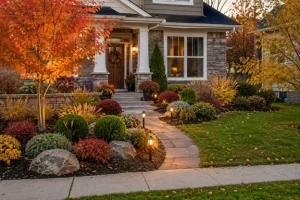
Planting can soften the patio and connect it to the landscape garden. Choose plants that offer fall flowers, foliage, seed heads, berries, or evergreen structure.
Consider:
- Asters
- Sedum
- Ornamental grasses
- Black-eyed Susan
- Goldenrod
- Heuchera
- Native shrubs
- Dwarf evergreens
- Pansies
- Ornamental kale
Keep plants and fallen leaves away from the fire pit. Avoid placing dry ornamental grasses, pine branches, or flammable mulch immediately beside open flames.
Use stone, gravel, or a noncombustible strip between the fire feature and vegetation. This creates a fire break and makes maintenance easier.
Add a Walkway to the Patio
A patio with firefit is more useful when it connects naturally to the house, garden, driveway, and backyard features. Install a clear path from the home to the patio and from the patio to other destinations.
Path materials may include:
- Concrete pavers
- Bluestone
- Brick
- Flagstone
- Gravel
- Stepping stones
- Decomposed granite
- Permeable pavers
A safe path should remain stable, well-drained, and visible after dark. Use step lights where the route changes elevation and path lights along darker sections.
Create Your Maryland Retreat with a Patio with Fire Pit
A well-planned patio with fire pit can become the center of your Maryland backyard before winter arrives. Begin with safe placement, reliable drainage, durable materials, and a stable base. Then add comfortable furniture, layered lighting, fall planting, privacy features, and practical accessories that make the space easy to enjoy.
Whether you want a small gravel fire-pit area, a brick patio, a natural-stone outdoor room, or a custom patio for outside entertaining, professional planning can help protect your investment and improve long-term performance.
Ready to upgrade your outdoor space? Start with a professional site evaluation to understand your property’s layout, drainage, grading, and design possibilities. Whether you’re dreaming of a new patio, a comfortable seating area, or a backyard fire feature, thoughtful planning can make all the difference.
At Hawkins Landscaping Inc., we can help turn your patio ideas into a functional outdoor space designed around your home and lifestyle. From selecting durable, weather-resistant materials to coordinating drainage, lighting, seating, and fire features, our team can create a cohesive design that looks great and works well through Maryland’s changing seasons.
With the right design and quality installation, your backyard can become a welcoming place to relax, entertain, and enjoy well beyond summer.
Call (301) 898-3615 or visit Hawkins Landscaping Inc. to schedule your consultation. Ask about flexible financing options for your next outdoor project.