Maryland’s fall weather can be beautiful, but it can also be demanding on outdoor spaces. Warm days may quickly shift into cool nights, heavy rain, freezing temperatures, snow, and repeated freeze-thaw cycles. These changing conditions can cause poorly selected landscape materials to crack, shift, stain, rot, rust, or deteriorate before their time.
The best materials for a Maryland landscape should be selected for more than appearance. They must work with the region’s seasonal moisture, clay-heavy soils in many areas, winter freezing, summer heat, drainage conditions, and long-term maintenance needs.
Whether you are building a patio, walkway, retaining wall, driveway border, deck, garden bed, or outdoor living area, the right landscape materials can improve durability and reduce future repairs. This guide explains the best options for Maryland properties, how to use them in practical landscape ideas, and how professional landscape design can help create a yard that performs well in every season.
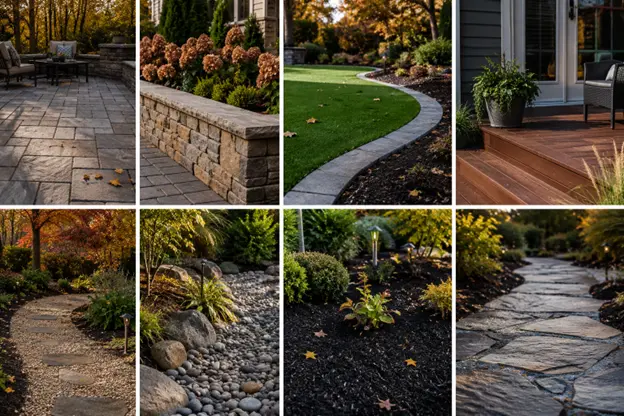
Choosing the Right Landscape Materials for Maryland Weather
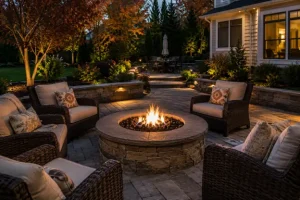
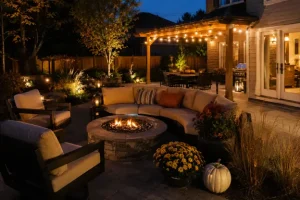
Maryland’s fall weather can bring rain, cooler temperatures, and changing conditions. Choosing the right landscape materials can help your outdoor spaces stay durable, attractive, and easier to maintain through the season.
1. Pennsylvania Bluestone
Pennsylvania bluestone is a popular choice among landscape materials for Maryland patios, walkways, steps, pool surrounds, and outdoor living spaces. Its blue-gray color works well with both traditional and contemporary architecture.
Bluestone can be installed as:
- Large irregular flagstones
- Cut rectangular pavers
- Stepping stones
- Patio slabs
- Stair treads
- Wall caps
- Walkway borders
It pairs well with Maryland’s fall colors, including red maple leaves, golden grasses, burgundy shrubs, and evergreen planting.
2. Maryland Fieldstone
Natural fieldstone gives a landscape a regional, organic appearance. It is useful for retaining walls, garden borders, steps, paths, seating walls, and informal patios.
Fieldstone may vary in shape, color, thickness, and texture. This variation creates a relaxed appearance that works well in:
- Woodland gardens
- Cottage landscapes
- Native plant gardens
- Sloped yards
- Rustic outdoor living spaces
- Naturalistic drainage features
Use fieldstone to create low retaining walls, dry-stack garden edges, boulder groupings, and informal stepping paths.
3. Granite
Granite is one of the strongest natural stone options for Maryland landscapes. Its dense structure makes it useful for steps, retaining-wall caps, pavers, edging, outdoor kitchens, and high-traffic areas.
Granite is available in colors such as:
- Gray
- Charcoal
- Black
- Pink
- Brown
- Speckled combinations
It works especially well in contemporary landscape design, where clean geometry and durable materials are important.
Use granite for:
- Front steps
- Walkway pavers
- Retaining-wall caps
- Outdoor kitchen counters
- Fire-pit surrounds
- Landscape boulders
- Driveway borders
Granite may have a higher upfront cost than some concrete or brick products, but its strength and long service life can make it valuable in heavily used areas.
4. Natural Sandstone
Sandstone can add warm tan, beige, gold, red, or brown tones to a Maryland landscape. It is often used for patios, paths, walls, steps, and garden accents.
However, sandstone varies considerably in density and water absorption. Some types are more porous and may be less suitable for areas exposed to constant moisture and winter freezing.
Before selecting sandstone, ask the supplier:
- Is it rated for exterior freeze-thaw exposure?
- How porous is the material?
- Is it suitable for patios or only decorative walls?
- Does it need sealing?
- Is the surface slip-resistant when wet?
- Has it been used successfully in Maryland?
Use dense, exterior-rated sandstone in areas where winter exposure is expected. Avoid selecting material solely by color or price.
5. Brick
Brick is one of the most versatile and timeless landscape materials for Maryland properties. It works with historic homes, colonial architecture, traditional gardens, cottage landscapes, and formal outdoor rooms.
Use brick for:
- Walkways
- Patios
- Garden edging
- Steps
- Retaining-wall accents
- Circular tree rings
- Low seating walls
- Mowing strips
6. Concrete Pavers
Concrete pavers are among the most practical landscape materials for Maryland patios, walkways, driveways, and outdoor living areas. They are manufactured in consistent shapes and sizes, making them easier to install in formal patterns.
Popular styles include:
- Large-format slabs
- Cobblestone-style pavers
- Wood-look pavers
- Permeable pavers
- Textured pavers
- Tumbled pavers
- Interlocking pavers
Why concrete pavers work
- Available in many colors and patterns.
- Easier to repair than poured concrete.
- Suitable for patios and walkways.
- Can be installed in permeable systems.
- Offer consistent thickness.
- Work with modern and traditional landscape ideas.
Concrete pavers can still crack, shift, or stain if the base is poorly prepared. Proper excavation, compaction, edge restraint, and drainage are essential.
7. Poured Concrete
Poured concrete provides a smooth, continuous surface for patios, walkways, steps, driveway borders, and outdoor living areas. It is often more affordable than premium natural stone and can be colored, stamped, textured, or broom-finished.
Use concrete for:
- Large patios
- Walkways
- Outdoor kitchens
- Pool decks
- Steps
- Seating pads
- Mowing strips
- Utility areas
Maryland considerations
Concrete must be installed correctly for freeze-thaw conditions. Important factors include:
- Proper subgrade preparation
- Suitable mix design
- Adequate drainage
- Correct slab thickness
- Reinforcement where needed
- Control joints
- Proper curing
- Avoiding excessive deicing-salt exposure
Concrete can crack because of settlement, frost movement, tree roots, poor drainage, or temperature changes. A professional contractor can specify a suitable mix and design for the site.
8. Permeable Pavers
Permeable pavers are increasingly popular for Maryland landscape projects because they combine usable hardscape with stormwater management.
Use them for:
- Driveways
- Walkways
- Parking areas
- Patios
- Courtyards
- Side-yard paths
- Outdoor dining areas
Permeable pavers include open joints filled with small aggregate. Rainwater moves through the surface and into a stone reservoir beneath.
Benefits include:
- Reduced surface runoff.
- Less standing water.
- Better use of available space.
- Compatibility with sustainable landscape design.
- Attractive modular appearance.
- Easier repair than poured concrete.
Permeable systems require careful design. The base depth, stone gradation, soil infiltration, slope, and drainage outlet must all be considered.
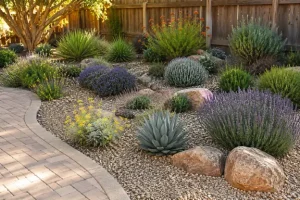
9. Gravel and Decomposed Granite
Gravel is a practical and affordable choice for Maryland pathways, seating areas, drainage zones, and informal patios. It works particularly well in naturalistic, rustic, Mediterranean-inspired, and low-maintenance landscapes.
Use:
- Crushed stone
- Limestone screenings
- River rock
- Pea gravel
- Decomposed granite
- Washed stone
- Decorative gravel
For walkways and seating surfaces, angular crushed stone usually compacts more effectively than smooth pea gravel. Use edging to keep gravel contained.
10. Concrete and Segmental Retaining-Wall Block
Retaining walls can create level planting areas, patios, steps, and seating zones in a sloped Maryland yard. Segmental retaining-wall block is a common landscape material because it is modular, consistent, and available in many textures.
Use retaining-wall block for:
- Terraced planting beds
- Sloped backyard solutions
- Raised patios
- Garden steps
- Seating walls
- Driveway transitions
- Small landscape borders
A retaining wall needs more than attractive blocks. It also requires:
- A compacted base
- Proper wall alignment
- Drainage aggregate
- Filter fabric where appropriate
- Backfill
- A drainage outlet
- Correct setback or batter
- Stable soil conditions
Water pressure behind a wall can cause failure. Proper drainage is critical, particularly in Maryland where fall rain, saturated soil, snowmelt, and freeze-thaw cycles place stress on structures.
11. Natural Stone Walls
Natural stone walls are attractive and durable when constructed correctly. They can define garden beds, stabilize modest slopes, create seating, or frame patios and paths.
Suitable stone types may include:
- Fieldstone
- Granite
- Bluestone
- Sandstone
- Limestone where appropriate
- Large landscape boulders
Natural stone works well in Maryland because it complements native planting, wooded settings, older homes, and seasonal foliage.
12. Mulch
Mulch is one of the most affordable and useful materials in a Maryland landscape. It protects soil, reduces weed growth, improves the appearance of planting beds, and helps moderate moisture and temperature.
Common mulch options include:
- Shredded hardwood
- Pine bark
- Pine straw
- Leaf compost
- Arborist wood chips
- Cedar mulch
- Decorative stone
Organic mulch can gradually add organic matter as it decomposes. Shredded mulch may stay in place better than large, lightweight chips on gently sloped beds.
13. Composite Decking
Composite decking is a popular alternative to traditional wood in Maryland. It combines wood fibers and recycled plastic or synthetic materials to create boards that generally require less staining and sealing than wood.
Composite decking works well for:
- Elevated decks
- Low decks
- Poolside platforms
- Outdoor dining areas
- Pergola decks
- Multi-level outdoor living spaces
Composite decking is not maintenance-free. It still needs cleaning, and dark colors may become hot in direct sun. Leaves, pollen, and moisture should be removed regularly, especially in autumn.
14. Pressure-Treated Wood
Pressure-treated lumber remains a common and budget-friendly option for decks, retaining walls, raised beds, fences, and pergolas.
It is suitable for:
- Basic deck structures
- Budget outdoor projects
- Raised garden beds designed for appropriate use
- Pergolas
- Stairs
- Privacy screens
- Landscape borders
The main drawback is maintenance. Wood absorbs moisture and can develop cracking, discoloration, mildew, or rot if it is not maintained.
To improve performance:
- Allow new lumber to dry before staining.
- Use an exterior-rated water-repellent finish.
- Inspect annually.
- Keep soil and mulch away from wood.
- Improve airflow beneath decks.
- Repair damaged boards quickly.
- Maintain proper drainage.
Pressure-treated wood can be practical, but homeowners seeking lower maintenance may prefer composite, aluminum, or masonry materials.
15. Cedar and Redwood
Cedar and redwood provide a warmer, more natural appearance than pressure-treated lumber. They are used for pergolas, decks, privacy screens, raised planters, benches, and outdoor structures.
Benefits include:
- Attractive natural color.
- Good compatibility with gardens.
- Resistance to some insects.
- Lightweight construction.
- A natural look that fits many landscapes.
However, cedar and redwood still weather outdoors. They may fade, split, stain, or develop surface wear without maintenance.
16. Metal Edging and Landscape Borders
Metal edging creates clean lines between lawn, mulch, gravel, and planting beds. It is a good option among landscape materials for modern yards, curved garden beds, and low-maintenance landscape design.
Choose from:
- Galvanized steel
- Powder-coated steel
- Aluminum
- Corten steel
Aluminum is a good choice where rust resistance is important. Steel provides more rigidity but may corrode if the coating is damaged or if it remains in wet soil.
Use metal edging for:
- Mulched planting beds
- Gravel paths
- Lawn borders
- Perennial gardens
- Contemporary landscapes
- Curved bed designs
Install it securely and avoid leaving sharp edges exposed. Keep the top edge low enough to reduce mower and trimmer damage.
17. Landscape Fabric and Geotextiles
Landscape fabric can help separate soil from gravel and reduce weed growth in some applications. Geotextiles can also support drainage and soil stabilization when specified correctly.
Use fabric beneath:
- Gravel paths
- Dry creek beds
- Decorative rock
- Some retaining-wall drainage systems
- Erosion-control installations
Fabric is not a universal solution. It can become exposed, collect soil, or complicate future planting. It should not be used as a substitute for proper grading, drainage, or soil preparation.
Plan Your Maryland Landscape with Durable Landscape Materials
Early fall is an excellent time to inspect your property, repair drainage concerns, refresh garden beds, and plan durable outdoor improvements. Whether you want a new patio, walkway, retaining wall, deck, pergola, or low-maintenance garden, the right landscape ideas can improve your yard’s appearance and performance through every season.
Ready to upgrade your Maryland property? Contact the experts at Hawkins Landscaping Inc. for professional landscape design and planning tailored to your home, property conditions, and outdoor goals.
With over 50 years of experience serving Frederick County and surrounding areas, our team can help you choose durable landscape materials, address grading and drainage, and create a cohesive landscape plan that works beautifully with your home. From patios and walkways to planting beds, retaining walls, and complete outdoor living spaces, we focus on solutions designed for lasting performance.
Maryland’s changing seasons can put your landscape to the test. With thoughtful planning and quality installation, your landscape yard can remain attractive, functional, and resilient through rainy fall weather, freezing winter conditions, and everything in between.
Call (301) 898-3615 or visit hawkinslandscaping.com to schedule your consultation today. Ask about our flexible financing options and let Hawkins Landscaping Inc. help you create an outdoor space built to last through every season.