Maryland backyards can look especially beautiful in fall. Warm foliage, golden grasses, late-season flowers, and cooler temperatures create the perfect setting for an outdoor refresh. One of the best ways to add structure and year-round interest is with landscape rocks.
Rocks can define garden beds, control erosion, improve drainage, create walkways, frame patios, and add natural texture to a landscape garden. Unlike seasonal flowers, properly selected stone remains attractive through Maryland’s rain, snow, freeze-thaw cycles, and changing temperatures.
The key is to choose the right stone for the project and install it correctly. A rock garden should look connected to the surrounding landscape rather than like a pile of stones placed randomly in the yard. This guide shares 15 practical landscape ideas for backyard gardens in Maryland, along with material recommendations, planting combinations, drainage tips, maintenance advice, and professional planning considerations.
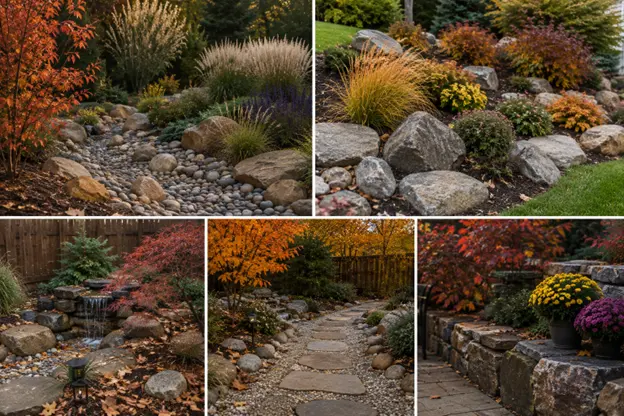
Why Use Landscape Rocks in Maryland?
Landscape rocks can solve both design and practical problems. They provide visual weight, help define spaces, and may reduce maintenance in areas where grass or plants struggle.
Maryland homeowners use stone to:
- Create rock gardens.
- Define planting-bed borders.
- Control erosion on sloped yards.
- Improve drainage around downspouts.
- Build dry creek beds.
- Construct garden paths.
- Frame patios and outdoor living areas.
- Create retaining walls.
- Add natural seating.
- Protect soil from runoff.
- Reduce lawn maintenance.
- Highlight native plants.
- Add year-round texture.
- Improve curb appeal and backyard function.
Natural stone, gravel, and boulders can act as permanent anchors in a landscape. Maryland suppliers commonly offer river rock, crushed stone, recycled concrete, flagstone, mulch, and building stone for residential landscape projects.
Unlike plants, rocks do not die back, require watering, or need seasonal pruning. However, stone still needs thoughtful placement. Poorly selected rocks can look out of scale, create drainage problems, damage plant roots, or make a yard feel overly hard and hot.
Maryland Fall Conditions to Consider
Before selecting landscape rocks, consider Maryland’s local weather and soil conditions. Many properties experience:
- Heavy autumn rain
- Humid summers
- Clay-heavy or compacted soil
- Snow and ice
- Freeze-thaw movement
- Erosion on slopes
- Leaf accumulation
- Stormwater runoff
- Salt exposure near roads and driveways
Fall is an excellent time to inspect the backyard after rain. Look for channels cut into soil, mulch washed downhill, water pooling near the house, exposed roots, and gravel moving into lawn areas.
How to Choose Landscape Rocks
The best stone depends on the project, location, soil, slope, and desired appearance.
River Rock
River rock has smooth, rounded surfaces created by natural water movement. It works well for:
- Dry creek beds
- Drainage channels
- Decorative borders
- Water features
- Rain gardens
- Low-traffic ground cover
Because it is smooth and loose, river rock is not always ideal for steep slopes or frequently used paths.
Crushed Stone
Crushed stone has angular edges that lock together more effectively than rounded rock. It is useful for:
- Walkways
- Patio bases
- Gravel courtyards
- Drainage strips
- Driveway borders
- Seating areas
Choose a compactable aggregate for structural layers and a decorative size for finished surfaces.
Flagstone
Flagstone consists of broad, relatively flat pieces of natural stone. It works well for:
- Walkways
- Patios
- Stepping stones
- Outdoor dining spaces
- Garden routes
- Stair treads
Choose pieces with sufficient thickness and a textured surface for safer walking during wet fall weather.
Fieldstone
Fieldstone has irregular shapes and natural color variation. It is ideal for:
- Rustic garden walls
- Informal borders
- Woodland gardens
- Dry-stack walls
- Naturalistic landscape gardens
- Sloped yards
Use stones that are stable and properly buried. A stone perched loosely on a slope can shift during heavy rain.
Granite
Granite is dense, strong, and suitable for steps, retaining-wall caps, boulders, patios, and high-traffic areas. It is available in gray, black, brown, pink, and speckled tones.
Bluestone
Bluestone offers a refined blue-gray appearance. It works well for formal and contemporary landscapes, including patios, steps, walkways, and garden borders.
15 Fall Landscape Rock Ideas for Maryland Backyards
1. Create a Maryland Native Rock Garden
A rock garden combines stone with drought-tolerant, native, and low-maintenance plants. It works well in sunny areas, slopes, dry corners, and locations where turf is difficult to maintain.
Start with several large boulders, then add medium stones and smaller gravel. Position the largest rocks first and partially bury them so they appear naturally anchored.
Add plants such as:
- Sedum
- Yarrow
- Black-eyed Susan
- Native grasses
- Asters
- Creeping phlox
- Little bluestem
- Wild columbine
- Harebell
- Native ground covers
Maryland native plants are adapted to regional conditions and can support wildlife while reducing unnecessary watering and fertilizer use. The University of Maryland Extension provides recommendations for native plants suitable for Maryland gardens and landscapes.
2. Build a Dry Creek Bed
A dry creek bed is one of the most useful landscape ideas for backyard spaces because it combines drainage with visual interest. It can guide stormwater through the yard while creating a naturalistic feature.
A basic dry creek bed includes:
- A shallow, curving channel
- Larger rocks along the edges
- Smaller gravel through the center
- Stable entry and exit points
- Plants that tolerate occasional moisture
- Erosion-control measures where needed
Place a dry creek bed where water already flows naturally, such as below a downspout or along the bottom of a slope. Do not create a channel that sends water toward your foundation, neighbor’s property, or public walkway.
3. Add a Gravel Garden Path
Gravel paths are practical, affordable, and visually flexible. They work well in Maryland backyard gardens because they allow water to infiltrate and can be repaired more easily than concrete.
Use gravel paths to connect:
- Patios
- Decks
- Garden beds
- Fire pits
- Sheds
- Vegetable gardens
- Gates
- Outdoor seating areas
For a stable path:
- Mark the route.
- Remove vegetation and topsoil.
- Compact the subgrade.
- Add crushed-stone base material.
- Compact the base in layers.
- Install edging.
- Add a decorative gravel surface.
- Rake the finished path evenly.
Use angular gravel for better stability. Smooth pea gravel can shift underfoot, particularly on slopes.
4. Frame a Patio With Stone
Landscape rocks can make a patio feel integrated with the garden. Use fieldstone, boulders, flagstone, or decorative gravel around the patio perimeter.
Consider:
- A low fieldstone border.
- A gravel transition between patio and lawn.
- Boulders placed near planting beds.
- Flagstone stepping stones.
- River rock around a rain garden.
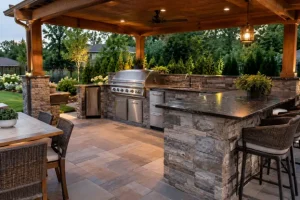
- Granite accents near an outdoor kitchen.
A stone border can soften the transition between hardscape and planting. Add ornamental grasses, asters, sedum, or native shrubs to connect the patio to the rest of the landscape garden.
5. Install a Boulder Border
Boulders create visual structure and can replace a formal retaining wall in areas with a mild slope. They are particularly effective in naturalistic and woodland-style Maryland yards.
Use boulders to:
- Define a garden bed.
- Separate lawn from mulch.
- Anchor a slope.
- Frame a dry creek bed.
- Protect a tree planting.
- Mark a property transition.
- Create a focal point.
Choose boulders that look as if they belong to the site. Use several related shapes and colors rather than one oversized stone surrounded by tiny gravel.
6. Create a Sloped Rock Garden
Slopes can be difficult to mow and vulnerable to erosion. A rock garden can stabilize the surface while adding structure and low-maintenance planting.
For a sloped landscape:
- Use larger stones near the bottom and key transitions.
- Bury stones deeply enough to resist movement.
- Plant deep-rooted ground covers.
- Add native grasses and shrubs.
- Use erosion-control blankets during establishment.
- Direct water through a stable channel.
- Avoid loose, rounded rocks on steep slopes.
A slight grade may be controlled with rocks, mulch, and plants, while steeper slopes may need landscape fabric, terraces, retaining walls, or engineered stabilization.
7. Use Stone to Define a Rain Garden
A rain garden can capture runoff from roofs, driveways, and patios while adding a colorful planting feature. Rocks can define the basin and protect areas where water enters.
Use:
- Flat stones at the inlet.
- River rock around the drainage route.
- Larger stones along the edge.
- Native plants in the basin.
- Gravel for overflow areas.
- Boulders as focal points.
Select plants that tolerate both wet and dry periods. The center of the rain garden may remain damp after storms, while the outer edge may dry quickly.
8. Create a Stone Seating Area
Large flat stones, boulders, or a low stone wall can provide informal seating in a backyard garden. This is a natural choice for fire-pit zones, woodland paths, and native landscapes.
Use stone seating near:
- A fire pit
- A pond or water feature
- A garden overlook
- A patio
- A dry creek bed
- A mature tree
- A pollinator garden
Choose stones with stable, relatively flat surfaces. Avoid sharp edges and loose rocks that can shift when someone sits down.
For more comfort, add removable outdoor cushions, but store them during rain and winter.
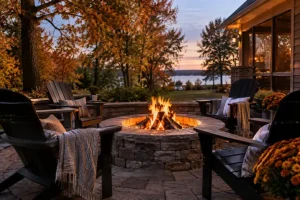
9. Add a Stone Fire-Pit Surround
A fire pit can become a fall focal point, and stone can help define the seating zone. Use noncombustible materials such as approved pavers, natural stone, gravel, concrete, or masonry.
Good surrounding materials include:
- Bluestone
- Granite
- Concrete pavers
- Brick
- Gravel
- Fieldstone used according to fire-feature requirements
Create a stable, level surface beneath the fire pit and chairs. Keep combustible mulch, wood fencing, low branches, and flammable furniture materials at the clearances required by local rules and the manufacturer.
Do not use random stones that may contain moisture or fracture when heated. Use products designed or approved for fire-pit applications.
10. Install Stone Steps on a Backyard Slope
Stone steps can make a sloped backyard safer and more accessible. They may connect a deck to a patio, garden, fire pit, or lower lawn area.
Use:
- Bluestone treads
- Granite steps
- Fieldstone
- Precast concrete steps
- Segmental retaining-wall blocks
- Timber with stone or gravel treads
Make riser heights consistent and provide enough tread depth for secure footing. Add handrails where necessary, particularly on long or steep routes.
In early fall, keep leaves cleared from stone steps. Wet leaves can hide edges and become slippery.
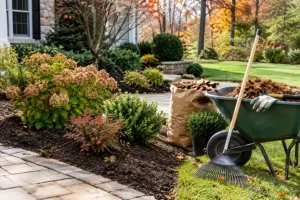
11. Use Decorative Stone Around Trees
A stone mulch ring can reduce lawn maintenance around trees and create a clean visual transition. However, it must be installed carefully.
Use:
- Small river rock
- Crushed stone
- Decorative gravel
- Fieldstone accents
- Natural mulch combined with stone
Keep stone and mulch away from the trunk flare. Do not build a deep raised ring that covers exposed roots or traps moisture against the bark.
A shallow stone border with organic mulch inside may offer a better balance than covering the entire root zone with rock. Consider tree species, soil temperature, drainage, and maintenance before choosing this treatment.
12. Build a Stone-and-Grass Border
Ornamental grasses and landscape rocks make a strong fall combination. Grasses add movement and warm seed heads, while stone provides permanent structure.
Use this combination around:
- Patios
- Driveways
- Walkways
- Mailboxes
- Retaining walls
- Backyard seating areas
- Native planting beds
Good plant partners may include:
- Switchgrass
- Little bluestem
- Prairie dropseed
- Fountain grass where regionally appropriate
- Blue fescue
- Sedge
- Muhly grass in suitable climates
Plant grasses in groups rather than scattering individual specimens. Repeat the same grass and stone color throughout the landscape for a more cohesive design.
13. Create a Gravel Courtyard
A gravel courtyard can provide a low-maintenance seating or dining area without the cost of a full concrete or paver patio.
Use:
- Compacted crushed stone as a base
- Decorative gravel as a top layer
- Brick or metal edging
- Large stepping stones
- Boulders or planters
- Outdoor furniture
- Low-voltage lighting
A courtyard works well near a back door, garden shed, fire pit, or pergola. Add evergreen shrubs and fall containers to give the space seasonal interest.
Proper edging is essential. Without it, gravel may spread into planting beds and lawn areas.
14. Add Rock Around Drainage Outlets
Downspout outlets and drainage pipes can create erosion when water discharges onto bare soil. A small rock apron can slow water and protect the ground.
Use larger stones near the outlet and smaller gravel farther away. Combine stone with deep-rooted plants or ground covers to create additional stabilization.
This approach can be attractive, but the size and depth of the rock should match the amount and speed of water being discharged. A small decorative patch may not be enough for a large roof or steep slope.
Consider redirecting the downspout toward a rain garden, swale, dry creek bed, or approved drainage area where appropriate.
15. Mix Rock With Native Fall Planting
A naturalistic landscape garden can combine landscape rocks with Maryland native trees, shrubs, grasses, and perennials. This creates a low-maintenance design with seasonal interest and wildlife value.
Use native fall plants such as:
- New England aster
- Goldenrod
- Black-eyed Susan
- Switchgrass
- Little bluestem
- Dogwood
- Serviceberry
- Aronia
- Native sedges
- Virginia sweetspire
Maryland native plants are adapted to regional conditions and can support local wildlife while requiring less supplemental care once established.
Place rocks at transition points:
- Along a path
- Near a garden entrance
- At the base of a slope
- Beside a seating area
- Around a rain garden
- Near the edge of a native meadow
The result should feel natural rather than overly formal. Use a restrained palette of stone colors and repeat the same material across the yard.
Upgrade Your Maryland Backyard With Landscape Rocks
Landscape rocks can bring year-round structure, fall texture, and practical function to a Maryland backyard. From dry creek beds and gravel paths to native rock gardens, stone seating areas, and patio borders, the possibilities are both attractive and useful.
Ready to transform your outdoor space? Start by identifying what your property needs most—better drainage, erosion control, a defined garden bed, an unused slope, or a more inviting place to sit and relax.
At Hawkins Landscaping Inc., we can help turn those challenges into opportunities for a more functional and attractive landscape. With more than 50 years of experience serving Frederick County and surrounding Maryland communities, our team can help you choose landscape rocks, plants, edging, and other materials that work with your soil, sunlight, drainage, and overall style.
Call (301) 898-3615 or visit Hawkins Landscaping Inc. to schedule your consultation. Ask about flexible financing options for your next outdoor project.