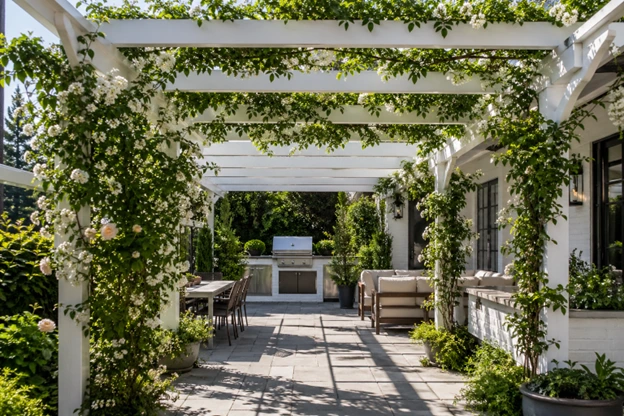
Pergolas with climbing plants and vines are a simple way to bring your pergola ideas to life and make your outdoor space feel like a cozy retreat. A pergola adds clear structure to your yard, gives shade, and creates a perfect place to relax, eat, or entertain. When you attach pergolas to the house, the space feels like a natural extension of your living area instead of a separate structure far away from the home.
This article will show you simple pergola ideas that use climbing plants and vines to create a beautiful, shaded outdoor room. You’ll also learn how do pergolas provide shade, how different designs work, and how to choose the right plants for your climate and style.
Why Consider Pergola Ideas for Your Yard?
A pergola is a simple outdoor structure with vertical posts and a flat, open roof made of beams or slats. It sits over a patio, deck, or walkway and gives light shade while still letting air and sunlight through.
Pergolas are great because they:
- Add structure to your yard
- Define outdoor living zones
- Offer partial shade and sun
- Support climbing plants and vines
Unlike a closed gazebo or roof, a pergola feels open and airy, which makes it perfect for homes in warm, sunny areas.
Pergolas That Attach to the House
Many homeowners choose pergolas that attach to the house because they extend the living space without needing a big new building. This design connects your indoor rooms to your landscape yard in a smooth, natural way.
Benefits of pergolas that attach to the house:
- Use the house wall as one side of the structure
- Save money on supports and materials
- Create a covered transition from indoors to outdoors
- Improve curb appeal and flow
You can attach a pergola over a patio off the kitchen, dining room, or living room, turning that area into a bright, shaded sitting space.
How Do Pergolas Provide Shade?
Understanding how do pergolas provide shade helps you use them better. A pergola does not block all the sun like a solid roof. Instead, it filters sunlight through the beams and slats.
How shade works:
- The beams and slats create lines of shade
- Gaps between them let some light through
- Climbing plants and vines add extra coverage
If you add climbing plants on top of the pergola, you get more shade and privacy. The structure still allows air to move, so the space stays cool and comfortable.
Choosing the Right Pergola Structure
Structure is important for safety and style when bringing pergola ideas to life. A well-built pergola should feel strong, balanced, and matched to your home.
Key points to think about:
- Height – usually 8–10 feet high so it feels open but not too tall
- Beam spacing – closer beams give more shade, wider beams let in more light
- Post size and material – thicker posts and sturdy materials last longer outdoors
- Roof slats – flat, angled, or louvered slats change how much shade you get
If you live in a windy area, ask a professional about wind‑rated designs. In hot climates, closer beam spacing with climbing plants will help you stay cooler.
Types of Pergolas for Your Yard
There are several pergola styles you can use with climbing plants and vines. Pick the one that fits your home, yard size, and budget.
Common types include:
- Attached pergolas – one side connects to the house, the other uses posts in the ground
- Freestanding pergolas – stand alone in the yard like an outdoor “room”
- Louvered pergolas – adjustable slats that let you control sun and shade
- Railed pergolas – add side rails for added privacy or for hanging plants
For many homeowners, pergolas that attach to the house work best because they create an easy, flowing space from indoor to outdoor.
Using Climbing Plants on Pergolas
Climbing plants and vines are the magic touch for pergolas. They soften the wood or metal structure, add greenery, and increase shade.
Popular climbing plants for pergolas:
- Grape vines – beautiful leaves and sometimes fruit
- Wisteria – long, hanging flowers that feel romantic
- Clematis – colorful flowers in many shades
- Passionflower – tropical look with unique blooms
- Honeysuckle – sweet scent and simple vines
- Bougainvillea – bright colors for warm climates
Choose plants that match your climate and how much sun your pergola gets. Some vines need full sun, while others prefer a little shade.
How Climbing Plants Help With Shade
Climbing plants and vines improve how do pergolas provide shade by adding a living roof layer. As the plants grow, they create a denser cover over the beams.
Advantages of using plants for shade:
- Natural cooling; plants also release moisture and cool the air slightly
- Soft, dappled light instead of harsh sun
- More privacy from the street or neighbors
- Extra beauty and texture all year
If you want more shade, choose fast‑growing, leafy vines. If you prefer a lighter look, use plants with smaller leaves or flowers.
Easy Pergola Ideas with Vines
Here are several simple pergola ideas you can use with climbing plants and vines. All of these work well with pergolas that attach to the house.
- Backyard dining pergola
- Attach the pergola to the house over a patio.
- Add a table and chairs under the pergola.
- Grow grape vines or clematis on the sides and roof to create a soft, shaded dining area.
- Reading or lounge corner
- Build a small pergola in one corner of the yard.
- Use comfortable chairs or a chaise lounge.
- Drape flowering vines like wisteria or passionflower over the top for a calm, cozy feel.
- Outdoor kitchen pergola
- Attach the pergola to the house over an outdoor kitchen or grill area.
- Plant vines that don’t drop too much debris so they don’t interfere with cooking.
- Use side vines instead of heavy overhead growth for light shade.
- Pathway pergola
- Build a pergola over a walkway from the house to the yard.
- Grow climbing plants along the sides and across the top.
- This creates a green “tunnel” that feels like you’re walking through a garden.
- Bedroom or balcony pergola
- If you have a bedroom or balcony that opens to the yard, attach a pergola overhead.
- Add light, airy vines that filter sun without blocking views.
- This makes your outdoor space feel private and peaceful.
These ideas help you think beyond just “a roof over the patio.” Each pergola can become a special zone for relaxing, eating, or entertaining.
Designing the Structure for Plants
Your pergola structure should be built to support climbing plants and vines. Heavy vines can add weight, so the beams and posts need to be strong enough.
Tips for plant‑friendly structure:
- Use thicker beams and posts if you plan dense vines
- Leave space between slats so air and light can still get through
- Add trellis panels or wires on the sides to help vines climb
- Make sure the pergola is anchored well in the ground
If you want maximum shade, design the pergola so plants can grow over the entire roof and sides.
Choosing the Right Location
Location affects how well your pergola works. For the best pergola ideas, think about where the sun moves during the day.
Good spots include:
- Over a patio off the main living or dining room
- Along a sunny side of the house where extra shade is needed
- Over a seating area near the pool or garden
If pergolas that attach to the house do not align with a sunny spot, you can still build a freestanding pergola and train vines to grow toward the sunniest side.
How Do Pergolas Give Shade in Different Seasons?
Pergolas can be used year‑round, but the shade changes with the seasons. In hot climates, that change can be an advantage.
Summer:
- High sun angle means more direct light through the pergola
- Climbing plants are full and green, so the pergola roof becomes denser and offers more shade
Winter:
- Low sun angle lets more light through
- Deciduous vines drop leaves, so the pergola becomes lighter and sunnier
If you like that balance, choose a deciduous vine like wisteria or grape vine. If you want shade all year, use evergreen vines or mix in some evergreens.
Fast‑Growing Vines for Quick Shade
If you want to see fast results, choose fast‑growing vines that cover the pergola quickly. These plants can fill out a pergola in one or two growing seasons.
Fast‑growing options include:
- Wisteria – needs support but grows very fast once established
- Passionflower – spreads quickly and loves sun
- Honeysuckle – grows fast and smells sweet
- Clematis “Profusion” or similar bushy types – fill space quickly
Be careful: some vines can become invasive in certain areas, so check with a local nursery before planting.
Low‑Maintenance Vine Options
If you do not want to prune often, choose low‑maintenance vines that still look nice.
Good choices:
- Some types of clematis with medium growth
- Certain evergreen vines that grow slowly
- Native vines that adapt well to your soil and climate
These plants still need some care, but they won’t take over your yard or require constant trimming.
Using Pergolas for Privacy and Style
Pergolas are not just for shade—they can also help with privacy and style. When you combine pergolas that attach to the house with climbing plants, you create a cozy, hidden space that brings your pergola ideas to life.
Ways pergolas add privacy:
- Vines grow along the sides and create a green wall
- Side curtains or bamboo screens can be added to the pergola
- The structure blocks the view from the street or neighbors
For style, you can:
- Paint or stain the pergola to match your home
- Use matching furniture and cushions
- Add outdoor rugs and lights under the pergola
This turns your pergola into a true outdoor living room.
Lighting Under Pergolas with Vines
Even with climbing plants and vines, it helps to add some lighting. Soft light makes the pergola structure feel warm and inviting at night.
Lighting ideas:
- String lights across the pergola beams
- Lanterns or small wall lights on the house side
- Low‑voltage pathway lights leading to the pergola entrance
- Spotlights to highlight climbing plants at night
Light helps define the structure and makes the space usable even after the sun goes down.
Protecting Your Pergola and Plants
To keep your pergola and climbing plants looking good, you need a little protection and care.
Tips to protect your pergola:
- Use pressure‑treated wood, cedar, or metal that resists rot
- Seal or paint the structure regularly
- Keep plants off the house siding to avoid holding moisture
- Check posts and beams for stability after storms
Tips to care for vines:
- Water new plants regularly until they are established
- Prune to control growth and keep the pergola roof from becoming too heavy
- Remove dead leaves and branches
Regular light maintenance keeps your pergola and plants healthy for many years.
Common Pergola Mistakes to Avoid
Even simple pergola ideas can go wrong if you ignore a few key points. Here are some common mistakes to avoid:
- Weak structure
- Not using strong posts or deep footings weakens the whole pergola.
- No plan for plants
- Building the pergola without thinking about how do pergolas provide shade with vines can leave you with too much sun or too little.
- Picking the wrong vine
- Some vines are too aggressive or invasive and can damage structures or nearby plants.
- Ignoring local building codes
- Some areas require permits for pergolas that attach to the house.
- Blocking doors or windows
- Make sure the pergola does not block easy access or views from inside the house.
Planning ahead helps you avoid these problems and create a pergola that works well for years.
How Pergolas Fit Into Your Overall Landscaping
Pergolas are part of a bigger landscaping picture. When you add pergolas that attach to the house, they should match your yard style and flow naturally from the home.
Tips for good landscaping balance:
- Choose plants that match your other gardens and beds
- Use similar colors in rugs, plants, and pergola finish
- Keep the pathway from the house to the pergola clear and inviting
This creates a landscape yard that feels complete and well‑designed, not like a random structure added at the last minute.
Simple Steps to Build Your Pergola
If you are thinking about adding a pergola with climbing plants and vines, here is a simple way to get started.
- Decide size and location
- Measure your patio or yard space.
- Choose where the pergola will sit.
- Pick the style
- Decide on an attached pergola, freestanding, or louvered type.
- Choose plants
- Select a few climbing plants that match your climate and sun.
- Plan structure details
- Work out post placement, beam spacing, and height.
- Build or hire someone
- Hire a professional if you are unsure about structure or safety.
- Plant and train vines
- Start planting and guide the vines to grow along the pergola.
Taking small steps makes a big pergola project feel easy and doable.
Turn Your Pergola Ideas Into a Backyard Retreat
Pergolas with climbing plants and vines are a simple yet powerful way to improve your yard. They add clear structure, create soft shade, and help you enjoy the outdoors more. Pergolas that attach to the house make your indoor and outdoor spaces feel connected, while how do pergolas provide shade can be customized with beam spacing and plant choices.
By choosing the right structure, plants, and location, you can turn your pergola ideas into a beautiful outdoor room that feels like a natural part of your home.
Ready to Add a Pergola?
If you’re ready to bring pergolas into your yard, start today. Pick one idea—like a dining pergola with grape vines or a lounge pergola with flowering climbers—and turn it into your first project.
Design the structure to support climbing plants, choose varieties that match your climate and style, and enjoy the shade, texture, and natural beauty they provide. With the right planning, your pergola can become the favorite spot in your outdoor space.
Take the next step: sketch your patio layout, choose a pergola style, and build your design from there.
For expert guidance and lasting results, partner with Hawkins Landscaping Inc.. With over 50 years of experience serving Frederick County and surrounding areas, their team designs and builds custom pergolas, patios, and outdoor living spaces tailored to your home, lifestyle, and budget.
Call (301) 898-3615 or visit hawkinslandscaping.com/ to schedule your consultation. Ask about flexible financing options and start creating a shaded retreat you’ll enjoy for years to come.