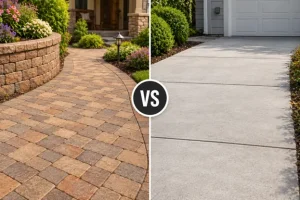
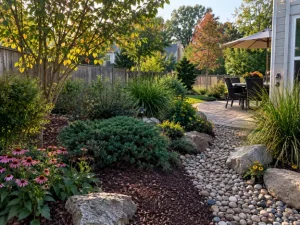
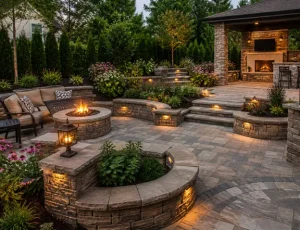
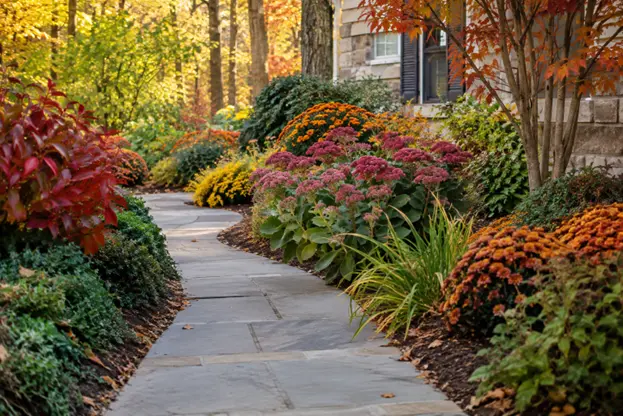
A well-planted walkway can do far more than lead people from one part of the yard to another. The right walkway border plants create definition, frame the route, soften hardscape, add fall color, and make a walkway backyard feel more intentional from September through early winter.
The best plants for fall walkway borders combine late flowers, colorful foliage, seed heads, grasses, and evergreen structure. Instead of relying only on short-lived seasonal mums, use a mix of perennials, grasses, ground covers, and shrubs that stay attractive after the first cool nights.
This article covers 10 strong plant choices for autumn walkways, plus planting layouts, design tips, maintenance advice, and a call to action.
Planning for Walkway Border Plants Before Planting
Before choosing plants, evaluate the walkway itself. A path can create challenging growing conditions because concrete, brick, stone, and pavers reflect heat. Narrow beds may dry out quickly, while shaded paths under trees can stay damp and compete with roots.
A successful walkway border should be attractive without becoming an obstacle. Plants should not lean into the path, cover steps, hide lighting, or make guests feel crowded.
When planning walkway designs, think about the following:
- The walkway width
- Sun exposure
- Soil drainage
- Reflected heat from hardscape
- Available planting-bed depth
- Mature plant size
- Foot traffic
- Visibility around stairs and turns
- Access for mowing and maintenance
- The style of the house and garden
Use low plants closest to the path and taller plants farther back. This creates layers while keeping the walking surface clear. For narrow borders, compact plants are especially important because oversized shrubs and grasses can quickly overwhelm the path.
1. Asters for Late Fall Flowers
Asters are among the most valuable fall flowers for walkway borders. Their blooms appear in purple, blue, pink, white, and lavender shades when many summer perennials have finished flowering.
Compact asters work well near the front of a path border, making them useful walkway border plants for narrower beds, while taller varieties belong farther back in a wider bed. They look especially striking when planted in groups rather than scattered individually.
Asters combine well with sedum, ornamental grasses, black-eyed Susan, goldenrod, and evergreen shrubs. Their cool tones create a strong contrast with the gold, copper, and bronze colors common in fall gardens.
Aster borders are widely valued for creating a dramatic fall display. Pairing asters with ornamental grasses can produce both flower color and long-lasting movement through the autumn season.
Choose a compact cultivar if your path is narrow. Taller asters can flop into the walkway if they are crowded, overwatered, or not cut back earlier in the season.
2. Autumn Joy Sedum for Lasting Structure
Autumn Joy sedum, now often classified as Hylotelephium, is one of the most dependable plants for sunny walkway borders. Its thick foliage remains attractive through the growing season, and its large flower heads change from pink to rose, copper, and rust tones as fall progresses.
This plant is useful because it adds both color and structure. Even after flowers fade, the seed heads can remain attractive through winter, especially when dusted with frost or snow.
Sedum is best for:
- Sunny borders
- Dry areas
- Rock gardens
- Gravel paths
- Patio edges
- Low-water landscapes
- Modern walkway designs
Place Autumn Joy sedum in the middle of the planting bed instead of directly at the path edge. Its mature width can spread beyond the line of the walkway if planted too close.
Autumn Joy is valued for late-summer flowers that can remain attractive through fall, with seed heads continuing to provide structure in winter.
3. Little Bluestem for Copper Fall Color
Little bluestem is a native ornamental grass that can bring blue-green summer foliage, orange-red fall color, and silvery seed heads to a walkway backyard.
Its upright form and fine texture make it especially useful for naturalistic planting designs. It can soften the hard edges of pavers, brick, flagstone, and gravel without creating a dense barrier.
Use little bluestem along:
- Sunny paths
- Native plant borders
- Gravel gardens
- Patio edges
- Driveway beds
- Dry slopes
- Pollinator gardens
This grass is often best placed toward the middle or back of a border because it can reach 2 to 3 feet tall. Plant it in repeating groups for a stronger visual effect.
Little bluestem is known for developing warm orange-red autumn foliage and silvery seed plumes, offering both fall color and winter interest.
Do not cut it back in fall unless it has become damaged or obstructs the walkway. Leaving the seed heads in place adds structure and visual interest during winter.
4. Feather Reed Grass for Vertical Definition
Feather reed grass is a narrow, upright ornamental grass that gives a path definition without taking up as much width as many mounded grasses. Its vertical form works well in formal, modern, and mixed perennial borders.
The grass develops upright flower plumes that can turn golden or wheat-colored in fall. These plumes remain attractive into winter and create movement when wind passes through the garden.
Use feather reed grass for:
- Walkway entrances
- Patio borders
- Narrow planting beds
- Privacy screens
- Formal garden designs
- Long paths that need rhythm
- Retaining-wall planting
Feather reed grass can be repeated at intervals along a longer walkway to create a visual beat. For example, place one clump every several feet behind lower sedum, asters, or ground covers.
Feather reed grass is recognized for its upright habit, pinkish-red early growth, and golden-brown fall transition, making it a strong companion for asters and sedum in autumn borders.
5. Goldenrod for Bright Native Color
Goldenrod is one of the most underused plants for fall color. Its bright yellow flower sprays can bring sunlight-like color to a walkway border, especially when planted beside purple asters or blue-green grasses.
Contrary to a common misconception, goldenrod is not the main cause of seasonal allergies. Ragweed is usually the greater concern because it is wind-pollinated, while goldenrod relies more heavily on insects for pollination.
Use compact, clump-forming goldenrod selections in garden borders. They work well in:
- Sunny native gardens
- Pollinator borders
- Meadow-inspired paths
- Large backyard beds
- Fall planting combinations
Goldenrod can grow too large for a narrow path if the wrong variety is selected. Research the mature size before planting and keep taller selections toward the back of the bed.
Pair goldenrod with asters for a traditional purple-and-gold fall color scheme. Add little bluestem or feather reed grass to introduce texture and movement.
6. Heuchera for Shaded Walkways
Heuchera, often called coral bells, is a strong choice for partly shaded or shaded walkways. It is valued for foliage rather than flowers, with leaves available in shades of burgundy, purple, copper, bronze, lime green, silver, and deep black.
Because heuchera forms a neat mound, it works well along the front edge of a walkway border. The foliage can remain attractive through fall and, in milder conditions, well into winter.
Use heuchera around:
- Shaded front paths
- Woodland walkways
- Patio borders
- Porch foundations
- Tree-lined routes
- Container displays
- Stone paths
Heuchera pairs well with ferns, sedges, hostas, Japanese forest grass, and evergreen shrubs. It is especially valuable among walkway border plants when you need fall color in a location that does not receive enough sun for asters, sedum, or ornamental grasses.
Coral bells are valued for fall foliage in shades of purple, amber, bronze, silver, lime, and deep green, making them useful as a shade-border plant or container filler.
7. Japanese Forest Grass for Soft Texture
Japanese forest grass is a graceful, arching ornamental grass that works well along shaded paths. It adds motion and softness without the stiffness of taller upright grasses.
Some varieties offer green-and-gold foliage, while others develop warm tones as temperatures cool. It is especially effective near stone, flagstone, gravel, and paver walkways because the soft foliage contrasts with hard surfaces.
Use Japanese forest grass in:
- Shaded patio borders
- Woodland paths
- Partly shaded entryways
- Courtyard gardens
- Tree-lined walkways
- Mixed foliage gardens
Plant it in drifts rather than as isolated individual clumps. Several plants grouped together create a flowing edge that guides the eye along the path.
Keep the grass just far enough from the path that its arching leaves do not cover the walking surface. It should soften the edge, not obstruct the route.
8. Black-Eyed Susan for Warm Fall Gold
Black-eyed Susan, or Rudbeckia, provides cheerful gold and yellow flowers that can continue into early fall. It is a classic choice for sunny walkways, cottage gardens, and pollinator-friendly landscaping.
Its warm color works especially well beside brick, natural stone, gravel, and warm-toned mulch. It can also balance the cooler colors of asters and blue grasses.
Use compact cultivars close to a walkway and reserve taller varieties for the back of wider borders. Plant in groups of three, five, or more plants to create a stronger visual effect.
Black-eyed Susan is useful for homeowners who want bold color with a natural, low-maintenance appearance. As flowers fade, some seed heads can be left for birds and winter texture.
Avoid overcrowding. Good airflow helps reduce disease problems, especially in humid climates or dense borders.
9. Creeping Sedum for the Path Edge
Creeping sedum is a low-growing plant that works well at the very front of a sunny walkway border. It can fill gaps between stepping stones, soften the edge of a gravel path, and add fall tones of red, bronze, purple, or gold.
It is suitable for:
- Rock gardens
- Stone paths
- Stepping-stone joints
- Gravel walkways
- Patio edges
- Dry sunny borders
- Low-water landscape designs
Creeping sedum does not need frequent mowing and can tolerate lean, well-drained soil. It should not be used as the main walking surface in high-traffic areas, but it can handle occasional stepping where the stones provide the primary footing.
Sedum is valued for sunny, dry walkway edges because its thick foliage adds texture, needs relatively little water after establishment, and can provide fall color.
For a layered effect, pair low creeping sedum at the path edge with upright Autumn Joy sedum farther back.
10. Dwarf Evergreen Shrubs for Year-Round Definition
Fall color is important, but a border also needs structure after flowers fade. Dwarf evergreen shrubs provide that lasting framework.
Use compact evergreens such as dwarf boxwood, inkberry, compact yew, juniper, dwarf spruce, or regionally appropriate evergreen shrubs. They can anchor the beginning and end of a path, frame a patio entrance, or separate groups of perennials.
Evergreens are particularly useful around:
- Walkway entrances
- Steps
- Corners of patios
- Mailbox beds
- Garden gates
- Front-door paths
- Seating areas
Avoid using too many identical shrubs in a straight line. Mix evergreen shapes, grasses, and flowering plants so the border has texture and seasonal change.
A simple fall walkway border may include dwarf evergreens for structure, creeping sedum along the path edge, Autumn Joy sedum in the middle, asters for flower color, and feather reed grass farther back. Together, these walkway border plants create a layered design with color, texture, and year-round definition.
Create Better Walkway Designs
The most attractive walkway designs use plants to guide movement and create a sense of arrival. The border should lead the eye toward a destination such as a front door, patio, garden gate, fire pit, shed, or seating area.
Repetition is one of the simplest ways to make a walkway look professionally designed. Instead of buying one of every plant, repeat a few key plants through the border. For example, use creeping sedum along the front edge, repeat groups of asters every few feet, and add feather reed grass at major turns or path entrances.
Use a mix of flowers, foliage, grasses, ground covers, and evergreen structure. A path border that relies only on flowers may look empty after blooming finishes. A combination of different plant types keeps the garden attractive from September through winter.
For narrow walkways, choose compact plants and keep the tallest plants toward the back. Avoid thorny shrubs, overly floppy perennials, or large grasses directly beside the path. These can create a crowded feeling and make the route harder to maintain.
A three-layer approach works well for many sunny paths. Low creeping sedum or compact heuchera can form the front layer. Autumn Joy sedum, compact asters, or black-eyed Susan can provide the middle layer. Feather reed grass, little bluestem, or taller asters can add height in the back.
Fall Care for Walkway Border Plants
Fall maintenance keeps the path safe and helps plants perform better through winter.
Water new plants deeply while they establish. Cooler temperatures do not eliminate the need for moisture, especially if autumn weather is dry. Check soil moisture below the surface rather than watering on a rigid schedule.
Apply a moderate layer of mulch around new planting beds. Keep mulch away from stems and crowns, and do not let it spill onto the path. Mulch can help protect roots, suppress weeds, and give the border a finished appearance.
Remove diseased foliage and plants that have collapsed into the walkway. However, leave some seed heads and ornamental grass plumes standing through winter. These add texture, support wildlife, and make the garden look more interesting after flowers are gone.
Sweep fallen leaves from paths regularly. Wet leaves can hide walkway edges, create slippery surfaces, and smother low-growing plants.
Common Walkway Border Mistakes
The most common mistake with walkway border plants is planting too close to the path. A small nursery plant may appear harmless, but many perennials and grasses spread wider than expected. Always check mature width and place plants far enough back to preserve walking space.
Another mistake is using only one season of interest. A walkway that depends entirely on summer flowers may look bare by September. Combine late-season blooms with grasses, foliage plants, seed heads, and evergreen shrubs.
Avoid installing tall grasses near stairs, path turns, or narrow routes. These plants can hide elevation changes and create safety problems.
Do not overlook drainage. A walkway border that stays wet may need soil improvement, a drainage solution, or plants suited to damp conditions. Do not force drought-tolerant plants into a soggy bed or moisture-loving plants into a dry, hot strip beside pavement.
Finally, avoid mixing too many unrelated colors, leaf textures, and materials. A restrained palette of repeated plants creates stronger definition and a calmer visual effect.
Transform Your Yard with Walkway Border Plants This Fall
The right walkway border plants can turn an ordinary route into a colorful, structured garden feature. Choose plants that match the site, repeat them in generous groups, and use a mix of flowers, grasses, foliage, and evergreen structure to create a border that remains attractive from September through winter.
Start small by updating one section of your walkway backyard with compact asters, sedum, ornamental grasses, or evergreen shrubs. Then expand the design as you learn which plants thrive in your soil, sun, and climate.
For larger walkway ideas or complete walkway designs involving new paths, drainage, landscape lighting, stonework, and four-season planting, Hawkins Landscaping Inc. can help you develop a plan that fits your property and outdoor goals.
From natural stone and paver walkways to planting beds, lighting, and drainage solutions, our professional landscaping services can bring your vision together while creating a path that is both attractive and practical. Thoughtful design can also help your walkway complement the surrounding landscape and remain functional through Maryland’s changing seasons.
With the right materials, proper installation, and carefully selected plants, your walkway can become more than a path—it can be a welcoming garden feature that adds fall color, definition, and lasting curb appeal.
Ready to upgrade your walkway? Call (301) 898-3615 or visit Hawkins Landscaping Inc. to schedule your consultation. Ask about flexible financing options for your outdoor project.