A patio kitchen turns a backyard into more than a place to sit outside. It creates a natural gathering point where cooking, conversation, dining, and fall entertaining can happen in the same space. When temperatures cool and evenings arrive earlier, a well-planned outdoor kitchen makes it easier to serve warm meals, host friends, and enjoy the patio without repeatedly running back and forth to the indoor kitchen.
The best patio ideas for backyard spaces begin with function. A patio kitchen should make outdoor cooking easier, not create a crowded or unsafe zone. It needs the right location, clear walkways, durable materials, good drainage, proper appliance clearances, weather-ready storage, and enough room for people to relax while someone cooks.
This guide explains 10 ways a patio kitchen can create the perfect fall gathering space. It also covers layout options, lighting, seating, materials, weather protection, utilities, maintenance, and important planning considerations for successful patio installation.
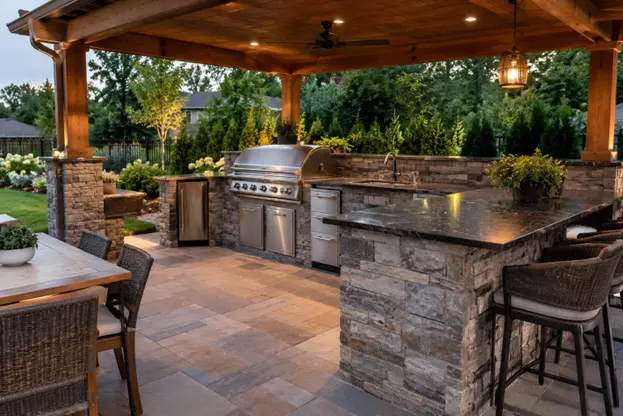
Why a Patio Kitchen Works in Fall
Fall is one of the best seasons for an outdoor kitchen. The heat of summer has eased, but the weather is often still comfortable enough for grilling, smoking, baking, and serving meals outside. A patio kitchen keeps the cook part of the gathering instead of isolated indoors.
A functional patio kitchen can provide:
- A dedicated grilling area
- Outdoor counter space for food preparation
- Storage for tools and serving supplies
- A serving station for drinks and snacks
- Seating for guests
- Better flow between the house and backyard
- A reason to use the patio after summer
- A more organized outdoor entertaining space
- A focal point for patio design
- A place to enjoy football games, family dinners, holidays, and weekend gatherings
Outdoor kitchen planning should begin with layout and location. The cooking area should be accessible, placed a safe distance from flammable materials, and located logically near the indoor kitchen and outdoor dining area to reduce unnecessary trips.
The best patio kitchen is not necessarily the largest one. A compact grill island with counter space and storage may be more useful than an oversized installation that takes over the yard.
1. A Patio Kitchen Keeps the Cook Part of the Gathering
One of the biggest benefits of an outdoor kitchen is social connection. In a traditional setup, one person may be inside cooking while everyone else sits outdoors. A patio kitchen changes that arrangement by bringing food preparation into the gathering space.
A grill island, prep counter, beverage station, or outdoor pizza oven allows the cook to talk with guests while preparing food. This is especially useful for fall meals such as grilled vegetables, burgers, chili, pizza, roasted corn, hot cider, and warm desserts.
Place the cooking zone close enough to the dining and lounge areas for easy conversation, but far enough away that smoke, heat, and food-preparation traffic do not interrupt guests.
A successful patio design gives the cook an unobstructed workspace while keeping guests nearby but out of the main preparation zone. This balance makes the space safer and more enjoyable.
2. A Defined Cooking Zone Improves Patio Design
A patio kitchen gives the backyard structure. Instead of placing a freestanding grill against a wall with no counter space or storage, the kitchen becomes a defined outdoor zone.
The cooking area may include:
- Built-in grill
- Side burner
- Smoker
- Pizza oven
- Outdoor refrigerator
- Sink
- Prep counter
- Storage drawers
- Trash pullout
- Beverage station
- Bar seating
- Lighting
The layout should match the size of the patio and how you cook. A small patio may only need a linear counter with a grill and storage. A larger patio may support an L-shaped kitchen, U-shaped kitchen, or kitchen island with seating.
Outdoor kitchen design guidance often recommends keeping the grill, prep area, and sink within a few steps of one another to reduce unnecessary movement. Linear layouts work well for compact patios, while L-shaped and U-shaped designs are better for dedicated cooking areas with more appliances.
3. A Patio Kitchen Makes Fall Dining Easier
A patio kitchen creates a smoother connection between cooking and eating. Instead of carrying plates, trays, condiments, and drinks across the yard, everything can be prepared and served in one outdoor zone.
For fall gatherings, include enough counter space for:
- Food preparation
- Serving platters
- Drinks
- Condiments
- Dessert
- Hot beverages
- Outdoor dishware
- A safe landing area near the grill
A bar-height counter can serve multiple purposes. It can be used for food preparation while cooking, then become a serving buffet or casual seating area during a gathering.
If space allows, place a dining table close to the kitchen but not directly in the main cooking path. Guests should be able to sit comfortably without blocking access to the grill, refrigerator, sink, or storage cabinets.
4. A Patio Kitchen Supports Multiple Gathering Zones
A well-designed patio does not need to function as one large open area. A patio kitchen can help divide the backyard into useful zones.
A functional fall patio may include:
- A cooking zone
- A dining zone
- A lounge zone
- A fire-pit zone
- A beverage station
- A garden-view seating area
- A pathway connecting the house to the yard
- A storage zone
For example, the kitchen may sit closest to the back door, making it easy to bring food and supplies outside. A dining table may be placed nearby, while lounge seating and a fire pit can sit farther into the yard.
This arrangement keeps the active cooking area separate from the quieter relaxing area. It also gives guests more space to spread out during larger gatherings.
5. A Patio Kitchen Extends Outdoor Cooking Season
A simple grill can be used year-round, but a complete patio kitchen makes fall cooking more comfortable and organized. With a protected prep counter, storage, lighting, and seating, homeowners are more likely to use the space after summer ends.
Weather protection can include:
- Pergolas
- Pavilions
- Retractable awnings
- Roof extensions
- Shade sails
- Wind screens
- Outdoor curtains
- Slatted privacy panels
- Umbrellas
A cover can provide shade and light rain protection, but it must be designed with proper ventilation and appliance clearances. Do not place a grill, pizza oven, or fire feature beneath an awning or low pergola unless the appliance manufacturer, local codes, and installation professional specifically approve it.
Weather protection can extend the use of an outdoor kitchen, but safe clearance, ventilation, and material selection must be considered before construction.
For chilly evenings, place a fire feature or approved patio heater outside the cooking zone. Keep heat sources away from fabric, cabinets, appliances, and walkways.
6. A Patio Kitchen Creates Better Storage
Outdoor storage is often overlooked, but it can make a patio kitchen far more functional. Without storage, grilling tools, dishware, condiments, and cleaning supplies end up on tables, inside the house, or scattered around the patio.
Built-in cabinets and drawers can hold:
- Grill tools
- Serving trays
- Outdoor dishes
- Paper towels
- Trash bags
- Cleaning supplies
- Spices
- Fuel accessories
- Fire-starting tools
- Weatherproof storage containers
Choose cabinets designed for outdoor use. Materials may include stainless steel, marine-grade polymer, masonry, stone veneer over suitable framing, powder-coated metal, or outdoor-rated composite cabinetry.
Storage should remain accessible after installation. Do not build counters or walls that hide gas shutoffs, cleanouts, electrical connections, plumbing access panels, or other service points.
Outdoor kitchen planning checklists emphasize that access for maintenance, utility shutoffs, service panels, and future repairs should remain available after the final patio and cabinetry are completed.
7. A Patio Kitchen Improves Backyard Lighting
A patio kitchen needs better lighting than a basic lounge patio. Cooks need to see food, knives, controls, counters, and surfaces clearly. Guests need enough light to move safely without feeling like they are sitting under a bright floodlight.
- Use layered lighting.
- Task lighting should illuminate the grill, prep counter, sink, refrigerator, and serving area. Weather-rated under-counter lights, wall-mounted fixtures, overhead pendants, or dedicated grill lights can improve visibility.
- Ambient lighting creates a comfortable fall atmosphere. String lights mounted to fixed structures, warm wall sconces, lanterns, and dimmable patio fixtures can create a softer glow around dining and seating zones.
- Accent lighting can highlight nearby trees, garden beds, stone walls, planters, and pathways. This adds depth and makes the patio feel connected to the rest of the landscape.
- Use warm-white LEDs for most residential patio spaces. Avoid placing fixtures where they shine directly into guests’ eyes or create glare on stainless steel counters.
8. A Patio Kitchen Can Include a Fire Feature
A fire feature can turn a patio kitchen into a true fall gathering destination. After dinner, guests can move from the cooking and dining area to a fire table, fire pit, outdoor fireplace, or heated lounge zone.
A fire feature works best when it is positioned away from the grill and cooking area. The kitchen should remain clear for food preparation, while the fire feature becomes a separate relaxation zone.
Possible options include:
- Propane fire tables
- Built-in gas fire pits
- Wood-burning fire pits where permitted
- Outdoor fireplaces
- Fire bowls
- Infrared patio heaters
Place the fire feature on a noncombustible, stable surface. Keep dry leaves, mulch, fabrics, furniture, and low branches at safe distances. Follow all local regulations and manufacturer requirements.
A fire pit should never be used as a substitute for proper outdoor kitchen heating or ventilation. Cooking appliances, grills, fire pits, and heaters all have specific clearance needs.
9. A Patio Kitchen Adds Long-Term Flexibility
A patio kitchen does not have to be built all at once. A phased approach can make the project more manageable.
Phased construction can help homeowners use the patio kitchen from the beginning while spreading costs across multiple seasons. A basic grill island with a counter and storage can be expanded later with appliances, seating, and shade structures.
The key is to plan utilities early. If you think you may want a sink, refrigerator, natural-gas grill, lighting, or outdoor speakers later, plan conduit, gas routes, electrical circuits, drainage, and access before the patio is finished.
Retrofitting utility lines after pavers, counters, and stonework are complete can be disruptive and expensive.
10. A Patio Kitchen Creates a More Valuable Everyday Experience
The most important reason to build a patio kitchen is not resale value or trends. It is the everyday experience of using the yard more often.
A patio kitchen can make family dinners feel less rushed. It can give teenagers a place to gather, create a weekend grilling routine, provide a comfortable setting for holiday meals, and make fall weekends more enjoyable.
The best patio design fits the household. A family that grills twice a week may benefit most from a simple grill island and dining patio. Someone who hosts large gatherings may need larger counters, bar seating, refrigeration, and multiple cooking zones. A homeowner who enjoys gardening may want a kitchen that opens toward raised beds and herb containers.
Before committing to a design, write down how you expect to use the kitchen. Consider how many people will gather, what meals you will cook, where food will be prepared, how guests will move through the area, and which features are essential.
Choose the Right Patio Kitchen Layout
Linear Layout
A linear kitchen places appliances and counters along one wall or one side of the patio. It is ideal for smaller spaces, narrow patios, decks, and simple grilling areas.
A linear layout may include a grill, prep counter, storage, and a small outdoor refrigerator. It keeps the footprint compact and leaves more patio space available for dining or lounge seating.
L-Shaped Layout
An L-shaped kitchen provides more counter space and creates a natural cooking zone. One side can hold the grill and prep counter, while the second side can provide storage, a sink, or bar seating.
This layout works well for medium-size patios and outdoor rooms. It also helps separate the cooking zone from guest seating.
U-Shaped Layout
A U-shaped kitchen offers the most counter space and storage. It can support a grill, sink, refrigerator, pizza oven, bar, and serving station.
This layout works best in larger patios. It should include enough interior clearance so the cook can move comfortably without feeling enclosed.
Island Layout
An island can create a central prep or serving area. It may include seating on one side and cooking appliances on the other.
An island is attractive for entertaining, but it requires enough circulation space around all sides. Do not crowd an island into a patio that is too small.
Choose Durable Materials
Outdoor kitchen materials should handle moisture, heat, sun, food spills, falling leaves, and changing temperatures.
Patio surfaces
Good patio materials include concrete pavers, natural stone, brick, porcelain pavers, textured concrete, and well-installed gravel. The surface should be stable, slip-resistant, and sloped correctly for drainage.
Countertops
Outdoor countertop options include granite, concrete, porcelain slab, stainless steel, soapstone, and certain weather-rated sintered surfaces. Avoid indoor materials that can crack, stain, or deteriorate outdoors.
Cabinets
Outdoor cabinet materials may include stainless steel, masonry, stone veneer, marine-grade polymer, powder-coated metal, or outdoor-rated composite materials.
Structure
For built-in islands, use materials designed to support appliances and resist moisture. Outdoor kitchens should not be framed with untreated materials that can rot or deteriorate.
A properly installed patio surface and drainage plan help prevent water from pooling around outdoor appliances and working into the base, cabinets, and surrounding hardscape.
Drainage and Patio Installation
Drainage is one of the least visible but most important parts of a patio kitchen. The cooking zone should not sit in an area where rainwater pools, runs toward the house, or flows into cabinets.
A patio should generally slope away from the home and away from appliance bases. Downspouts should not discharge directly onto the cooking area. If necessary, add drains, swales, gravel strips, permeable pavers, or other drainage features.
For paver patios, use a properly compacted base, edge restraint, and correct joint materials. Concrete patios need appropriate thickness, control joints, and a suitable drainage slope. When installing stone patios, choose a stable base and surfaces that remain slip-resistant when wet.
If the patio includes a sink, do not treat sink water the same as rainwater. Sink drainage may contain food particles, grease, soap, and cleaning products, so it needs an approved drainage plan rather than simply draining into the yard.
Common Patio Kitchen Mistakes
- Avoid placing the kitchen too far from the house. A patio kitchen does not need to sit directly beside the back door, but it should be convenient enough that you will actually use it.
- Avoid building without enough counter space. Even a small grill needs a safe landing area for raw food, cooked food, utensils, and serving dishes.
- Avoid ignoring the wind direction. Smoke should not blow directly toward doors, windows, seating areas, or neighbors.
- Avoid installing utilities after the patio is finished. Planning gas, power, water, and drainage early prevents costly demolition later.
- Avoid placing the kitchen where water naturally collects. Drainage must be corrected before cabinets and appliances are installed.
- Avoid using indoor appliances, cabinets, fabrics, or finishes outdoors. Choose materials specifically rated for exterior conditions.
- Avoid crowding the patio. Guests need clear walkways around the kitchen, dining table, lounge area, and doors.
When to Hire a Professional
A basic freestanding grill and rolling cart may be simple enough for a homeowner to arrange. Built-in outdoor kitchens generally require professional planning.
Hire qualified professionals for:
- Gas lines
- Electrical circuits
- Plumbing
- Sink drainage
- Built-in grill islands
- Patio installation
- Structural pergolas
- Outdoor fireplaces
- Paver base preparation
- Retaining walls
- Major drainage work
- Appliance ventilation
- Permit-required projects
A professional designer or contractor can create a patio kitchen that works as one system. This means the patio surface, drainage, appliance locations, counters, lighting, seating, planting, and utility access all support one another.
Create Your Ideal Patio Kitchen for Fall Gatherings
A patio kitchen can turn your backyard into the perfect place for fall meals, football gatherings, quiet dinners, and weekend entertaining. Start with the essentials: a safe grill location, enough counter space, durable materials, good drainage, clear circulation, and comfortable seating.
Then add the features that match how you live, such as a refrigerator, sink, bar seating, outdoor lighting, fire feature, pergola, or storage. The best patio ideas for backyard spaces are built around real use, not just appearance.
Ready to upgrade your outdoor living space? A well-designed patio kitchen can turn your backyard into a comfortable place to cook, gather, and enjoy time with family and friends. Start by considering how you want to use the space, where utilities should be located, and how the design will work with your existing landscape.
At Hawkins Landscaping Inc., we can help turn your vision into a practical and attractive patio design. From the layout and material selection to proper patio installation, drainage, lighting, and weather-ready features, our team can help create an outdoor kitchen designed around your property and lifestyle.
With thoughtful planning and quality workmanship, your patio kitchen can become a welcoming gathering space you can enjoy through fall and across the seasons.
Ready to bring your patio ideas to life? Call (301) 898-3615 or visit Hawkins Landscaping Inc. to schedule your consultation. Ask about flexible financing options for your outdoor project.