The most important masonry hardscape to complete before winter are those that improve safety, control water, and repair existing damage. Resetting uneven pavers, repairing loose steps, addressing deteriorated mortar, restoring drainage, and correcting unstable borders usually deserve attention before decorative additions.
Fall can also be a practical time to build a patio, walkway, seating wall, or outdoor gathering area. However, the project must allow enough time for excavation, inspections, installation, and weather-sensitive materials to cure properly. A dependable landscaping hardscaping contractor will plan around site conditions and temperature requirements rather than rushing to finish before the first freeze.
This guide explains which projects to prioritize, how masonry differs from other hardscape construction, and what homeowners should ask when researching hardscapes Frederick MD.
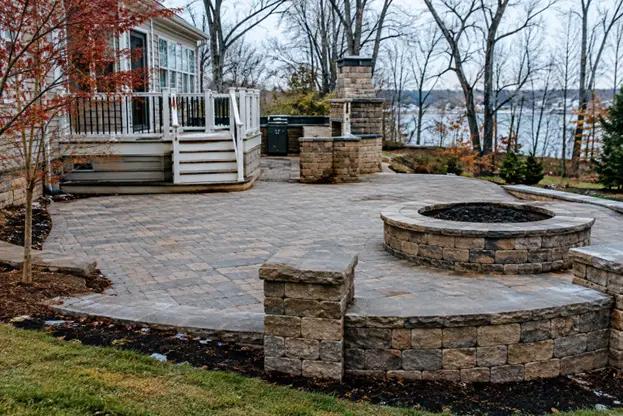
Why Your Masonry Hardscape Needs Winter Preparation
Winter is difficult on outdoor surfaces because moisture, freezing temperatures, and ground movement can expose weaknesses in an installation. A loose stone that seems manageable in October may become harder to navigate beneath leaves, snow, or ice.
Water management is central to prevention. Before winter, inspect joints, edges, drainage outlets, and low spots. Seasonal paver guidance recommends clearing debris, checking drainage, replenishing appropriate joint material, and inspecting walls and edge restraints.
Not every crack means immediate failure, and not every uneven surface requires replacement. The important question is whether the problem is cosmetic, actively worsening, or connected to drainage or structural movement.
A professional assessment can distinguish between a localized repair and a deeper problem that needs base reconstruction, grading, or engineering.
Understand the Different Types of Masonry Hardscape Work
The term “masonry hardscape” often refers to several construction methods. They may look similar after installation, but their preparation and repair requirements differ.
Mortared brick and stone use mortar to bond units together. Segmental retaining walls typically rely on a designed block system, appropriate foundations, backfill, and reinforcement where required. Sand-set paver surfaces use individual units supported by a prepared base and restrained edges.
Poured concrete is another hardscape category, but its installation and curing procedures are not identical to mortared masonry.
This distinction matters when comparing proposals. A contractor should specify the system being installed rather than offering a vague promise to “build a stone patio.”
Cold-weather procedures also depend on the system. The Concrete Masonry & Hardscapes Association states that concrete masonry construction below 40°F requires consideration of special construction and protection procedures. That is not a universal cutoff for every outdoor project, but it is an important planning threshold for relevant masonry work.
1. Repair Uneven Paver Walkways
A walkway is a good starting point because people use it daily. Inspect the route from the driveway to the door, side-yard paths, garden walkways, and connections between patios and outdoor gathering areas.
Look for rocking pavers, sunken sections, raised edges, widening joints, and areas where water collects. Mark the locations and photograph them after rain.
A localized repair may involve lifting the affected units, correcting the supporting layers, compacting as needed, and resetting the surface. Repeated movement in the same area suggests that the underlying cause has not been resolved.
Do not assume new joint sand will fix settlement. Likewise, replacing a damaged paver will not solve concentrated runoff beneath the path.
The finished repair should preserve the intended drainage and provide a stable walking surface. Before approving the work, walk across it and check that individual units do not rock.
2. Restore Safe Brick and Stone Steps
Steps deserve priority because they combine elevation changes with potentially slippery conditions. Check treads, risers, landings, joints, railings, and adjacent lighting.
A loose tread should not be dismissed as a minor cosmetic issue. Stop using the affected route where necessary and have the problem evaluated. Cracked stone, deteriorated supports, and loose masonry may require different repairs.
The contractor should determine why the step moved before resetting it. Possible concerns include the supporting base, water entry, deteriorated mortar, or movement in the surrounding structure.
Avoid creating inconsistent step heights during patch repairs. A repair should maintain a predictable walking pattern rather than introduce a new hazard.
If the project includes a longer stairway, steep grade, or substantial landing reconstruction, ask whether permits, structural drawings, or other approvals apply. Address those questions before demolition begins.
3. Repoint Deteriorated Mortar Joints
Mortared walls, steps, and landings can develop open, cracked, or crumbling joints. Repointing replaces deteriorated mortar in a controlled way rather than simply covering the surface with a thin smear.
The repair material must be compatible with the existing masonry. Older or softer brick may need a different approach from modern concrete block or dense stonework.
Ask the mason how much deteriorated material will be removed, what mortar will be used, and how the work will be protected afterward. Color matching matters visually, but compatibility and installation quality matter more.
Repointing should also address the source of repeated deterioration. If roof runoff continually saturates the same wall, repairing joints without correcting water exposure may provide only temporary improvement.
Weather is especially important. Fresh mortar must be protected according to the applicable cold-weather requirements; masonry should never be placed on snow- or ice-covered surfaces.
4. Inspect Retaining Walls Before Adding New Features
Retaining walls deserve careful inspection before winter, particularly where they support a patio, driveway, slope, or frequently used area.
Look for new leaning, bulging, displaced blocks, significant cracks, soil loss, or water collecting behind the wall. These signs should prompt professional evaluation rather than cosmetic patching.
A retaining wall is a system. Its performance depends on the foundation, retained soil, drainage, construction details, and reinforcement where required. Replacing a few visible blocks may not correct a problem deeper in the installation.
Keep drainage outlets clear, but do not excavate behind a questionable wall without an appropriate plan. Disturbing supporting soil can create additional risk.
If reconstruction is recommended, ask for documentation explaining the wall system, drainage, reinforcement, approvals, and inspection requirements. Taller walls or walls affected by nearby loads may need engineering.
5. Correct Drainage Around Patios and Walls
Drainage improvements should come before expensive finishes. Inspect the property during rainfall to see where water originates, where it travels, and where it collects.
Pay attention to downspouts, patio edges, steps, retaining walls, and narrow side yards. A roof outlet that empties onto a walkway can create a problem even if the paving itself is installed correctly.
Possible solutions may include adjusting grades, correcting a settled patio section, extending a downspout, or installing an appropriate drainage feature. The correct choice depends on the site.
Ask the contractor where collected water will discharge and how the system will be maintained. A drain without a suitable outlet is not a complete solution.
Before winter, clear leaves and debris from existing channels and outlets. Seasonal maintenance guidance specifically identifies drainage systems, joints, and edges as fall inspection priorities.
6. Restore Patio Edges and Joint Material
A patio can begin deteriorating at its perimeter. Loose edge restraints, missing joint material, and unsupported outer pavers may allow the installation to spread or become uneven.
Inspect the perimeter before winter. Check whether gravel, soil, or mulch has covered the edge and whether pavers have moved outward.
Repairs should suit the installed system. A sand-set paver patio requires different detailing from mortared stone. The contractor should identify the existing construction before choosing replacement joint products.
If polymeric sand is appropriate, follow the product’s requirements for joint dimensions, surface preparation, temperature, activation, and drying. It is not a universal substitute for mortar or a remedy for a failing base.
Seasonal paver guidance recommends restoring low joint areas and inspecting edge restraint, but these tasks should follow any necessary correction of settlement or drainage.
7. Build a New Patio When Conditions Allow
A new masonry or paver patio can still be a worthwhile fall project when design, approvals, materials, and weather align.
Plan the footprint around furniture and circulation. A dining table needs space for pulled-out chairs, while a lounge area needs clear movement between seating and doors.
Resolve drainage before selecting decorative patterns. Confirm how the patio will be supported, how its edges will be restrained, and whether concentrated runoff needs separate management.
Ask for an installation specification rather than assuming every site needs the same base depth. Soil, loading, drainage, material type, and local conditions affect the design.
If the schedule becomes too tight, complete planning and approvals now. Postponing installation is better than placing materials over frozen or unsuitable ground or leaving weather-sensitive work inadequately protected.
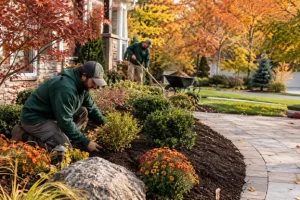
8. Add Durable Garden Borders and Low Walls
Garden borders can contain mulch, separate planting from paving, and create a cleaner landscape during winter dormancy.
Brick, stone, concrete edging, and suitable landscape blocks can all provide definition. Choose the material based on function rather than appearance alone.
A one-course decorative edge does not serve the same purpose as a wall holding back soil. Once a border retains material or changes the grade significantly, structural and drainage considerations become more important.
Keep edges low and predictable beside walking routes. Avoid creating raised corners that people may trip over or that snow-removal tools can strike.
Around mature trees, do not build raised rings that bury the trunk flare or require cutting important roots. A border should improve maintenance without compromising the existing landscape.
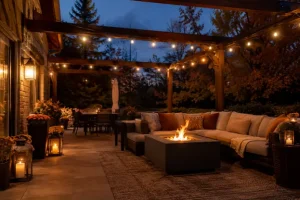
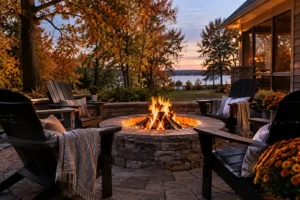
9. Complete a Fire-Pit Patio Safely
A fire-pit patio can extend outdoor use into autumn, but the project should begin with appliance selection and safe placement.
Confirm local rules and manufacturer requirements before deciding where the fire feature will sit. Wood-burning, propane, and natural-gas units may have different installation and clearance requirements.
Do not assume ordinary landscape blocks are suitable for direct exposure to high heat. A masonry fire feature may need an approved lining or a purpose-built system.
Plan stable seating, clear circulation, lighting, and access from the house. Keep the fire feature separate from combustible planting and furnishings according to its requirements.
Gas connections should be handled by qualified professionals. If the approved design cannot be completed safely before winter, finish the surrounding patio separately rather than improvising the fire installation.
10. Finish Small Repairs Before Cosmetic Sealing
Sealing often receives attention in fall, but it should not be the first response to damaged masonry hardscape features.
Start by identifying cracks, loose units, missing joints, drainage problems, and incompatible previous coatings. Repair the cause before considering a surface treatment.
Not every stone, brick, or paver installation requires sealer. The product must suit the material, exposure, appearance, and intended use. Some coatings can alter color or traction, and unsuitable applications can trap moisture or create maintenance problems.
Ask what benefit sealing will provide, what preparation is required, and how often maintenance is expected. Confirm suitable weather and drying conditions.
Be cautious of blanket promises that sealing will make masonry waterproof or prevent all freeze-thaw damage. Good drainage, sound construction, and appropriate repairs remain fundamental.
Plan Masonry Hardscape Work Around Weather, Not Just the Calendar
Late-season construction requires a realistic weather plan. A pleasant afternoon does not guarantee suitable overnight temperatures or adequate protection after the crew leaves.
For concrete masonry, CMHA identifies special construction considerations when ambient temperatures fall below 40°F. It also describes protection requirements based on temperatures during the period following installation.
The International Masonry Institute recommends including a cold-weather plan for fall and winter work. Depending on conditions, that can involve protected storage, heated materials, coverings, insulation, or heated enclosures.
Homeowners do not need to design those procedures themselves. They do need to ask whether the proposal includes the necessary protection and whether the schedule allows it.
A contractor should be willing to delay work when appropriate. Adding an accelerator or covering fresh work with a basic tarp is not automatically a complete cold-weather strategy.
Choose Materials for the Actual Application
Exterior suitability matters more than a material’s name alone. Natural stone varies, brick products have different intended uses, and concrete products must match the project.
Ask suppliers and contractors about freeze-thaw suitability, water exposure, traction, load requirements, and maintenance. Request product details rather than relying on a photograph.
Project | What to confirm |
Paver walkway | Appropriate units, prepared base, drainage, restraints |
Mortared steps | Stable support, compatible mortar, curing protection |
Retaining wall | Designed system, drainage, reinforcement where needed |
Stone patio | Exterior suitability, surface texture, support method |
Garden border | Stability, safe height, soil-retention requirements |
Fire feature | Approved materials, lining, clearances, fuel installation |
Keep the material palette restrained. Repeating stone tones, brick colors, or paving details can connect separate projects without making every surface identical.
Hiring Hardscape Professionals in Frederick, MD
When researching “hardscapes Frederick MD,” compare relevant experience rather than choosing only by price or proximity.
Ask to see projects similar to yours, including construction-stage photographs. A contractor skilled in decorative borders may not have the same experience with masonry hardscape repairs as one rebuilding structural steps or retaining walls.
Confirm licensing or registration requirements for the exact scope, request current insurance documentation, and clarify which specialists will handle regulated work.
The proposal should identify demolition, excavation, materials, construction methods, drainage, restoration, disposal, schedule, weather protection, and warranty terms.
Verify which authority has jurisdiction over the property. Frederick County provides plan-review submission guidance, but required documents and approvals depend on the project. Confirm the applicable requirements directly before construction.
A dependable contractor should explain options clearly and avoid promising that every project can be finished regardless of weather.
Prioritize Your Pre-Winter Budget
If the budget cannot cover everything, separate urgent repairs from optional improvements.
Priority | Examples |
Safety first | Loose steps, unstable walking surfaces, failing railings |
Water management | Blocked outlets, recurring puddles, active erosion |
Prevent further damage | Deteriorated joints, displaced edges, localized settlement |
Functional additions | New paths, patio expansion, seating areas |
Decorative work | Accent borders, optional finishes, cosmetic upgrades |
Ask for alternatives and phased scheduling. A targeted repair may make the property safer now while allowing a larger renovation later.
Avoid accepting a cheap surface patch without understanding what it will accomplish. The proposal should distinguish temporary stabilization from a durable repair.
Maintain Finished Hardscapes Through Winter
Once work is complete, protect it with straightforward maintenance. Remove leaves from paths, keep drainage outlets open, and inspect surfaces after storms.
Follow the installer’s instructions before walking on, furnishing, or loading newly completed work. Mortared masonry, adhesives, sealants, and concrete products may have different curing restrictions.
Use snow-removal tools and deicing products approved for the material. Do not assume one chemical is harmless to every surface, nearby plant, or metal component.
Record the completed work with photographs and retain product information, care instructions, and warranty documents. If movement or deterioration appears, document it and contact the installer before making incompatible repairs.
A spring inspection is useful, but it should not replace attention to obvious hazards during winter.
Prepare Your Masonry Hardscapes Before Winter
A successful pre-winter project begins with the right priorities: safe access, dependable drainage, stable foundations, compatible repairs, and realistic weather planning.
Start by inspecting steps, paths, patios, walls, joints, and drainage after the next rain. Photograph concerns and arrange an assessment before freezing conditions complicate the work.
Ready to improve your outdoor space before winter arrives? Contact Hawkins Landscaping Inc. for professional landscaping and hardscaping services tailored to your property, needs, and budget. Whether you need masonry repairs, a new patio, walkway improvements, or other hardscape installations, our team can help you plan a durable and functional outdoor space.
When comparing hardscapes in Frederick, MD, look for a contractor who explains construction methods, material options, local approval requirements, cold-weather preparation, and long-term maintenance. With thoughtful planning and quality workmanship, your masonry hardscapes can remain safer, better maintained, and ready to support outdoor living in the seasons ahead.
With over 50 years of experience serving Frederick County and surrounding areas, Hawkins Landscaping Inc. can help you turn your outdoor improvement ideas into a practical plan for lasting beauty and functionality.
Ready to prepare your hardscapes for winter? Call (301) 898-3615 or visit hawkinslandscaping.com to schedule your consultation. Ask about our flexible financing options for your outdoor project.