The best patio ideas for backyard spaces before winter combine comfort with practical preparation. Start by checking the paving, improving drainage, protecting furniture, and making walking routes visible. Then add a few thoughtful touches that make the patio inviting on suitable evenings.
You do not need a complete renovation to make a difference. A smaller seating arrangement, well-positioned patio lights, and organized storage can improve how the space works without creating unnecessary maintenance.
Larger improvements may still be possible, but weather and installation requirements should guide the schedule—not the desire to finish before the first snowfall.
This guide explores useful upgrades, seasonal maintenance, and planning decisions to help your backyard patio enter winter in better condition.
Patio Ideas for Backyard Spaces Begin With a Clear Winter Plan
Before buying accessories, decide how you intend to use the patio.
Will you continue cooking outdoors? Do you want somewhere to sit on mild afternoons? Or are you closing the area until spring?
Your answer determines what should stay outside, what needs storage, which routes must remain usable, and which patio ideas for backyard spaces make the most sense.
Divide the work into three categories:
- Essential maintenance and repairs
- Improvements for occasional winter use
- Larger projects to plan for a suitable construction window
Walk the patio after rainfall and again after dark. Photograph puddles, uneven paving, blocked routes, and poorly illuminated steps.
This simple assessment helps you spend money on real problems rather than decorative items that may not improve the space.
1. Repair Uneven Paving Before Decorating
A patio refresh should begin underfoot.
Inspect the surface for rocking pavers, displaced edges, cracks, and changes in level where the patio meets steps or walkways.
Keep the distinction between appearance and function clear. A stain may be cosmetic; an unstable paving unit affects how the area can be used.
The Concrete Masonry & Hardscapes Association notes that paver surfaces require ongoing cleaning and maintenance, while localized repairs can be less disruptive than replacing an entire poured surface.
Ask a contractor to identify why the paving moved before approving a repair.
A surface reset may be appropriate, but repeated settlement can require investigation of the supporting layers or drainage.
Finish necessary repairs before adding planters and furniture that would obstruct the work.
2. Check Drainage After Rain
A patio that regularly holds water deserves attention before freezing conditions arrive.
Observe where water comes from and where it stops. Check downspouts, adjacent planting beds, low paving sections, and drainage openings.
Do not assume that adding a drain is always the answer. A settled area, blocked outlet, or concentrated roof discharge may require a different correction.
Ask the contractor to explain the complete water route, including the discharge destination and overflow.
For permeable paving, maintenance must preserve the system’s intended infiltration. Concrete Masonry & Hardscapes Association (CMHA) recommends checking observation wells and underdrain outlets where present, along with removing debris and maintaining the specified joint aggregate.
A clean-looking surface does not necessarily mean the drainage system is working correctly.
3. Create a Smaller Cold-Weather Seating Zone
A large summer arrangement may feel unnecessary when only two people use the patio in November.
Bring the seating together around the activity you actually enjoy: conversation, reading, or a warm drink.
Keep the main route from the house open. Avoid arrangements that require stepping around table corners or walking through planting beds.
Use the most comfortable pieces rather than retaining every chair simply because storage is inconvenient.
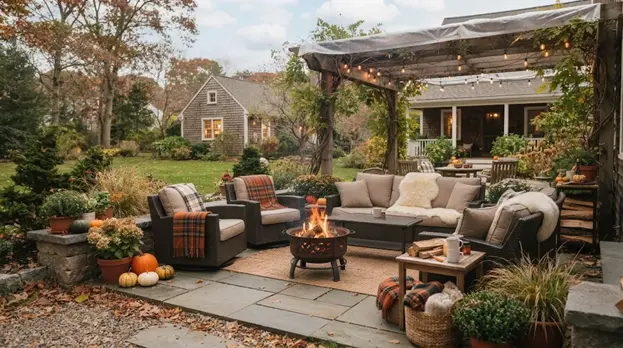
A compact layout can also make it easier to cover furniture and clear debris, making it a practical choice among patio ideas for backyard spaces.
If your winter plans do not include outdoor seating, store or secure items according to their instructions instead of maintaining a decorative setup that will not be used.
Practicality should lead the arrangement.
4. Protect Patio Furniture According to Its Materials
Different furniture materials need different care.
Check the manufacturer’s instructions for cleaning, covering, storage, and exposure to freezing temperatures. Do not assume “outdoor” means every component can remain unattended through winter.
Pay attention to joints, hardware, finishes, cushions, and removable parts.
Clean furniture before storage and allow it to dry appropriately. Store pieces where they will not block doors, ventilation, or essential household access.
If furniture remains outside, use compatible covers and secure them as directed.
Avoid choosing covers solely by appearance. Confirm dimensions, fit, and the required care routine.
A useful winter plan protects the furniture without making the patio harder to inspect or maintain.
5. Give Cushions and Textiles a Separate Storage Plan
Cushions, throws, umbrellas, and outdoor rugs can create more seasonal work than the furniture frames.
Sort them into items suitable for continued use and items requiring protected storage.
Follow cleaning instructions, allow materials to dry fully, and inspect for damage before packing them away.
Keep occasional-use blankets and cushions somewhere convenient indoors rather than leaving them outside between gatherings.
If an outdoor rug remains, check both its care requirements and compatibility with the paving beneath it.
Do not use a rug to conceal unstable units or a recurring wet area.
The most manageable setup is usually a limited collection of accessories that can be brought out and returned easily.
6. Improve Patio Lights for Earlier Evenings
Lighting should help people use the patio comfortably, not simply make it brighter. That principle should guide patio ideas for backyard spaces, especially as evenings get darker.
Start with the route from the house, steps, and changes in surface. Then consider the table, seating, and cooking area.
DarkSky International recommends giving every outdoor light a clear purpose, directing it where needed, and avoiding excessive output or spill onto neighboring property.
A bright exposed bulb can be less comfortable than a well-shielded fixture aimed at the task.
Inspect the arrangement from seated positions as well as while walking.
Separate functional lighting from decorative accents where possible. You may want a clear access route while keeping the lounge area softly illuminated.
7. Add Warm, Controlled Accent Lighting
Once essential visibility is addressed, decorative lighting can make the patio feel more welcoming.
Options include suitable table lamps, restrained string lights, or carefully placed lanterns.
Keep fixtures and cords out of walking routes and follow outdoor-use instructions.
DarkSky recommends warmer outdoor lighting, with a correlated color temperature of 3000K or lower, and suggests timers or occupancy controls to reduce unnecessary operation.
You do not need to illuminate every plant or wall.
One coordinated lighting feature may provide more atmosphere than several unrelated products.
Before adding permanent fixtures or new outlets, have the electrical arrangement assessed by a qualified professional.
Good patio lights should remain easy to operate and maintain.
8. Consider a Fire Feature Only Where Appropriate
A fire pit can become a focal point for suitable evenings, but it is not an accessory to fit wherever space remains.
Confirm local rules, current burning restrictions, and manufacturer requirements first.
NFPA recommends placing fire pits outdoors on a level, noncombustible surface and at least 10 feet from anything that can burn. Local requirements or appliance instructions may require greater separation.
Keep the feature away from overhead branches, rooflines, railings, vegetation, and other combustible surroundings.
Do not crowd it with chairs or use firelight as the only illumination for access.
If the patio cannot accommodate the required conditions, choose another way to enjoy the space rather than reducing essential clearances.
9. Keep Fire-Pit Comfort Separate From Fire Safety
Warm blankets and closely grouped seating may look inviting, but combustible accessories must remain appropriately separated from the heat.
NFPA recommends keeping children and pets at least three feet away, arranging chairs a safe distance from the fire, and supervising outdoor fires continuously.
Avoid burning on windy, dry days. Keep suitable extinguishing equipment available and follow the correct shutdown procedure.
For wood-burning pits, NFPA recommends clean, dry, seasoned hardwood and complete extinguishment before leaving. Cooled ashes should go into a metal container with a tight-fitting lid, kept away from combustible materials.
The most successful gathering area makes responsible operation straightforward.
Do not rely on guests to recognize hazards hidden by the decorative arrangement.
10. Organize the Grill Area for Winter Use or Storage
Decide whether the grill will remain active.
For continued cooking, preserve a clear route, appropriate working light, and the operating location required by the appliance instructions.
For storage, follow the manufacturer’s cleaning, fuel-handling, covering, and winterization procedures.
Do not assume a location suitable for storing a grill is suitable for operating it.
Keep accessories organized without placing them where they interfere with controls or required clearances.
Outdoor-kitchen plumbing, refrigeration, and electrical components may need separate specialist attention.
Make a written checklist of what has been disconnected or shut down. This helps prevent accidental operation and simplifies reopening.
Treat the cooking area as a collection of appliances, not one item covered by a tarp.
11. Refresh Containers With a Maintenance Plan
Containers can provide color and structure after summer planting fades.
However, winter suitability depends on both the plant and the pot.
Check whether the container can tolerate local conditions and whether drainage openings remain clear.
Choose plants according to their actual exposure, moisture needs, and suitability for container growing—not simply their appearance at purchase.
Position pots where they do not narrow steps or force people off the paving.
Move vulnerable containers before they become difficult to handle.
A pair of coordinated planters may provide enough visual interest without creating a large collection requiring frequent attention.
Let the planting complement the patio rather than fill every unused corner.
12. Keep Planting Beds From Spilling Onto the Patio
Review the edges between paving and planting.
Remove displaced soil and mulch, inspect borders, and note where rainfall repeatedly washes material across the surface.
Do not simply add a taller edge without considering how it affects water movement.
Prune or reposition growth appropriately where it obstructs access, but avoid unnecessary work solely to produce a stripped-back winter appearance.
Preserve access to drains, fixtures, utility covers, and maintenance points.
The relationship between planting and paving should remain clear throughout the season.
If a bed repeatedly creates debris or moisture problems, include it in a broader design review rather than treating cleanup as the only solution.
13. Add Storage Without Blocking the Space
A storage bench, cabinet, or other suitable unit can organize accessories, but placement matters.
Measure doors, lids, and the space needed to use the storage comfortably.
Confirm the product’s weather limitations and avoid assuming every outdoor box provides completely dry storage.
Keep service points, drainage routes, and required appliance clearances accessible.
Do not use the patio as overflow storage for items that have no long-term home.
A useful approach is to reduce the accessory collection before buying a larger container for it.
The best storage improvement makes maintenance easier and preserves circulation—it should not become another obstacle to move around. This keeps patio ideas for backyard spaces practical and uncluttered.
Patio Ideas for Backyard Spaces of All Sizes
Different spaces need different priorities.
Patio Size or Layout | Useful Winter Approach | Avoid |
Small courtyard | One seating function and restrained lighting | Oversized furniture and crowded containers |
Medium patio | Defined seating and clear access | Unnecessary divisions between activities |
Large backyard patio | Maintain the zones you actually use | Keeping every area fully furnished |
Patio with steps | Prioritize transitions and lighting | Décor on treads and landings |
Permeable-paver patio | Preserve infiltration and joint aggregate | Treating it like conventional paving |
For permeable systems, Concrete Masonry & Hardscapes Association (CMHA) recommends seasonal debris removal and replenishing the specified jointing aggregate as needed.
Use the layout to reduce work rather than create more features to maintain.
Know Which Projects Can Wait
Late-season enthusiasm should not override installation requirements.
Surface cleaning, furniture organization, and design planning can often proceed independently of major construction.
New paving, reconstruction, and other weather-sensitive work require suitable site conditions.
CMHA’s interlocking-pavement specifications state that sand and pavers should not be installed during heavy rain or snowfall or over frozen aggregate base materials.
Ask the contractor about weather-related delays and protection.
If the installation window is unsuitable, complete the planning, material selection, and approvals now.
Waiting for appropriate conditions is better than rushing work that will soon require repair.
Prepare for Snow Removal Before It Is Needed
Identify the route that must stay open and decide where cleared snow can go.
Move vulnerable furniture, containers, and accessories out of the working area.
Check the maintenance guidance for the actual paving system and any sealers or coatings.
CMHA notes that metal snow-removal blades can scratch pavement surfaces, including permeable concrete paving.
Coordinate with anyone maintaining the property so they know about fixtures, borders, repaired areas, and drainage outlets.
Do not place snow where meltwater will routinely cross the entrance route.
A clear snow plan protects the patio while reducing the amount of furniture rearranging needed during bad weather.
Budget for Useful Improvements First
If the budget is limited, prioritize the issues affecting access and maintenance.
A sensible sequence is:
- Address unstable paving and significant drainage concerns
- Improve essential lighting
- Protect furniture and weather-sensitive equipment
- Organize storage
- Add selected decorative details
Compare written proposals using equivalent scopes.
A repair estimate may or may not include excavation, disposal, joint restoration, and surrounding landscape repairs.
Ask which improvements are necessary now and which can be phased.
The strongest patio ideas for backyard spaces often involve fewer, better-coordinated decisions rather than a larger shopping list.
Common Pre-Winter Patio Mistakes
Avoid these frequent problems:
- Covering damaged furniture without cleaning or assessment
- Adding a fire feature before checking its location
- Ignoring recurring puddles
- Using decorative lighting instead of access lighting
- Filling the patio with storage
- Treating all paving systems identically
- Rushing construction into unsuitable conditions
NFPA emphasizes appropriate fire-pit location and supervision, while CMHA’s guidance highlights system-specific maintenance and suitable installation conditions.
A winter-ready patio should be simpler to manage—not merely styled for a seasonal photograph.
Your Before-Winter Patio Checklist
Before considering the work complete, confirm that you have:
- Inspected the paving and steps
- Observed drainage after rainfall
- Selected the areas that will remain in use
- Cleaned and protected furniture appropriately
- Stored sensitive textiles and accessories
- Tested patio lights after dark
- Reviewed grill and fire-feature instructions
- Kept drains and service points accessible
- Planned snow storage and removal
- Recorded larger projects for a suitable season
Recheck the space after storms. Moved accessories, accumulated debris, and changed conditions can affect an otherwise thoughtful arrangement.
Get Ready for Winter With Practical Patio Ideas for Backyard Spaces
A practical winter patio begins with dependable footing, managed water, appropriate lighting, and a realistic plan for furniture and equipment.
Ready to make your backyard more functional, organized, and enjoyable? Hawkins Landscaping Inc. can help you explore practical landscaping and hardscaping improvements that fit your outdoor lifestyle. Whether you want to refresh an existing patio or plan a more complete backyard upgrade, the right improvements can make your space easier to enjoy and maintain.
Explore patio ideas for backyard spaces that address your property’s needs. Consider repairing uneven paving, arranging patio furniture for better comfort and movement, or adding well-positioned patio lights to improve visibility during evening gatherings. From small updates to larger outdoor projects, prioritize improvements that make the biggest difference to your everyday use of the space.
With over 50 years of experience serving Frederick County and surrounding areas, Hawkins Landscaping Inc. can help you create an attractive and practical outdoor area that’s ready to enjoy throughout the seasons.
Ready to improve your backyard? Call (301) 898-3615 or visit hawkinslandscaping.com to schedule your consultation. Ask about our flexible financing options for your outdoor project.