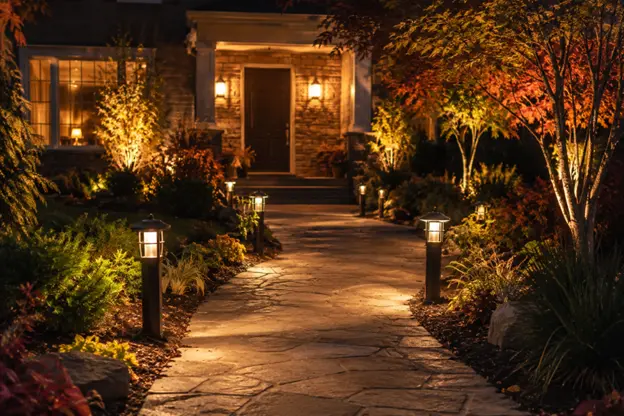
As early fall arrives, days become shorter, evenings grow darker earlier, and walkway lighting becomes more important for keeping outdoor paths safe. A walkway that felt easy to navigate during summer can quickly become a tripping hazard after sunset—especially when leaves, rain, wet pavement, uneven pavers, stairs, or changing elevations are involved.
The right walkway lights outdoor setup improves more than safety. It can make a front entry feel welcoming, define a garden route, highlight planting beds, guide guests toward a patio, and increase nighttime curb appeal. The best designs use soft, purposeful lighting rather than harsh brightness.
This guide explores early fall walkway ideas, fixture types, placement tips, safety considerations, and creative walkway designs that help homeowners create more visible, attractive outdoor spaces.
Why Walkway Lighting Matters in Early Fall
Early fall is an ideal time to inspect and upgrade outdoor lighting. The weather is often comfortable enough for installation, while shorter daylight hours reveal where paths, stairs, driveway transitions, and entrances need better visibility.
Walkway lighting can help you:
- Improve visibility on dark paths.
- Reduce tripping risks near steps and uneven surfaces.
- Guide guests from the driveway to the front door.
- Make patios and garden areas more usable after sunset.
- Highlight the edges of a pathway.
- Improve visibility during rainy weather.
- Add curb appeal to the front yard.
- Support safer access for children, guests, and older adults.
- Create a welcoming transition from indoors to outdoors.
- Illuminate important areas without over-lighting the property.
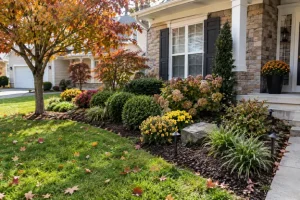
Pathways, driveways, and stairs are common outdoor areas where low-level lighting can improve safety after dark.
Start With a Nighttime Walkthrough
Before choosing fixtures, walk around the property at night. Bring a flashlight and make notes about places where it is difficult to see.
Pay attention to:
- Front walkways
- Side-yard paths
- Backyard garden routes
- Patio transitions
- Deck stairs
- Porch steps
- Driveway-to-door routes
- Mailbox areas
- Gates
- Uneven pavers
- Loose stepping stones
- Low branches
- Dark corners near sheds or garages
1. Low-Voltage LED Path Lights
Low-voltage LED path lights are among the best all-purpose options for front walks, garden paths, and patio connections. They operate on a 12-volt system connected to a transformer, making them an energy-efficient and popular choice for residential landscapes.
These fixtures typically direct light downward and outward, creating soft illumination on the path surface.
Low-voltage path lights are well suited for:
- Walkways to the front door
- Driveway-side paths
- Garden paths
- Side-yard routes
- Patio connections
- Mailbox walks
- Paths between a deck and lawn
For best results, choose warm-white fixtures that complement the home and landscape. Avoid bright, blue-white lighting that can make outdoor spaces feel harsh or commercial.
2. Solar Path Lights for Simple Walkway Ideas
Solar path lights are one of the easiest ways to add outdoor lighting without trenching wires or installing a transformer. They collect solar energy during the day and switch on automatically after dark.
Solar fixtures work best for:
- Short garden paths
- Decorative planting-bed edges
- Low-traffic side paths
- Mailbox gardens
- Small patio routes
- Garden accents
Solar lights should not be the only safety lighting for critical paths, steep steps, or heavily shaded walkways. Their brightness and runtime can vary depending on sun exposure, panel quality, battery condition, weather, and seasonal daylight.
3. Step Lights for Stairs and Grade Changes
Steps are one of the most important places to add outdoor lighting. Even a small change in elevation can become hazardous after dark, particularly when leaves, rain, frost, or shadows obscure the edge of a step.
Step lights can be installed:
- On vertical stair risers
- Along retaining walls
- Under stair treads
- On deck posts
- Along handrails
- Beside stone steps
- Under capstones on seating walls
Low-profile LED fixtures are usually the best choice because they provide enough light to reveal each tread without shining directly into a person’s eyes.
4. Bollard Lights for Wider Paths
Bollard lights are short posts that provide downward-directed illumination along wider walkways, driveways, plazas, and garden routes. They are taller and more visible than low path lights, making them useful where a stronger visual marker is needed.
Use bollards for:
- Wide front walks
- Driveway edges
- Long garden paths
- Courtyard routes
- Commercial-style entries
- Large backyard walkways
- Paths through open lawn areas
5. Recessed In-Ground Walkway Lighting
Recessed in-ground lights sit nearly flush with a path, patio, deck, or driveway edge. They offer a sleek, contemporary look and are useful for marking boundaries without adding tall fixtures.
Use recessed lights to define:
- Paver walkways
- Concrete paths
- Patio edges
- Driveway transitions
- Deck perimeters
- Garden walls
- Poolside routes
These fixtures should be rated for the expected conditions. A light installed where it may be stepped on, exposed to water, or driven over needs the appropriate load rating and weather protection.
6. Downlighting for a “Moonlight” Effect
Downlighting creates soft illumination from above. Fixtures may be mounted on trees, pergolas, eaves, or nearby structures and aimed downward onto a path or gathering area.
This technique can feel more natural than placing many lights at ground level. It creates a gentle “moonlight” effect and can illuminate a wider area with fewer fixtures.
Downlighting works well for:
- Curved paths beneath mature trees
- Garden walkways
- Patio seating areas
- Outdoor dining spaces
- Lawn paths
- Deck transitions
- Front-entry planting beds
Downlighting is especially useful in early fall when falling leaves can create shadows on a path. A higher fixture angle may help illuminate a wider walking area.
7. Wall-Mounted Fixtures Near Entry Paths
Wall-mounted exterior fixtures help illuminate the final approach to a front door, garage door, side entrance, or gate. They are particularly useful where a walkway passes close to the home.
Install wall lights near:
- Front doors
- Side doors
- Garage entries
- Garden gates
- Covered porches
- Back doors
- Patio doors
A wall-mounted lantern should provide enough light to see the door handle, threshold, and nearby steps. It should also complement the scale and style of the home.
8. Post-Cap and Fence Lights
Post-cap lights provide gentle illumination along fences, gates, deck railings, and porch posts. They are useful for defining the edge of a route without filling the landscape with visible path-light stakes.
Use post-cap lights along:
- Deck stairs
- Fence-lined walkways
- Gates
- Porch rails
- Driveway gates
- Raised garden beds
- Patio boundaries
9. Motion-Sensor Lights for Side Yards
Motion-sensor lights are practical for side yards, rear access paths, sheds, garages, gates, and utility areas. They provide light only when movement is detected, making them useful for occasional-use spaces.
Motion-sensor fixtures are best for:
- Side-yard walkways
- Rear gates
- Trash and recycling areas
- Shed access
- Garage-side paths
- Service entrances
- Dark driveway corners
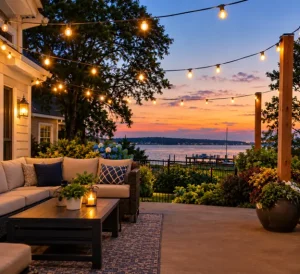
10. String Lights for Patio Walkways
String lights can add warmth and ambiance to patio-adjacent paths, pergolas, garden gates, and outdoor dining spaces. They are not usually sufficient as primary walkway lighting for an uneven walkway, but they work well as a secondary layer.
Use string lights to enhance:
- Pergola-covered walkways
- Patio-to-garden transitions
- Courtyard paths
- Garden archways
- Outdoor dining areas
- Fence lines near seating zones
- Entry trellises
Install outdoor-rated string lights with secure mounting hardware. Keep them high enough that people cannot walk into them and make sure they do not sag into the route.
11. Tree Uplights to Define Path Edges
Tree uplighting is primarily decorative, but it can also improve the visual definition of a walkway. A softly lit tree near a path creates depth and helps people understand the route through the landscape.
Use one or two uplights to highlight:
- Mature canopy trees
- Multi-trunk ornamental trees
- Evergreen shrubs
- Specimen plants
- Entry columns
- Stone walls
12. Lighted Planters Near the Front Entry
Lighted planters combine seasonal planting and low-level illumination. They can be especially effective in early fall, when homeowners often refresh entry containers with mums, ornamental kale, asters, grasses, and pumpkins.
Use lighted planters to:
- Frame a front door
- Mark the start of a walkway
- Highlight porch corners
- Brighten a patio transition
- Define a small courtyard
- Add seasonal color to an entry
13. Stair-Rail Lighting
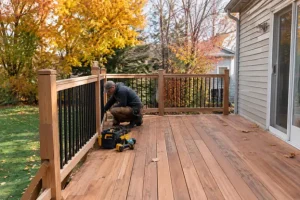
Handrail lighting is an excellent option for deck stairs, porch stairs, retaining-wall steps, and garden routes with elevation changes. Small LED fixtures can be mounted beneath the rail or integrated into posts.
This type of lighting helps reveal the length of the stairway and gives users a visual guide without creating bright glare at eye level.
Use stair-rail lighting for:
- Raised decks
- Long front stairs
- Sloped garden routes
- Retaining-wall steps
- Multi-level patios
- Outdoor kitchens
- Pool-deck transitions
This is one of the most useful safety-focused walkway ideas because it highlights the route directly where people need to place their feet.
14. Smart Timers and Lighting Controls
Lighting controls can make a walkway system more convenient and energy-efficient. Instead of manually switching lights on every evening, use a timer, photocell, motion sensor, or smart controller.
Common control options include:
- Dusk-to-dawn photocells
- Programmable timers
- Smart plugs
- App-controlled low-voltage transformers
- Motion sensors
- Remote switches
- Voice-controlled outdoor systems
For early fall, adjust lighting schedules as sunset times change. A timer set during midsummer may turn on too late once evening darkness arrives earlier.
15. Combine Lighting With Planting and Hardscape
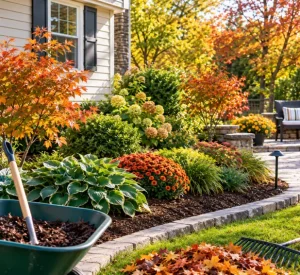
The best walkway designs integrate lighting with the surrounding landscape rather than treating it as an afterthought. Fixtures should be positioned where they reveal the path while also complementing plants, edging, walls, and paving materials.
For example:
- Place low path lights inside mulched planting beds.
- Install step lights beneath stone capstones.
- Use uplights behind ornamental grasses.
- Add bollards beside wide gravel paths.
- Mount downlights in a pergola over a patio path.
- Use post-cap lights along a fence or deck route.
- Frame the start of a walkway with illuminated containers.
Walkway Lighting Safety Tips
When choosing and installing outdoor lighting, keep these safety principles in mind:
- Use fixtures rated for exterior use.
- Install GFCI protection where required.
- Follow local electrical codes.
- Keep cords and cables out of walking paths.
- Bury low-voltage cable at the recommended depth.
- Call before digging near buried utilities.
- Use weather-rated connectors.
- Place fixtures outside the main walking zone.
- Avoid sharp or exposed stakes.
- Use slip-resistant pathway materials.
- Keep lights clear of mulch, leaves, and vegetation.
- Maintain adequate drainage around recessed fixtures.
- Replace damaged wires and cracked lenses quickly.
Low-voltage systems operate on a safer 12-volt current than standard household wiring and are commonly used for residential pathway lighting.
Early Fall Lighting Maintenance Checklist
Early fall is a good time to inspect your existing outdoor lighting before darker evenings and winter weather arrive.
Use this checklist:
- Clean dirt, mulch, and leaves from fixtures.
- Wipe solar panels clean.
- Trim plants that block light beams.
- Replace damaged or dim bulbs.
- Check rechargeable batteries in solar fixtures.
- Inspect cable connections.
- Reset leaning fixtures.
- Adjust timers for earlier sunset.
- Test motion sensors.
- Clean lenses and covers.
- Confirm path lights are not hidden by fall decorations.
- Check drainage around ground fixtures.
- Remove leaves from steps and walkways.
A few minutes of maintenance can restore light output and reduce the risk of dark, unsafe walking areas.
Create Safer Outdoor Spaces With Walkway Lighting This Fall
Early fall is the perfect time to improve the safety and appearance of your outdoor paths. Start with the areas people use most: the walkway to the front door, porch steps, deck stairs, driveway transitions, and side-yard access routes.
Use low-voltage LEDs for reliable illumination, solar fixtures for simple decorative accents, and step or rail lighting where elevation changes create a tripping risk. Combine these walkway ideas with clean hardscapes, trimmed planting beds, and thoughtful fixture placement for a safer, more inviting home after dark.
Ready to upgrade your walkway lights outdoor system? Contact the experts at Hawkins Landscaping Inc. for a customized walkway lighting plan that complements your property, budget, and existing walkway designs.
With over 50 years of experience serving Frederick County and surrounding areas, our team can help you create a welcoming outdoor environment with thoughtfully planned landscape lighting that highlights pathways, planting beds, patios, and other important features. The right placement can improve visibility, enhance curb appeal, and make your outdoor spaces more enjoyable after sunset.
Whether you’re updating an existing walkway or planning a complete landscape transformation, Hawkins Landscaping Inc. can help you choose a practical lighting approach that works beautifully with your home’s design.
Call (301) 898-3615 or visit hawkinslandscaping.com to schedule your consultation today. Ask about our flexible financing options and let us help make every path safer, more functional, and more inviting throughout fall and beyond.