When many homeowners think about upgrading their yard, they jump straight to big projects like decks, pools, or outdoor kitchens. But for homeowners exploring walkways for backyard upgrades, a well-planned stone walkway is often the feature that pulls all those elements together and makes the entire space feel high-end. Even in a small backyard, the right walkway ideas can create a clear route, highlight your favorite plants, and make the area feel larger and more organized.
Natural stone is especially powerful because each piece is unique. The color shifts, organic shapes, and subtle texture make your path feel like it truly belongs in the landscape, not just sitting on top of it. Whether your style is rustic, cottage, or modern, you can find stone that matches your home and blends with your existing hardscapes and landscapes. And because stone is strong and long‑lasting, you get both beauty and function for many years.
In this article, you will learn how natural stone walkways can transform your backyard, what types of stone and layouts to consider, and simple planning tips to get the most from your project. You will also see how a professional approach to design and installation helps your walkway stand out online and in real life—so your outdoor space not only looks great, but also becomes a place you truly love to use.
Why Choose Natural Stone Walkways for Backyard Spaces
Natural stone is one of the best materials for landscaping design because it looks timeless and blends with plants, lawn, and other outdoor features. For homeowners planning walkways for backyard areas, stone offers natural color and texture, so your walkway becomes a focal point instead of just a path.
Stone walkways also improve safety and function. They guide guests from the driveway to the patio, from the deck to the garden, or from the house to a fire pit without walking through mud or damaging the grass. Because stone is durable and weather-resistant, a well-built walkway can last for many years with minimal upkeep.
Design Benefits for Your Backyard
A natural stone walkway can change how your whole backyard feels. It can make a small yard feel larger by drawing the eye through curves and turns, or bring order to a big yard by linking different outdoor “rooms” like the patio, lawn, and garden beds.
When you plan walkways ideas early in your landscaping design, you can create a smooth flow between hardscapes and landscapes. For example, you might extend the same stone from your patio into a garden path so the whole area looks like one connected space. This gives your yard a polished, professional look that boosts curb appeal and outdoor enjoyment.
Popular Natural Stone Types
Choosing the right stone is key to both beauty and long-term performance when designing walkways for backyard areas.
- Flagstone: Flat, irregular pieces with earthy tones that fit almost any backyard style, from cottage to modern. Flagstone is easy to walk on and ideal for informal, natural-looking paths.
- Slate: Dark, smooth stone that works well in minimalist or modern landscaping design, especially when used in large, clean slabs.
- Sandstone: Warm beige, yellow, or pink tones that brighten sunny backyards and offer a softer, welcoming feel.
- Limestone: Light-colored stone that creates a refined look and pairs nicely with formal gardens.
- Quartzite and basalt: Hard, durable stones that come in a range of colors and textures, often used for more contemporary or high-end projects.
Each stone has different colors, textures, and slip resistance, so consider both style and safety when you decide.
Layout Styles and Walkway Ideas
The layout of your walkway affects both the look and how people move through the yard.
1. Stepping stone paths
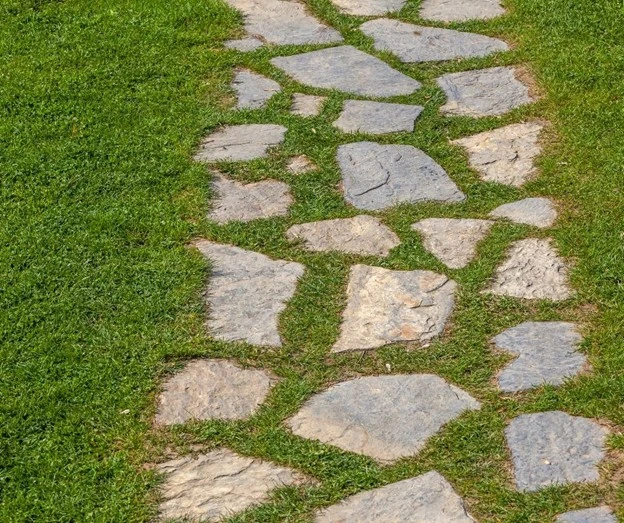
Stepping stones set into grass, mulch, or gravel are perfect for informal gardens and small backyards. The gaps between stones let plants grow, creating a relaxed, natural feel and saving on materials because you do not pave the entire path.
You can:
- Space stones evenly to look like they are “floating” in the lawn.
- Use pea gravel between stones for extra texture and drainage.
- Add low groundcovers or moss between stones for softness.
2. Curved walkways
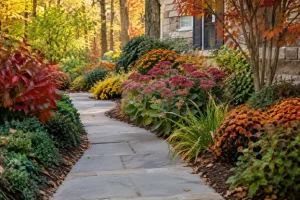
A gentle curve feels more natural than a straight line and invites you to explore the garden. Curved walkways ideas work well when you want to make a small yard feel deeper or to hide a view so the space reveals itself slowly as you walk.
Curves also soften the look of strong, straight house lines and can help you avoid obstacles like trees, beds, or existing hardscapes and landscapes.
3. Straight and geometric paths
For modern homes, straight lines and geometric shapes give a crisp, organized look. Large rectangular slabs of slate or other stone, set in a grid or staggered pattern, create a walkway that feels sleek and contemporary.
You can:
- Use evenly spaced square stones set in gravel.
- Lay rectangular pieces in a linear or herringbone pattern.
- Add metal, concrete, or brick borders for a finished edge.
4. Mixed-material walkways
Combining stone with other materials helps your walkway stand out and tie into the rest of the yard.
Popular mixes include:
- Stone with wood planks for a warm, rustic-modern style.
- Stone with brick borders to echo the house or front steps.
- Stone with gravel or pebbles for better drainage and a softer look.
This flexible approach works well for walkways for backyard spaces because it lets you match existing decks, fences, or retaining walls so your whole landscaping design feels unified.
Design Ideas by Backyard Style
Different styles call for different walkway ideas, even when all use natural stone.
Cottage and rustic gardens
For cottage-style yards, pick irregular flagstone or mixed stones with soft edges and varied colors. Let plants spill over the edges and tuck herbs, creeping thyme, or low flowers between stones to blur the line between path and planting.
Winding paths work especially well here, guiding you through beds, around trees, and past seating areas or birdbaths.
Modern and minimalist yards
In a modern yard, use large, simple stones like slate or smooth quartzite in clear patterns. Keep joints tight, lines clean, and plantings bold but uncluttered, such as grasses, evergreen shrubs, or single-color plant beds.
Straight or slightly angled paths look strong and purposeful, especially when paired with outdoor lighting and simple, dark mulch or gravel.
Family-friendly and functional spaces
If kids or guests use the space often, focus on safety and clear routes. Choose stones with a non-slip texture and make paths wide enough for two people to walk side by side or for easy stroller access.
Use walkways to connect:
- Driveway to front or side entry
- Patio to play area or lawn
- House to shed, garden, or pool
This makes your yard easier to use every day while still looking stylish.
Planning Walkways for Backyard Spaces Step by Step
A good plan helps your walkway look beautiful and work well for years.
1. Map your routes
Watch how you already move through the yard, then sketch simple lines from doorways to key features like the patio, fire pit, shed, or garden beds. These natural routes are good candidates for a stone walkway.
2. Choose the walkway width
Main paths (like from the house to the patio) should be wider, usually enough for two people to walk comfortably. Secondary paths, such as through a garden bed, can be narrower and more informal.
3. Match your home and landscape
Decide if your home feels more traditional, rustic, or modern, then choose stone types and patterns that match that style. This connection between house and yard is a big reason carefully designed hardscapes and landscapes look high-end.
4. Think about views and focal points
Aim your walkway toward focal points like a seating area, water feature, sculpture, or a favorite tree. You can also bend the path slightly so that the destination comes into view as you walk, adding a sense of discovery.
5. Plan lighting and edges
Low path lights, step lights, or lanterns make your walkway safe and inviting at night. Edging with metal, brick, or stone helps keep gravel or mulch in place and gives a clean outline.
Basic Installation Overview
While many homeowners hire a pro, understanding the basic steps helps you see why a professional job lasts longer and looks better.
- Excavation: Remove grass and soil to make space for a compacted base.
- Base layer: Add several inches of crushed stone and compact it well. This prevents sinking and improves drainage.
- Bedding layer: Spread a layer of sand or fine gravel to help level the stones.
- Stone placement: Set stones in place, adjusting height and spacing until the surface is even and comfortable to walk on.
- Joint filling: Fill gaps with sand, fine gravel, or plant groundcover, depending on the look you want.
Proper base preparation is the difference between walkways for backyard areas that shift and weed quickly and ones that stay solid and attractive for years.
Maintenance Tips for Long-Lasting Elegance
Natural stone walkways are generally low-maintenance, but a little care keeps them looking elegant.
- Keep the surface swept so dirt and leaves do not stain or promote moss in unwanted areas.
- Pull weeds early or use a weed barrier under gravel paths to reduce growth between stones.
- Rinse with water as needed, and spot-clean stains with gentle cleaners approved for the type of stone you have.
- Check for loose stones and reset them before they become trip hazards.
Many stones like granite, sandstone, and slate handle freeze-thaw cycles well when installed over a good base, making them a smart choice in four-season climates.
How Stone Walkways Improve Your Whole Landscape
A well-designed natural stone walkway does more than connect spaces; it can pull together all parts of your yard. By tying into patios, steps, retaining walls, and planting beds, it becomes the backbone of your landscaping design.
Stone walkways:
- Add structure to garden beds and lawns so everything feels intentional.
- Highlight key outdoor features like pools, pergolas, or fire pits.
- Increase curb appeal and can even add value to your home because buyers appreciate finished outdoor living areas.
In short, the right walkway ideas turn a simple path into a design feature that lifts your entire yard.
Quick Comparison of Popular Styles
Walkway style | Best for backyard type | Look and feel | Key materials |
Stepping stones in grass | Informal, cottage, small yards | Natural, relaxed, playful | Flagstone, sandstone, slate |
Curved garden path | Lush gardens, sloped yards | Soft, flowing, inviting | Mixed natural stones, gravel |
Geometric slab walkway | Modern or minimalist yards | Clean, structured, bold | Slate, quartzite, cut stone |
Mixed-material path | Transitional or unique designs | Custom, creative, textural | Stone with wood, brick, gravel |
Patio-to-garden connector | Outdoor living-focused yards | Seamless, unified, polished | Same stone as patio, edging |
Create Lasting Beauty With Walkways for Backyard Spaces
If you are dreaming of a backyard that feels elegant, welcoming, and easy to use, a natural stone walkway is a smart place to start. For homeowners considering walkways for backyard upgrades, talking with a local landscaping design expert can help you choose the right stone, explore walkway ideas tailored to your yard, and build a durable path that looks beautiful in every season.
At Hawkins Landscaping Inc., our experienced team specializes in custom hardscapes and landscaping design, including natural stone walkways, garden paths, patios, and complete outdoor living spaces. With over 50 years of experience serving Frederick County and surrounding areas, we create outdoor features that blend beauty, durability, and functionality.
Reach out today to schedule your design consultation. Call (301) 898-3615 or visit hawkinslandscaping.com to get started. Ask about flexible financing options and see how the right hardscapes and landscapes can turn your yard into a true outdoor retreat—with a natural stone walkway leading the way.